Custom buffalo horn glasses can be a beautiful product for a premium eyewear brand.
But they are not the kind of product you should develop casually.
This is not a simple “choose a frame, add a logo, and place an order” project.
Buffalo horn is a natural material.
It has grain, color layers, texture, and variation.
That is exactly why it feels premium.
But it is also why OEM production needs more planning than regular acetate or metal frames.
A good buffalo horn frame can help a brand build a strong luxury story: natural material, handcrafted feeling, limited production, warm touch, and unique visual identity.
A poorly planned buffalo horn project can create the opposite result:
The sample looks beautiful.
The bulk order looks inconsistent.
The hinge feels loose.
The lens fitting is difficult.
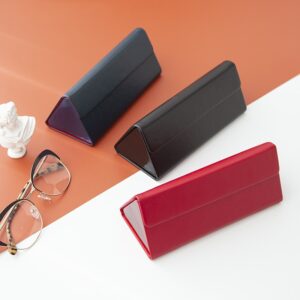
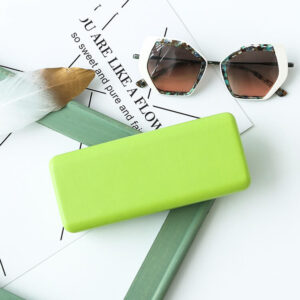
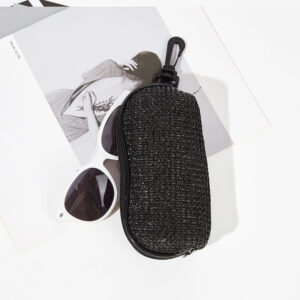
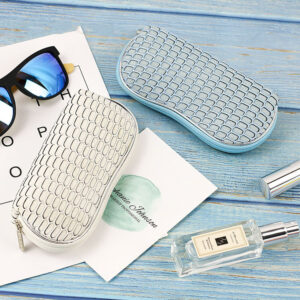
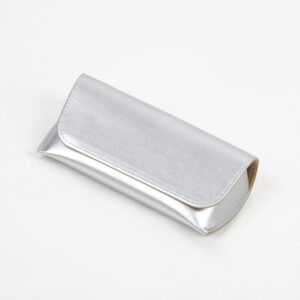
The packaging does not match the price.
And the customer does not understand why the frame costs more.
So before starting custom buffalo horn glasses, brands need to slow down and ask the right questions.
Not only:
“Can you make this style?”
But also:
“Can this material, structure, finish, and packaging support my brand’s premium positioning?”
That is the real question.
In this guide, we will look at custom buffalo horn glasses from a practical OEM buyer’s angle — what to confirm, what to avoid, and how to make the project easier to control from sample to bulk production.
1. What Should Brands Know Before Custom Buffalo Horn Glasses OEM Production?
The first thing to know is simple:
Custom buffalo horn glasses are different from regular acetate frames.
With acetate, the material is easier to control.
The color is more stable.
The pattern can be repeated.
The production process is more predictable.
Buffalo horn is not like that.
Each horn piece may have different grain, color, density, and usable area. Some pieces look beautiful but may not be suitable for a certain frame structure. Some pieces are strong, but the pattern may not match the brand’s visual direction.
That means brands need to confirm more details before production.
Before starting OEM, you should be clear about:
- whether the frame uses real buffalo horn
- whether it is full horn or horn-combination
- what horn color direction you want
- whether the product is for optical lenses or sunglasses
- how thick the frame should be
- what hinge structure will be used
- how the surface will be polished
- how the logo will be added
- what packaging will support the premium price
- how much natural variation is acceptable in bulk production
This may sound like a lot.
But it is exactly what makes buffalo horn eyewear different.
The more clearly these details are confirmed at the beginning, the fewer problems you will have later.
2. Why Custom Buffalo Horn Glasses Need More Planning Than Acetate Frames
Many brands make one common mistake.
They treat buffalo horn like acetate.
That is risky.
Acetate is a great material for eyewear. It is colorful, stable, adjustable, and suitable for larger commercial collections. You can choose sheet colors, make many styles, repeat production, and control the final look more easily.
Buffalo horn works differently.
It is more sensitive.
The material has natural variation.
The cutting waste can be higher.
The polishing takes more care.
The lens fitting needs more attention.
The bulk order may not look exactly like the sample.
This does not mean buffalo horn is a bad material.
Actually, this is part of its premium value.
But it does mean the project needs better planning.
For example, if your brand wants a dark, quiet, elegant horn look, you should not just say:
“Use buffalo horn.”
That is too vague.
You need to explain:
Do you want dark brown horn?
Black horn?
Soft gradient horn?
Low-contrast natural pattern?
A more transparent horn effect?
Should the front and temples match closely?
These details matter.
Without them, the supplier may choose horn material that is technically correct but visually wrong for your brand.
In OEM production, “correct material” and “right brand feeling” are not always the same thing.
3. Confirm Whether the Frame Uses Real Buffalo Horn
Before talking about shape, logo, or packaging, confirm the material first.
This is the most basic step.
It is also one of the easiest places to create confusion.
In the market, you may see several types of “horn style” eyewear.
Some are real buffalo horn.
Some use buffalo horn only on part of the frame.
Some use horn veneer.
Some are acetate frames with a horn-like pattern.
They may look similar in photos.
But they are not the same product.
For a premium brand, this matters a lot.
A real buffalo horn frame has a different material value, cost structure, selling story, and customer expectation.
A horn-look acetate frame may still be beautiful, but it should not be marketed as real buffalo horn.
So before OEM production, ask the supplier clearly:
Which parts are real buffalo horn?
Is the front made from horn?
Are the temples made from horn?
Is titanium or metal used in the structure?
Is it full horn, horn-combination, or horn-look acetate?
Do not leave this unclear.
If your brand later says “real buffalo horn” on the product page, the material claim must be accurate.
Luxury positioning starts with honesty.
4. Choose the Right Buffalo Horn Frame Structure
There is no single “best” structure for buffalo horn glasses.
The right choice depends on your brand, price level, target customer, and use case.
Some brands want the strongest natural material story.
Some want better daily wearability.
Some want a balance between luxury look and commercial stability.
That is why the structure must be chosen carefully.
4.1 Full Buffalo Horn Frames
Full buffalo horn frames have the strongest material story.
They look natural.
They feel handcrafted.
They give the customer a clear luxury impression.
For boutique optical stores and designer brands, this can be very attractive.
A full horn frame is easy to explain:
“This frame is made from natural buffalo horn. Each piece has its own pattern.”
That story is simple and powerful.
But full horn frames also need more control.
The structure must be stable.
The lens fitting must be careful.
The hinge area must be strong.
The thickness must be balanced.
If the frame is too thin, it may not feel secure.
If it is too thick, it may feel heavy and old-fashioned.
So full horn frames are best for brands that want a focused premium line, not a quick low-cost project.
They are especially suitable for:
- luxury capsule collections
- boutique optical stores
- limited edition eyewear
- premium optical frames
- natural material brand stories
4.2 Buffalo Horn and Titanium Frames
For many high-end OEM projects, buffalo horn and titanium is one of the most practical combinations.
Why?
Because each material does a different job.
Buffalo horn gives the frame warmth, texture, and luxury character.
Titanium gives the frame lightness, strength, precision, and better daily wearability.
This combination is especially useful for premium optical frames.
Customers who buy high-end prescription eyewear care about more than appearance. They also care about comfort, weight, balance, and long-term use.
A horn front with titanium temples can feel more refined than a full heavy horn frame.
But the connection between the two materials must be checked carefully.
The horn and titanium parts should not look forced together.
The frame should feel like one complete design.
For OEM buyers, check:
- how the horn and titanium connect
- whether the screws are stable
- whether the hinge movement feels smooth
- whether the frame feels balanced
- whether the titanium parts match the luxury feel of the horn
A good horn and titanium frame can look very premium.
A poorly connected one can look like an unfinished experiment.
4.3 Buffalo Horn with Metal or Acetate Combination
Some brands do not need a full horn frame.
They want the horn story, but with more practical structure or better cost control.
In that case, horn-combination frames may be a smart choice.
Buffalo horn can be used on the front, temple details, or decorative parts. Metal or acetate can help with structure, comfort, or commercial production.
This works well for brands that are testing buffalo horn for the first time.
It gives the product a natural luxury detail without making the whole project too difficult.
For private label buyers, this can be a good middle step:
Not too basic.
Not too risky.
Still special enough to sell as a premium line.
5. Define the Horn Color Range Before Sampling
This is one of the most important steps in buffalo horn OEM.
Do not wait until bulk production to discuss color.
By then, it is already too late.
Buffalo horn is natural, so every piece will not look exactly the same. That is normal. Actually, that is part of the value.
But natural variation still needs direction.
A luxury collection should not look random.
Before sampling, your brand should decide what kind of horn feeling you want.
For example:
Do you want dark horn for a quiet luxury look?
Do you want warm brown horn for a natural lifestyle feeling?
Do you want lighter horn for a softer boutique style?
Do you want strong contrast patterns for a statement collection?
Do you want low-contrast grain for a more elegant optical line?
These are different directions.
The supplier needs to know which one fits your brand.
Otherwise, you may approve one beautiful sample, but the bulk order may arrive with a much wider color range than expected.
That can be a problem for online sales.
Product photos show one look.
Customers receive another look.
Then the product may get complaints, even if the material is real.
So the better way is to set a horn color standard early.
You do not need every frame to be identical.
But you do need the whole order to feel like one collection.
6. Control Natural Variation Without Killing the Material Story
Some buyers want every buffalo horn frame to look exactly the same.
That is not realistic.
If you want perfect color repetition, acetate is a better material.
Buffalo horn is valuable because it has natural variation.
But this variation should be controlled within a premium range.
There is a big difference between:
beautiful natural difference
and
uncontrolled production difference
Beautiful natural difference means each frame has its own character, but all frames still look refined.
Uncontrolled difference means one frame looks luxury, another looks messy, and another looks like it belongs to a different collection.
For bulk orders, brands should confirm:
- acceptable dark/light range
- acceptable grain variation
- whether high-contrast pieces are allowed
- whether front and temple matching is required
- whether left and right temples should be close in tone
- whether the approved sample represents the bulk standard
This is not being picky.
This is professional OEM control.
If your product is going to sell at a premium price, the material variation must feel intentional.
7. Decide the Frame Shape Carefully
Buffalo horn already has a strong visual identity.
The material has grain, texture, and color depth.
So the frame shape does not need to do too much.
In many cases, simple shapes look better.
Good options include:
- round optical frames
- soft square frames
- rectangular frames
- keyhole bridge styles
- browline-inspired frames
- classic sunglass shapes
- balanced statement frames
The shape should let the material speak.
If the design is too complicated, the frame may look heavy or messy.
For buffalo horn, clean design often feels more expensive.
This is especially true for luxury optical frames.
A simple horn frame with good proportion can look more premium than an overdesigned frame with too many cuts, colors, or decorative parts.
Before sampling, think about your target customer.
Are they looking for quiet luxury?
Natural lifestyle?
Designer statement?
Premium optical comfort?
Luxury sunglasses?
The answer should guide the frame shape.
8. Check Frame Thickness and Wearing Balance
Thickness is a big issue in buffalo horn glasses.
Too thin can be risky.
Too thick can look bulky.
A good buffalo horn frame needs balance.
The frame should feel strong enough for daily use, but not heavy on the face.
This is especially important for optical frames because customers may wear them for many hours.
When checking samples, do not only look at the front view.
Hold the frame.
Feel the weight.
Try the opening and closing movement.
Check whether the front feels too heavy.
Look at the bridge.
Check whether the temples feel balanced.
A frame can look beautiful in photos and still feel uncomfortable in real life.
For B2B buyers, this is where physical samples become necessary.
Photos can sell an idea.
Samples reveal the truth.
A premium buffalo horn frame should not only look expensive.
It should feel wearable.
9. Confirm Whether the Frame Is for Optical Lenses or Sunglasses
This decision should be made early.
Do not develop the frame first and think about lens use later.
Buffalo horn sunglasses and buffalo horn optical frames have different requirements.
9.1 Custom Buffalo Horn Sunglasses
Buffalo horn sunglasses are often easier to start with.
The product story is clear.
Natural horn.
Luxury lifestyle.
Travel feeling.
Resort mood.
Premium handmade look.
They work well for:
- boutique summer collections
- resort retail
- luxury sunglasses lines
- lifestyle brands
- premium gift projects
For sunglasses, buyers should confirm:
- lens color
- UV protection
- polarized lens option
- gradient lens option
- lens thickness
- lens fitting stability
- how the lens color matches the horn tone
Lens matching matters.
A good lens color can make the horn look more expensive.
A poor lens color can make the whole frame feel unfinished.
9.2 Custom Buffalo Horn Optical Frames
Buffalo horn optical frames need more technical control.
Prescription lenses can create pressure on the frame.
Different lens thicknesses may affect fitting.
Some customers may need lens replacement later.
So the frame must be designed for real optical use.
Before ordering buffalo horn optical frames, brands should ask:
Can this frame support prescription lenses?
What lens thickness is recommended?
Can it support high-index lenses?
Can the lens be replaced later?
How is pressure controlled around the rim?
Is the lens groove stable enough?
This is very important.
Not every beautiful horn frame is suitable for optical lenses.
A frame may work well as sunglasses but become risky for prescription use.
For optical buyers, lens compatibility should be confirmed before sampling.
Not after bulk production.
10. Check the Hinge Design Like a Buyer, Not Like a Photographer
Product photos rarely show hinge quality.
But customers feel it immediately.
A loose hinge can destroy the premium feeling of buffalo horn glasses.
Even if the horn pattern is beautiful, the frame will feel cheap if the temples shake.
For buffalo horn OEM, hinge design deserves serious attention.
Check:
- hinge type
- screw quality
- hinge size
- how the hinge is fixed into the frame
- whether the horn around the hinge is strong enough
- whether the opening movement is smooth
- whether both temples open evenly
- whether the temples stay stable after repeated movement
When you receive a sample, do a simple test.
Open and close the temples many times.
Do not be too gentle.
Use it like a real customer would.
If the hinge feels weak in the sample, it will likely become a bigger problem after daily use.
A luxury frame should open and close with confidence.
That small movement says a lot about quality.
11. Set the Polishing Standard Before Bulk Production
For buffalo horn glasses, polishing is not a small detail.
It is one of the main reasons the product feels luxury.
A customer may not know how to judge horn quality.
But they will immediately feel whether the frame is smooth or rough.
That is why polishing must be discussed before bulk production.
Do not only say:
“Make it good quality.”
That is too general.
You need to check specific areas:
- front surface
- lens rim edge
- bridge area
- temple outside
- temple inside
- temple tips
- hinge area
- corners and edges
A good buffalo horn frame should feel smooth from every angle.
Not only the front.
Many lower-quality frames look fine in product photos, but the inside of the temples feels rough. The bridge may feel dry. The edges may feel unfinished.
Customers notice these things when they try the frame on.
For premium eyewear, hand feel is part of the product value.
So when you approve the sample, touch the frame carefully.
Run your fingers along the edges.
Check the temple tips.
Check the bridge.
Check the inner side.
If the sample does not feel refined, do not move to bulk production yet.
Ask the supplier to improve the polishing standard first.
12. Choose a Logo Method That Does Not Cheapen the Frame
Buffalo horn glasses do not need loud branding.
The material already has character.
If the logo is too large, too shiny, or placed in the wrong position, it can make the frame feel more like a promotional item than luxury eyewear.
For premium buffalo horn glasses, subtle branding usually works better.
Good options include:
- small inner temple logo
- light laser engraving
- small metal logo detail
- logo on lens corner
- logo on case
- logo on cleaning cloth
- logo on packaging card
The logo should support the frame.
It should not fight with the horn pattern.
For example, if the horn grain on the temple is very beautiful, placing a large printed logo directly on that area may damage the whole look.
A small inner temple logo may be more elegant.
For private label brands, packaging branding is often more effective than heavy frame branding.
The customer still sees your brand.
But the frame keeps its natural, refined feeling.
That is usually better for luxury positioning.
13. Plan the Packaging Early, Not at the End
Many buyers make this mistake.
They spend time choosing the horn material, shape, lens, and logo.
Then at the end, they quickly choose a basic case.
That weakens the whole product.
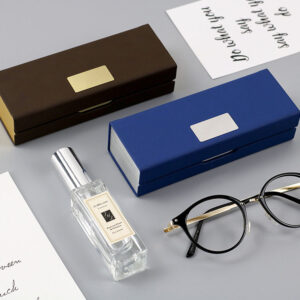
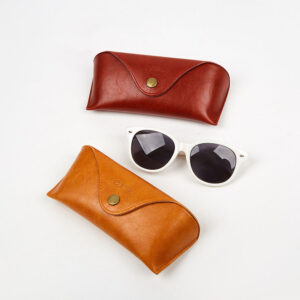
Buffalo horn glasses need packaging that matches the price.
The packaging does not need to be complicated.
But it should feel intentional.
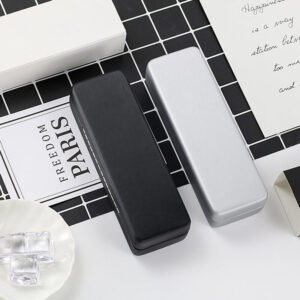
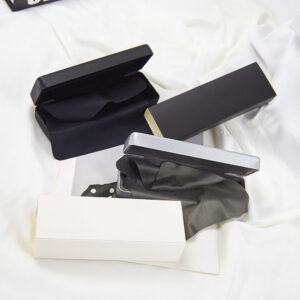
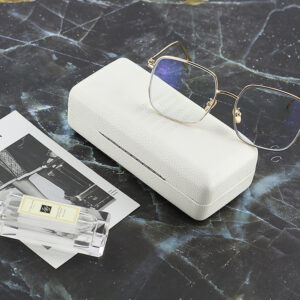
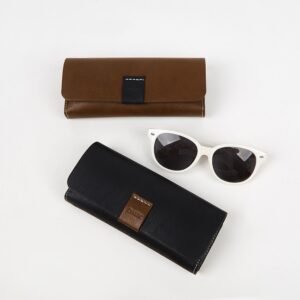
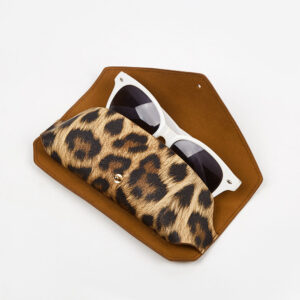
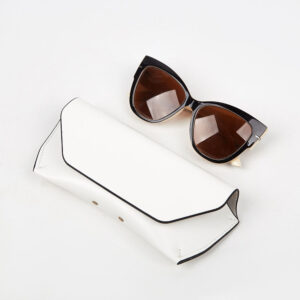
A good packaging set may include:
- premium hard case
- leather-style case
- natural texture case
- microfiber cleaning cloth
- care instruction card
- brand story card
- outer paper box
- barcode or SKU label
- retail display support
For buffalo horn glasses, the care card is especially useful.
Because the frame is made from natural material, customers need to know how to use it properly.
The care card can simply explain:
- avoid long exposure to water
- avoid high heat
- avoid strong chemicals
- wipe with a soft cloth
- store in the case when not in use
- avoid heavy pressure
This is not just after-sales information.
It also makes the product feel more professional.
When customers open the package and see a clear care card, they understand:
This is not a cheap plastic frame.
This is a special material that deserves proper care.
That supports the premium story.
14. Understand What Affects MOQ, Sampling Cost, and Lead Time
Custom buffalo horn glasses usually need more development time than regular frames.
So brands should not treat the project like a quick logo order.
The MOQ and cost depend on many details.
For example:
Are you choosing an existing frame shape?
Are you developing a new shape?
Is it full buffalo horn?
Is it horn and titanium?
Do you need a special horn color range?
Do you need custom lenses?
Do you need private label packaging?
Do you need a new hinge structure?
All of these affect cost and lead time.
Ready styles are usually easier.
You can test the market faster, especially if you only need logo and packaging customization.
Semi-custom styles give more brand feeling without too much development risk.
Full custom styles are better for mature brands, but they need more time, clearer design direction, and stronger order planning.
For sampling, brands should prepare more than just a photo.
A good sampling brief should include:
- target customer
- frame shape reference
- size requirement
- horn color direction
- optical or sunglass use
- lens requirement
- hinge preference
- logo method
- packaging idea
- target price range
- expected bulk order quantity
The clearer the brief, the easier it is for the factory to give a useful answer.
If the brief is vague, the sample may go in the wrong direction.
Then both sides waste time.
15. Do Not Approve Bulk Production from One Pretty Sample Only
A beautiful sample is important.
But for buffalo horn glasses, one beautiful sample is not enough.
Why?
Because buffalo horn is a natural material.
The approved sample may have a beautiful grain and color.
But the bulk order will use different horn pieces.
So before bulk production, you need to set a standard.
Not just:
“I like this sample.”
But:
“This sample represents the color direction, polishing level, hinge quality, frame balance, and packaging standard we want.”
That is much clearer.
Before production, confirm:
- acceptable horn color range
- acceptable grain variation
- front and temple matching standard
- frame shape tolerance
- polishing standard
- hinge movement standard
- lens fitting standard
- logo position
- packaging standard
- final inspection checklist
This protects both sides.
The supplier knows what to control.
The buyer knows what to expect.
For custom buffalo horn glasses, bulk quality is not about making every frame identical.
It is about keeping every frame within the same premium quality level.
16. Ask About Repeat Order Stability
A good first order is nice.
But a good repeat order is what makes the product commercially useful.
This is very important for brands.
If the buffalo horn glasses sell well, you may want to reorder.
But can the supplier repeat the same style?
With natural horn, the exact pattern cannot be repeated.
That is normal.
But the overall product feeling should be repeatable.
Before launching the collection, ask the supplier:
Can the same horn color direction be sourced again?
Can the same frame shape be repeated?
Can the same hinge be used again?
Can the same lens color be maintained?
Can the same packaging be reordered?
Can the same polishing level be controlled?
This matters more than many new buyers realize.
If every reorder looks too different, it becomes hard to keep a stable product page, retail display, or brand collection.
For B2B buyers, repeat order stability is part of supplier reliability.
A factory should not only make a nice sample.
It should also support the product after it starts selling.
17. Common Mistakes Brands Make When Customizing Buffalo Horn Glasses
Custom buffalo horn glasses can be a strong product.
But only if the project is managed properly.
Here are the mistakes buyers should avoid.
Mistake 1: Treating Buffalo Horn Like Regular Acetate
This is the biggest mistake.
Buffalo horn needs more material control, more sample checking, and clearer quality standards.
If you use the same process as acetate, you may be surprised by color variation, polishing differences, or lens fitting issues.
Buffalo horn is not difficult because it is “bad.”
It is difficult because it is natural.
That is also why it feels premium.
Mistake 2: Only Sending a Logo and Asking for a Quote
Some buyers ask:
“Can you put my logo on buffalo horn glasses?”
That is not enough.
For this product, the supplier needs more information.
What market are you selling to?
Is it optical or sunglasses?
Do you want full horn or horn and titanium?
What horn color direction do you prefer?
What price level do you want?
What packaging style do you need?
Without this information, the quote may not be useful.
A serious OEM project needs a serious brief.
Mistake 3: Not Confirming Real Horn Material
Horn-look acetate and real buffalo horn are not the same.
They may look similar in photos.
But the selling story is completely different.
If your product page says real buffalo horn, the frame must truly use buffalo horn.
This should be confirmed at the beginning.
Do not wait until the sample arrives.
Mistake 4: Ignoring Color and Grain Variation
Natural variation is beautiful.
But uncontrolled variation is a problem.
If you want a luxury collection, you need to define the horn direction early.
Otherwise, the final order may look too mixed.
This is especially risky for online brands because product photos create customer expectations.
Mistake 5: Making the Frame Too Complicated
Buffalo horn already has texture.
It does not need too many design tricks.
A complicated shape can make the frame look heavy.
Too many decorative details can make it feel less refined.
For premium horn eyewear, clean design usually works better.
Let the material do the work.
Mistake 6: Ignoring Lens Fitting
This is a serious issue for optical frames.
A frame can look beautiful but still fail in real use if the lens fitting is poor.
Always confirm whether the frame can support prescription lenses.
Ask about lens groove, lens thickness, pressure control, and replacement possibility.
This can save many after-sales problems later.
Mistake 7: Using Cheap Packaging
Cheap packaging can pull down the whole product.
If you are selling buffalo horn glasses as premium eyewear, the case, cloth, box, and care card should support that price.
Do not let a good frame lose value because of weak presentation.
Mistake 8: Not Setting Bulk QC Standards
Approving a sample is not the same as approving production quality.
Before bulk production, confirm the standards clearly.
This includes horn color, grain range, polishing, hinge feel, lens fitting, logo position, and packaging.
For buffalo horn glasses, this step is not optional.
It is necessary.
18. What Should a Good OEM Brief Include?
If you want the factory to understand your project clearly, do not only send a few product photos.
Photos are useful.
But they are not enough.
For custom buffalo horn glasses, a good OEM brief should explain both the product and the business goal.
Because the supplier needs to know what you are trying to build.
Are you making a luxury optical frame?
A resort sunglasses line?
A private label capsule collection?
A buffalo horn and titanium series?
Different goals need different materials, structure, lenses, packaging, and price control.
A useful OEM brief should include:
- target market
- brand positioning
- optical frames or sunglasses
- full horn or horn-combination
- preferred horn color direction
- frame shape reference
- frame size requirement
- lens requirement
- hinge preference
- logo method
- packaging requirement
- target MOQ
- target price range
- sample deadline
- expected bulk order quantity
- care card or product story needs
This may look like a lot of information.
But it saves time.
A clear brief helps the factory understand whether the design is practical, whether the target price is realistic, and where the project may need adjustment.
For example, if a brand wants a very thin full horn optical frame with strong prescription lens compatibility, the supplier may need to adjust the structure.
If a brand wants a luxury horn and titanium frame, the supplier may need to check the connection method and weight balance first.
If a brand wants a very low MOQ with fully custom packaging, the supplier may suggest a semi-custom solution instead.
That is good communication.
A good OEM supplier should not simply say “yes” to everything.
They should help you avoid problems before production starts.
19. How to Choose a Buffalo Horn Glasses Manufacturer
Choosing the right manufacturer is more important than chasing the lowest quote.
Buffalo horn glasses need experience.
A factory that can make acetate frames may not automatically be good at horn frames.
The material behaves differently.
The finishing is different.
The lens fitting is different.
The batch control is different.
The customer expectation is also different.
So when choosing a supplier, brands should check more than price.
Ask whether the manufacturer has real buffalo horn eyewear experience.
Ask if they can explain the difference between full horn, horn-combination, horn veneer, and horn-look acetate.
Ask if they can support optical frames, not only sunglasses.
Ask if they can make buffalo horn and titanium structures.
Ask how they control polishing, hinge strength, and lens fitting.
Ask if they can provide real samples before bulk production.
A reliable manufacturer should be able to discuss limitations honestly.
For example, they should be able to tell you:
“This horn color cannot be repeated exactly.”
“This frame shape may be too thin for optical lenses.”
“This logo position may not look good on the horn grain.”
“This packaging is too basic for your premium price point.”
“This structure needs titanium support to improve stability.”
That kind of answer is valuable.
It means the supplier is thinking about the product, not only the order.
For premium OEM eyewear, you need a manufacturing partner who can help protect your brand image.
Not just someone who says yes quickly.
20. What Questions Should Brands Ask the Supplier Before Sampling?
Before sampling, brands should ask direct and practical questions.
Do not be afraid to ask details.
The more details you confirm early, the easier the project becomes later.
Here are useful questions:
Material questions
- Is this real buffalo horn?
- Which parts of the frame use buffalo horn?
- Is it full horn, horn veneer, or horn-combination?
- What horn color range is available?
- Can we choose dark, light, brown, or more translucent horn?
Structure questions
- Is this frame suitable for sunglasses or optical lenses?
- Can it support prescription lenses?
- What lens thickness is recommended?
- Is titanium or metal reinforcement needed?
- How is the hinge fixed into the frame?
Quality questions
- How is the horn polished?
- How do you control rough edges?
- How do you check hinge strength?
- How do you control lens fitting pressure?
- What color variation is acceptable in bulk production?
Branding questions
- What logo method works best for this material?
- Can we use laser engraving?
- Can the logo go on the inner temple?
- Can the case, cloth, box, and care card be customized?
Production questions
- What is the MOQ for ready styles?
- What is the MOQ for semi-custom styles?
- What is the MOQ for full custom development?
- What is the sampling time?
- What is the bulk production lead time?
- Can repeat orders keep the same quality level?
These questions make the conversation more serious.
They also help you judge whether the supplier really understands buffalo horn eyewear.
If the answers are vague, be careful.
21. How Should Brands Check Buffalo Horn Glasses Samples?
When the sample arrives, do not only look at it quickly and say, “Looks good.”
Check it like a real buyer.
Because this sample is your warning system.
It tells you what may happen in bulk production.
Start with the material.
Does the horn pattern match your brand direction?
Does the color look premium?
Does the front match the temples well enough?
Does the frame look like the product you want to sell?
Then touch the surface.
Is it smooth?
Are the edges clean?
Does the bridge feel comfortable?
Are the temple tips polished?
Does the inner side feel finished?
Then test the hinge.
Open and close the temples several times.
Does the movement feel stable?
Do both sides open evenly?
Is there any shaking?
Does the screw area look strong?
Then check the lens fitting.
Is the lens stable?
Does it move?
Does the frame look under pressure?
Is the lens line clean?
Does the product feel suitable for real use?
Then check the wearing balance.
Does the front feel too heavy?
Do the temples sit evenly?
Does the frame twist?
Does it feel comfortable on the face?
Finally, check the packaging.
Does the case match the product price?
Is the cloth acceptable?
Does the care card explain the material?
Does the full package feel premium enough?
A sample should not only look good on the table.
It should feel ready for your customer.
22. How to Control Bulk Production Quality
Bulk production is where many OEM projects succeed or fail.
This is especially true for buffalo horn glasses.
Because the material is natural, the bulk order will not be exactly the same as the sample.
That is normal.
But the quality level must stay consistent.
Before bulk production, brands should confirm the approved sample and quality standards in writing.
The factory should know:
- the accepted horn color range
- the accepted grain variation
- the front and temple matching requirement
- the frame shape tolerance
- the polishing standard
- the hinge standard
- the lens fitting standard
- the logo position
- the packaging standard
- the final inspection points
This does not need to be complicated.
But it needs to be clear.
For example:
“Natural variation is acceptable, but the horn color should stay within the approved dark brown range.”
Or:
“Front and temples do not need to be identical, but they should not look like different material batches.”
Or:
“Surface must be smooth on the front, inside temples, bridge, lens rim, and temple tips.”
This kind of language helps avoid misunderstandings.
For premium eyewear, vague standards can create expensive problems.
Clear standards protect both the buyer and the supplier.
23. How to Present Custom Buffalo Horn Glasses to Customers
OEM production is only one part of the project.
The next part is selling the product properly.
Buffalo horn glasses need explanation.
If the customer only sees a high price, they may hesitate.
But if they understand the material, the price makes more sense.
Your product page, retail display, or sales team should explain:
- what buffalo horn is
- why each frame has natural variation
- why the surface feels different from plastic
- why the production needs more handwork
- how the frame should be cared for
- why the product belongs in a premium collection
Do not overcomplicate the story.
Keep it simple and real.
For example:
“Each frame is made with natural buffalo horn, so the grain and color may vary slightly from piece to piece. This natural variation gives every frame its own character.”
This is clear.
It turns variation into value.
For online stores, close-up photos are very important.
Show the horn grain.
Show the polishing.
Show the hinge details.
Show the packaging.
Show the frame from different angles.
Do not only show one clean front image.
Premium customers want to see details.
24. Final Thoughts: How Brands Should Approach Custom Buffalo Horn Glasses
Custom buffalo horn glasses can be a strong product for premium eyewear brands.
But they need the right approach.
Do not treat them like basic acetate frames.
Do not rush the material decision.
Do not approve bulk production from one pretty photo.
Do not leave color variation, lens fitting, hinge quality, polishing, and packaging until the last minute.
A good buffalo horn OEM project should start with clear positioning.
Are you building a luxury optical frame?
A natural material capsule collection?
A horn and titanium premium series?
A boutique sunglasses line?
A private label high-end product?
Once the direction is clear, the details become easier to control.
Choose the right horn structure.
Define the horn color range.
Check the frame thickness.
Confirm lens compatibility.
Test the hinges.
Set the polishing standard.
Use subtle branding.
Plan packaging early.
Agree on bulk QC standards.
Think about repeat orders.
That is how buffalo horn glasses become a real premium product.
Not just a beautiful sample.
Not just a natural material claim.
But a frame your customers can see, touch, understand, wear, and remember.
For B2B brands, that is the real value of custom buffalo horn eyewear.