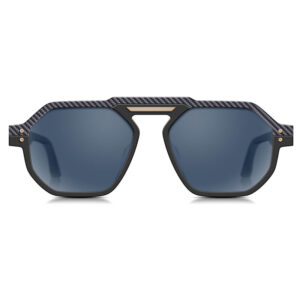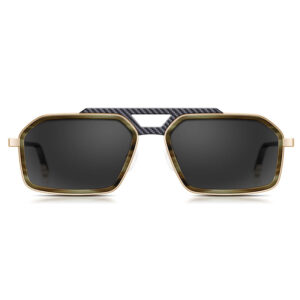
Some sunglasses are designed to complement an outfit. Others become the first thing people notice.
Thierry Lasry and Linda Farrow have built recognizable identities around the second idea, although their approaches to statement eyewear are quite different.
Thierry Lasry is known for sculptural acetate frames, striking color combinations, and a design language that brings vintage references into something more futuristic. Linda Farrow has a longer history in fashion eyewear, with collections that move between architectural silhouettes, refined metals, luxurious finishes, and designer collaborations.
Both brands demonstrate how sunglasses can become an expression of personal style rather than simply a functional accessory.
For established eyewear brands, designers, and wholesale buyers, the interesting question isn’t which label produces the more dramatic frame.
It’s how each brand creates that sense of identity.
What makes an oversized acetate design look deliberate rather than excessive? Why can a relatively simple metal frame feel unmistakably luxurious? And how can an independent eyewear brand use these observations to develop an original statement collection of its own?
1. Two Brands, Two Different Ways to Make a Statement
Thierry Lasry: Making the Frame Itself the Main Attraction
Thierry Lasry launched his namesake eyewear brand in 2007, building its identity around an aesthetic he describes as futuristic vintage.
The concept is easy to recognize in many of his designs.
Familiar shapes are pushed beyond their usual proportions. A cat-eye becomes more angular. A rectangular frame gains additional volume. Acetate colors and patterns are arranged to make the frame feel almost sculptural.
The result is often playful, but rarely accidental.
Look at the brand’s FLASHY or DOPAMY designs. They show how changes in the upper rim, lens shape, color, and acetate volume can give relatively familiar silhouettes a very different personality.
What’s particularly interesting is the way Thierry Lasry uses the material itself to create visual impact.
The front of the frame often provides most of the statement. Decorative logos don’t need to carry the entire identity.
For an eyewear designer, that’s worth examining.
A distinctive product can communicate its character through shape and color before anyone notices the brand name.
Linda Farrow: Luxury Through Materials, Proportions, and Fashion
Linda Farrow approaches statement eyewear from a different background.
Founded in London in 1970, the brand was among the early names treating sunglasses as a serious fashion accessory. Its later revival under Simon Jablon brought renewed attention to its archive and a series of collaborations with fashion designers.
That fashion connection remains important.
The Linda Farrow collection encompasses substantial acetate designs, sophisticated metal constructions, and highly detailed luxury frames.
Some products use Japanese titanium, precious-metal plating, or elaborate finishing. Other designs make their impression through bold geometry and unusual proportions.
These are not necessarily quieter sunglasses than Thierry Lasry’s.
Their visual impact often comes from a different combination of elements.
A gold-toned metal frame may have a relatively restrained outline, yet the finish, lens color, construction, and details can make it feel unmistakably luxurious.
The brand has also explored dramatic shapes through its designer collaborations, showing how the same eyewear category can accommodate different creative identities.
Different Design Priorities, Not Different Levels of Creativity
It’s tempting to describe Thierry Lasry as bold and Linda Farrow as elegant.
But that simplifies both brands too much.
Linda Farrow has produced highly experimental eyewear, while Thierry Lasry also offers refined designs that are easier to incorporate into everyday wardrobes.
The more useful distinction is how their recognizable products often create impact.
Thierry Lasry frequently makes acetate geometry and color the central visual feature.
Linda Farrow has a broader design vocabulary in which materials, fine details, metal structures, and fashion references can play equally important roles.
For a brand planning a statement sunglasses collection, this raises an early question:
Will your products be recognizable primarily through their silhouettes, or through a combination of materials, finishes, and signature details?
That decision affects almost everything that follows.
2. What Makes Thierry Lasry’s Acetate Designs So Recognizable?
Volume Can Be More Interesting Than Decoration
One of the most useful aspects of Thierry Lasry’s eyewear is the treatment of volume.
A thick acetate front doesn’t automatically produce a successful statement frame.
If every part becomes heavier, the result may simply look oversized.
The more interesting designs use volume selectively.
A stronger brow line might sit above a narrower lower rim. An angular outer corner can give a cat-eye more attitude. A broad front may be balanced by a carefully shaped bridge and relatively restrained temples.
Those decisions create a sense of movement.
Even before the customer tries on the sunglasses, the frame has a recognizable silhouette.
For a private-label brand developing acetate sunglasses, this is a more useful starting point than simply requesting a thicker frame.
Where should the visual weight sit? Which lines should be exaggerated? What should remain relatively simple?
A single confident change can be more memorable than several competing details.
Color Is Part of the Shape
Acetate offers opportunities that are difficult to reproduce through surface color alone.
Translucency, layered patterns, embedded color effects, and polished edges can influence how the entire frame appears under different lighting.
Thierry Lasry makes frequent use of expressive color combinations.
In some designs, the acetate pattern emphasizes the width or curvature of the front. In others, a strong lens tint changes the way the frame color is perceived.
For product development, this means color decisions should happen early enough to influence the design.
A frame developed entirely in black may behave visually quite differently when produced in a transparent amber or layered tortoiseshell acetate.
Thickness becomes more apparent. Internal edges may become visible. The relationship between lens color and frame material changes.
It’s worth evaluating the actual material combinations rather than assuming every color option will create the same effect.
The Design Must Still Work When Worn
A dramatic silhouette can look outstanding in a campaign photograph.
That doesn’t mean it will work equally well for the intended customers.
Large fronts affect overall proportions. Strong outer corners can change how the frame sits visually against the face. Thick acetate can influence both weight and fit.
This doesn’t mean statement frames need to be conservative.
It means the designer should know which part of the silhouette creates the intended impact and which dimensions need to remain practical.
For a wholesale collection, that distinction matters.
A design that looks impressive on a display but feels awkward on most customers may be difficult for retailers to sell consistently.
Good statement eyewear gives customers something unusual without making the product unnecessarily difficult to wear.
3. Linda Farrow Shows Another Side of Luxury Sunglasses Design
Premium Materials Need a Reason to Be There
Linda Farrow’s use of materials provides a different lesson.
The brand’s collections include Japanese titanium, Italian acetate, precious-metal finishes, and specialized lens options.
These material choices support its luxury positioning, but the value of a material depends on how it’s used.
A metal frame may have carefully refined rim proportions. The temples may introduce a distinctive detail without overwhelming the front. A gold finish can emphasize particular components rather than covering every visible surface.
This is worth remembering when developing custom luxury sunglasses.
Adding expensive materials to a conventional design doesn’t automatically create a convincing premium product.
The material needs to contribute to the appearance, construction, fit, or tactile quality of the frame.
For example, combining a sculpted acetate front with refined metal temples can create a useful contrast.
But the transition between the materials needs careful attention.
An awkward joint can undermine the impression of quality, regardless of how expensive the individual components may be.
Small Details Can Change the Entire Impression
Not every statement design needs an unusually large silhouette.
Sometimes the difference is found in the smaller details.
Consider the effect of a finely shaped metal bridge, a carefully positioned decorative element, or an unusual temple profile.
Those features may seem minor when viewed separately.
Together, they can give a frame a distinctive identity.
This is especially relevant for brands that want to develop premium sunglasses without relying exclusively on oversized acetate.
A restrained metal design can still have character through its geometry, finishes, and construction.
Of course, there is a balance to maintain.
Too many decorative elements can compete with one another, leaving the frame without a clear focal point.
A successful design usually gives the eye somewhere to look first.
What Designer Collaborations Reveal About Product Identity
Linda Farrow’s history of collaborations is also instructive.
Working with fashion designers allows the brand to explore different shapes and creative directions while remaining within its broader luxury eyewear identity.
A particularly expressive collaboration may look quite different from a core collection.
But it can still communicate the same attention to materials, finishing, and product presentation.
For an independent eyewear company, the lesson isn’t that collaborations are necessary.
It’s that a strong collection needs a recognizable foundation before it can successfully explore different directions.
A brand with a clear identity can introduce a more experimental capsule without making the rest of the range feel disconnected.
That becomes harder when every new product starts with an unrelated design idea.
4. How Do You Make Statement Sunglasses Distinctive Without Making Them Difficult to Sell?
One Strong Feature Is Often Enough
A common problem in custom sunglasses development is trying to make every detail unusual.
The front becomes thicker. The corners become sharper. The temples gain decorative metalwork. The lenses receive an unexpected tint.
Individually, these ideas may be interesting.
Together, they can make the design feel confused.
Thierry Lasry’s sculptural acetate designs and Linda Farrow’s carefully detailed luxury frames suggest a more disciplined approach.
Decide where the main visual interest should be.
If the front shape is dramatic, the remaining components may need to be relatively quiet.
If the material finish and metal details carry the design, the silhouette may benefit from greater restraint.
The result should look intentional from every angle.
Think About the Customer Before Finalizing the Silhouette
Statement sunglasses are not all purchased for the same reason.
A fashion boutique may want highly expressive pieces that make its assortment look different.
A premium optical retailer might prefer distinctive frames that remain suitable for everyday wear.
An established designer brand may want a recognizable signature style that can continue across several seasons.
These are different product briefs.
Before approving a design, determine the intended customer, retail positioning, and role of the frame within the collection.
Is it meant to attract attention in a shop window? Become a recurring bestseller? Introduce a new material direction? Or serve as a limited seasonal highlight?
There’s no reason to force one frame to perform every role.
A Collection Needs Contrast
A successful statement sunglasses range doesn’t necessarily need ten equally dramatic models.
In fact, that can make the assortment harder to navigate.
A few stronger silhouettes can establish the creative direction, while more restrained designs give retailers something easier to introduce to a broader group of customers.
The mix depends on the brand.
For development planning, one possible structure is:
| Collection Role | Design Direction | Development Priority |
|---|---|---|
| Signature Frame | Strong, recognizable silhouette | Original shape and brand identity |
| Statement Highlight | More experimental proportions or color | Visual impact and wearability |
| Refined Premium Frame | Restrained shape with distinctive details | Materials, finishing, construction |
| Commercial Core | Easier-to-wear interpretation of the design language | Fit, consistency, repeat-order suitability |
| Seasonal Color Edition | Existing silhouette with a new material or lens combination | Color approval and product continuity |
This isn’t a prescribed quantity mix. It’s a way of giving each proposed design a reason to exist.
For established brands, that discipline can help prevent a collection from becoming a set of unrelated samples.
5. What Should Custom Eyewear Brands Learn From These Two Labels?
Design Recognition Before Brand Recognition
One of the strongest lessons from Thierry Lasry and Linda Farrow is that distinctive eyewear doesn’t have to depend entirely on visible branding.
Their design identities are established through product choices.
That should encourage independent brands to ask a more demanding question during development.
If the logo were removed, would the frame still express something consistent about the collection?
Perhaps the brand develops a distinctive brow line that appears across several acetate models.
Perhaps its signature becomes an elegant metal temple construction, a particular color palette, or a consistent approach to combining materials.
Whatever the direction, it needs to be original and capable of supporting more than one frame.
The aim isn’t to reproduce another label’s recognizable design.
It’s to understand the discipline behind creating one.
Know Which Features Require Custom Development
Not every feature needs a new mold, component, or manufacturing process.
A new acetate color combination may be comparatively straightforward when an appropriate frame design and material are already available.
Changing the geometry of the front can be more involved.
A specialized metal connection, unusual temple construction, or custom decorative component may require additional technical review, tooling, or sampling.
The exact requirements depend on the chosen design and production method.
This is why design development should involve a practical discussion before expensive production commitments are made.
Which elements create the collection’s identity?
Which can be achieved through existing components or suitable manufacturing methods?
Which require genuinely new engineering work?
A strong concept becomes much easier to manage once those questions are answered.
Review the Finished Product, Not Just the Design Drawing
Statement sunglasses can be particularly sensitive to finishing.
A dramatic acetate profile needs clean, consistent edges. Layered colors must be positioned as intended. Metal components should have the correct surface appearance.
Lens color also matters.
A change in tint can alter how the entire product looks, particularly when paired with translucent or brightly colored acetate.
When reviewing samples, inspect the complete frame under different lighting conditions.
Check how the materials meet, how the temples align, whether the colors match the approved references, and how the sunglasses actually sit on the face.
For a premium collection, the finish needs to support the design rather than distract from it.
6. Turning Brand Inspiration Into an Original Custom Sunglasses Collection
Start With a Clear Product Direction
Established eyewear brands often come to a manufacturer with reference images.
That’s understandable. Showing a few recognizable designs can communicate the intended aesthetic much faster than describing everything in words.
But reference images are only the beginning.
A useful development brief should establish what the brand wants its own collection to become.
For example, a company might want a series of sculptural acetate sunglasses with strong upper-rim shapes, refined color combinations, and a distinctive but wearable design identity.
Another might prefer luxury metal sunglasses with delicate finishing, carefully integrated acetate details, and understated branding.
Both ideas can be developed without reproducing another brand’s specific designs.
The references help establish the direction. The actual design work should create something original.
Decide What Deserves Investment
It is easy to spend money developing details customers may barely notice.
For a brand entering a new premium sunglasses category, a more focused approach can be useful.
Begin with the silhouette, fit, and materials.
Then identify the details that will make the collection recognizable.
A carefully developed acetate front may deserve more attention than a complicated decorative temple. In another collection, a distinctive metal construction might justify additional development because it carries the entire design identity.
There isn’t one correct answer.
The point is to invest in features that support the product’s positioning.
Brands should also consider whether the chosen designs can be developed into additional sizes, color options, or related models without losing their identity.
A successful original design can become the starting point for a much broader collection.
How EyewearBeyond Can Help Turn Design Ideas Into Products
For professional eyewear buyers, studying brands like Thierry Lasry and Linda Farrow is valuable because it shows how different design decisions create different kinds of premium sunglasses.
But inspiration needs to be translated into clear product requirements.
At EyewearBeyond, we work with eyewear brands, wholesalers, and optical retailers looking for distinctive wholesale frames and suitable private-label or custom development options.
A retailer may want to introduce a selected range of ready-stock statement sunglasses without developing a new collection from scratch.
An established brand may have a more specific project involving acetate silhouettes, metal components, custom finishes, branded details, or a coordinated range of premium sunglasses.
Those projects require different approaches.
For existing designs, the discussion may begin with available models, color choices, branding possibilities, and order quantities.
For an original custom collection, it begins with the design direction, technical feasibility, material selection, samples, and agreed production requirements.
The useful question isn’t whether a manufacturer can make sunglasses that resemble a famous brand.
It’s whether the manufacturer can help develop a product that suits your own customers and establishes a recognizable identity for your business.
EyewearBeyond is independent of Thierry Lasry and Linda Farrow. Our design discussions concern original products and appropriate manufacturing options, not copies of their protected designs, trademarks, or proprietary details.
For experienced buyers, that distinction matters.
A new collection should strengthen your brand rather than depend on someone else’s reputation.
Final Thoughts: A Statement Frame Needs a Point of View
Thierry Lasry and Linda Farrow show that luxury statement sunglasses can take very different forms.
One often creates impact through sculptural acetate, unusual proportions, and expressive color.
The other demonstrates how refined materials, sophisticated construction, fashion references, and carefully considered details can make sunglasses feel distinctive.
Neither approach is a formula to copy.
For brands developing original eyewear, the more valuable lesson is to make every significant design decision support a clear identity.
A striking silhouette is useful when it suits the intended customer. A luxurious material is valuable when it improves the product. A distinctive detail matters when it belongs to the overall design.
The strongest statement sunglasses rarely feel as though every feature is competing for attention.
They have something specific to say.
And that is what makes a collection worth developing.
Planning a distinctive custom sunglasses collection? Explore EyewearBeyond’s wholesale eyewear selection and contact our team with your design brief, preferred materials, reference direction, or existing product specifications to discuss suitable private-label and custom manufacturing options.