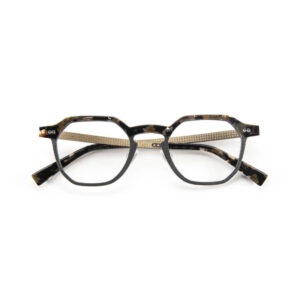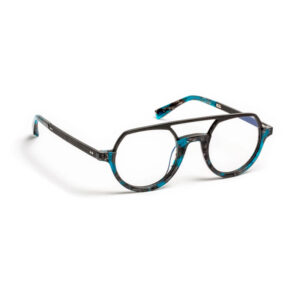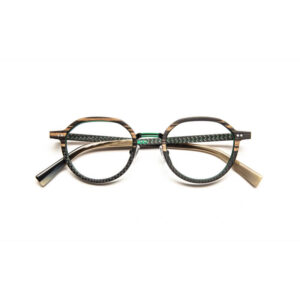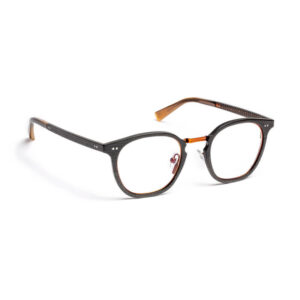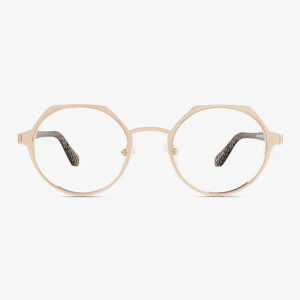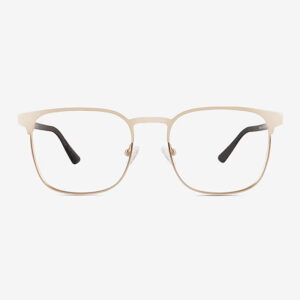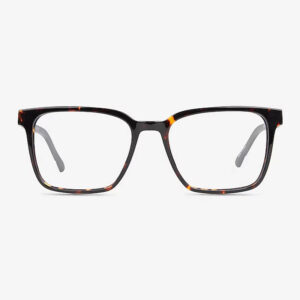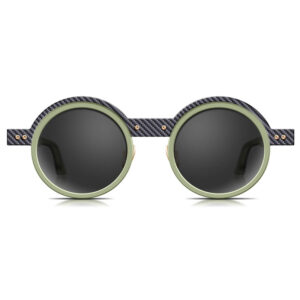
Not every eyewear collection needs to be manufactured from scratch.
An established distributor may already have dependable suppliers producing its bestselling frames. What it needs next could be something entirely different: a few distinctive acetate styles, a fresh titanium collection, or an unexpected color that gives retail customers something new to consider.
Waiting several months for a custom production run doesn’t always make sense in those situations.
On the other hand, if a particular frame sells consistently across fifty optical stores, relying on whatever happens to be available in a wholesaler’s warehouse might not be the best long-term arrangement.
That’s the difference between buying eyewear for immediate opportunity and buying for predictable demand.
Ready-stock eyewear is generally better suited to faster assortment changes, smaller initial commitments, and selected product testing. Made-to-order eyewear becomes more attractive when buyers need specific designs, planned quantities, or greater control over production.
Most experienced buyers will find reasons to use both. The important part is knowing where each approach belongs.
1. What Are You Actually Buying: Finished Stock or Production Capacity?
Ready-Stock Eyewear: What Is Available Now?
Ready-stock eyewear refers to frames that have already been manufactured and are available for wholesale purchase.
The designs, materials, dimensions, and colors have generally been decided before the buyer places an order. You select from what the supplier currently has.
That can be particularly useful for distributors who want to introduce additional styles without starting another development project.
But there’s an important detail buyers sometimes overlook.
A frame listed in a wholesale catalog isn’t necessarily available in every color or quantity shown. Some collections are replenished regularly, while others are available only until the remaining inventory sells out.
Before confirming an order, check the actual model numbers, color codes, quantities, and dispatch arrangements.
And if you expect to reorder the same designs next season, ask about that separately. Current availability and future continuity are two different questions.
Made-to-Order Eyewear: What Needs to Be Produced?
Made-to-order is a broader category than many buyers realize.
It might mean producing an existing frame design in a confirmed quantity. It could involve changing the acetate color, metal finish, or temple details.
At the more involved end, it can mean developing an entirely new frame with its own specifications and tooling.
The further you move from an existing design, the more work is usually required before production begins.
Materials need to be confirmed. Samples may need several rounds of adjustment. Technical details, colors, and finishing requirements must be approved.
Production scheduling also becomes part of the purchasing decision.
This isn’t necessarily a disadvantage. For a brand with a clear product direction, that extra control may be exactly what it needs.
The question is whether the expected commercial value justifies the additional commitment.
Private Label Sits Somewhere in Between
There’s another option that doesn’t fit neatly into either category.
A retailer or distributor may like an existing frame but want to sell it under its own name.
Depending on the supplier and product, private-label options may include logo printing, laser engraving, branded cases, or customized packaging.
These changes don’t necessarily require a completely new frame design.
However, they may still involve production work. Adding a logo to finished stock can be different from manufacturing a new batch with branded components.
Custom colors, special hardware, or unique acetate patterns may require separate minimum quantities.
Before choosing this route, clarify exactly what is being customized and whether the underlying frame is already available.
2. When Does Ready-Stock Eyewear Make Better Business Sense?
When a Retailer Needs Something New Without Waiting for Development
Optical stores don’t always plan every assortment change months in advance.
A boutique may notice growing interest in translucent acetate. A regional chain might want to introduce a few more refined metal frames. A distributor may have retail accounts asking for designs its existing manufacturers don’t currently offer.
In these situations, ready-stock eyewear can be useful.
The frames already exist, so the buyer can evaluate actual products rather than relying entirely on drawings, samples, or development proposals.
A carefully selected assortment can then be introduced without committing to an entirely new production program.
This is especially relevant for retailers that value distinctive designs but don’t need exclusive ownership of every model they carry.
Speed is an advantage, but it’s not the only one.
Being able to choose from finished products makes the buying decision more immediate. Buyers can inspect the proportions, finishes, and materials before deciding whether the frames suit their collection.
When You’re Not Yet Sure a Design Will Sell
Experienced buyers can recognize an interesting frame. Predicting how well it will sell is another matter.
An oversized acetate design might look impressive at a trade show. A new color could be receiving attention online.
Neither guarantees your retail customers will place repeat orders.
Ready-stock purchasing can give distributors a way to test selected styles without immediately funding a larger production run.
You might introduce several designs to a small group of established accounts, then watch which ones retailers actually purchase.
The feedback can be quite revealing.
Perhaps the unusual color receives compliments but few orders, while a more restrained version sells consistently. Or a titanium frame that looked unremarkable in photographs becomes a favorite once customers try it on.
Those observations are useful when planning future collections.
When Mixed-Style Orders Are More Valuable Than Volume Discounts
For many distributors, the challenge isn’t purchasing enough eyewear. It’s purchasing the right mix.
Suppose you want to introduce five different frame styles, each in two colors.
A supplier requiring substantial quantities per model may turn that modest assortment update into a much larger inventory commitment.
A ready-stock wholesaler with suitable mixed-order arrangements may give you more freedom to choose only the combinations you need.
That doesn’t make every small order economical.
Freight, handling charges, and minimum quantities per color can still affect the final cost. Some ready-stock suppliers also have restrictions on mixing products from different collections.
But for a distributor trying to add variety without overstocking, purchasing flexibility can matter more than securing the lowest possible price on one model.
3. When Is Made-to-Order Eyewear Worth the Extra Commitment?
When You Know Which Frames Will Keep Selling
Custom production makes more sense when demand is reasonably predictable.
If a frame has been part of your core collection for several seasons, you may already know which colors sell best, which sizes retailers prefer, and approximately how much stock your business needs.
That information gives you a stronger basis for planning production.
Instead of buying whatever remains available, you can negotiate a defined quantity with agreed specifications and delivery arrangements.
For distributors supplying established retail networks, this can make purchasing more structured.
However, production orders still require sensible forecasting. A factory can manufacture to an agreed schedule, but that doesn’t remove the risk of ordering too many frames or misjudging future demand.
When Your Collection Needs Its Own Identity
There comes a point when selecting from existing wholesale catalogs may not give an established brand enough design freedom.
Perhaps you’ve developed a recognizable acetate shape and want it produced in your own colors.
Maybe you need a particular temple construction, bridge design, or finish that isn’t available in standard wholesale ranges.
That’s where custom development becomes valuable.
You can work toward a frame that reflects your brand’s design direction instead of building the collection entirely around products selected by other companies.
Of course, exclusivity and design ownership shouldn’t be assumed simply because a frame is custom-made.
Who owns the tooling? Can the manufacturer offer similar designs to other buyers? Are there restrictions on future production?
Those details belong in the commercial agreement.
When Production Volume Makes Financial Sense
Larger planned orders can sometimes improve unit economics.
Manufacturing involves setup costs, material preparation, production scheduling, and quality-control work. Spreading certain fixed costs across a larger quantity may reduce the cost per frame.
But a lower unit price doesn’t automatically mean a better purchasing decision.
If you order 1,000 frames to obtain a discount but only need 400 in the near term, the remaining inventory still has to be financed, stored, and sold.
Made-to-order becomes more attractive when purchasing volume is supported by credible demand.
For a mature distributor with established accounts, that’s often easier to assess than it would be for a brand introducing its first collection.
4. Which Option Really Costs More Once Inventory Is Included?
Compare the Money Committed, Not Just the Unit Price
One of the most useful comparisons is the amount of money each sourcing option requires before any products are sold.
Consider two hypothetical offers for comparable frames.
A ready-stock supplier offers 120 frames at $24 each, while a production supplier offers 500 frames at $18 each.
The production quote is 25% lower per frame.
But the initial purchasing commitment tells a different story.
The ready-stock order costs $2,880. The production order costs $9,000.
If you already have confirmed demand for 500 frames, the larger order may be sensible. If you’re testing an unfamiliar design, committing another $6,120 may be difficult to justify.
These figures are illustrative, not actual EyewearBeyond quotations or industry averages. Freight, duties, quality differences, and future reorder terms are excluded.
The exercise is useful because it separates the cost of each frame from the amount of capital required to pursue the opportunity.
Storage and Freight Can Change the Calculation
Smaller orders aren’t automatically cheaper to manage.
International shipping often includes fixed charges. Customs processing, handling, and local delivery can also add costs that become significant when spread across a very small shipment.
A distributor placing frequent small orders may end up paying more per frame in freight than expected.
Larger shipments can spread those charges across more units, but they also require greater inventory commitments.
The best arrangement may involve consolidating several ready-stock purchases into one shipment or planning production deliveries around predictable sales periods.
There’s no universal answer.
The right choice depends on shipment size, destination, freight method, storage capacity, and the speed at which the frames are likely to sell.
What Happens When Only One Color Becomes Popular?
This is where the original purchasing plan often meets reality.
You order a frame in four colors. After several months, the dark tortoiseshell is selling well, but the other three colors are moving slowly.
Now you need more tortoiseshell.
A production supplier may require another minimum quantity for that color. A ready-stock supplier might have it immediately available—or it may already be sold out.
Neither outcome can be assumed.
For any collection you expect to replenish, ask about color-specific minimums and future availability before the opening order.
The ability to reorder a successful color without repeatedly purchasing slower alternatives can be important to the collection’s overall performance.
5. How Should an Established Distributor Combine Both Sourcing Models?
A mature eyewear business rarely needs every product to follow the same purchasing plan.
A better approach is to decide what role each part of the assortment plays.
Use Planned Production for Your Proven Core Collection
Established bestsellers are often suitable for production planning.
You know the designs, understand the customer base, and have sales history to guide quantities.
For these products, maintaining consistent specifications and arranging predictable replenishment may be more valuable than constantly searching for alternatives.
This is particularly relevant to private-label collections, where customers expect a recognizable design and consistent product identity.
The production arrangement should reflect realistic demand, not simply the largest volume discount available.
Use Ready Stock to Add Variety
Ready-stock collections can serve a very different purpose.
They allow distributors to introduce additional styles without replacing their established production partners.
Perhaps your core collection already includes conventional metal frames, but you want to add a small range of sculpted acetate designs.
Or your retail accounts are interested in more titanium eyewear, yet you’re not ready to develop an entire custom collection.
A selected group of finished frames may be enough to explore that opportunity.
The key is to choose products that actually complement what you already sell.
Adding twenty distinctive designs can be more useful than adding another hundred frames that closely resemble existing stock.
What If a Ready-Stock Frame Becomes a Bestseller?
This is one of the most important questions to discuss with a supplier.
Suppose a ready-stock acetate frame performs exceptionally well with your retail customers. You now want to make it part of your continuing collection.
Can you reorder the exact model?
If not, can the supplier arrange another production run?
And if production is possible, who controls the design, material specifications, and tooling?
The answers depend on how the original product was sourced.
Some existing frames can be reproduced through the same manufacturing arrangement. Others come from limited stock, discontinued production, or partner factories that may not agree to manufacture them again.
Never assume a successful stock design can automatically become an exclusive custom product.
If long-term supply is important, establish the options early.
A Practical Eyewear Sourcing Decision Matrix
| Purchasing Situation | Recommended Starting Point | What to Confirm |
|---|---|---|
| Testing an unfamiliar frame shape | Ready stock | Fit, initial quantities, retailer response |
| Refreshing a boutique’s premium selection | Curated ready-stock frames | Available designs and color options |
| Replenishing proven core products | Planned production or confirmed continuing stock | Repeat-order terms and specifications |
| Developing an exclusive collection | Custom manufacturing | Tooling, design rights, MOQ, sample approval |
| Adding branding to an existing frame | Private label | Logo process, packaging, branding minimums |
| Responding to an urgent retail order | Confirmed ready stock | Actual inventory and dispatch arrangements |
| Expanding a successful test collection | Replenishable stock or planned production | Future product availability and total commitment |
The table isn’t intended to prescribe one purchasing method for every business.
A retailer with strong, predictable demand may choose planned production for products that another company prefers to purchase from stock.
The value lies in matching the purchasing method to what the business already knows about demand.
6. What Should Buyers Check Before Committing?
For Ready Stock, Go Beyond the Product Photos
A catalog can tell you what a frame looks like.
It doesn’t always tell you how many are available, whether the color matches the photograph, or whether the supplier expects to replenish the model.
Before confirming a significant order, request accurate product information.
Check frame dimensions, materials, colors, lens specifications where applicable, packaging, and available quantities.
For international orders, establish the actual dispatch arrangements and relevant product documentation.
If you’re introducing optical frames intended for prescription lenses, make sure the product specifications and applicable technical requirements suit the destination market.
And if the collection will be presented to retailers as a continuing range, discuss replenishment before making that commitment.
For Made-to-Order, Make the Sample Approval Count
With custom production, the approved sample should be more than a visual reference.
It needs to establish what the factory is expected to reproduce.
Frame dimensions, materials, colors, finishes, hinge specifications, logo placement, and relevant tolerances should be agreed upon.
If the project includes packaging or specialized lenses, those requirements should be confirmed as well.
Don’t assume a verbal discussion about a small change will automatically be reflected in bulk production.
Clear specifications protect both parties.
They also make repeat orders easier to manage, particularly when the same collection remains in production across several seasons.
Ask About the Second Order Before Placing the First
This question is relevant to both sourcing models.
What happens when the initial shipment sells?
For ready stock, find out whether the selected models are part of a regularly replenished range.
For made-to-order products, ask whether repeat production requires the same minimum quantity, whether materials are likely to remain available, and how production is scheduled.
A good opening-order arrangement isn’t particularly useful if the next order doesn’t fit your business.
Experienced distributors know that supplier relationships become valuable over time.
The second and third orders often tell you more about the working relationship than the first.
7. Choosing the Right Mix for Your Next Eyewear Collection
Start With What Your Customers Already Buy
Before deciding how many new frames to purchase, review the assortment you already have.
Which designs are generating repeat orders? Where are retailers asking for more variety? Are there materials, shapes, or price levels that your current suppliers don’t cover particularly well?
Those answers will help separate genuine product opportunities from the temptation to buy something new simply because it looks interesting.
If an established core collection is performing well, there may be no reason to change its sourcing arrangement.
The opportunity might be in the smaller part of your assortment that needs more personality.
Decide Which Products Need Continuity
Not every frame needs to remain available indefinitely.
A classic design that supports regular repeat orders should have a supply plan suited to that role.
A seasonal acetate color or limited fashion-led collection can be handled differently.
Retailers may appreciate products that are available for a short period, provided they understand the arrangement before placing orders.
The important thing is to avoid treating all products as if they carry the same replenishment promise.
A well-managed assortment can include both permanent and limited collections without creating confusion.
Find Suppliers That Fit Each Purchasing Need
A distributor may already work with a manufacturer for large, planned orders. Adding a stock-based supplier doesn’t have to change that relationship.
It can simply create another option.
EyewearBeyond offers wholesale eyewear collections that include acetate, metal, titanium, and distinctive designer-style frames, alongside private-label and custom manufacturing options for suitable projects.
According to its published purchasing information, selected ready-stock collections can start from 10 pieces, while fully customized acetate and metal eyewear typically requires around 300 pieces per model. Exact minimums depend on the collection and specifications.
The company’s published planning estimates also distinguish ready-stock preparation from custom sample development and bulk production. Actual timing should always be confirmed for the selected products and destination.
For established buyers, the useful approach is to discuss the products and quantities involved rather than assume one purchasing arrangement applies to the entire catalog.
A ready-stock assortment may be the right way to introduce something fresh. A custom production project may be more suitable when the business needs a specific design developed around an established market opportunity.
Both should serve a clear commercial purpose.
Final Thoughts: Buy What’s Ready, Produce What’s Proven
Ready-stock and made-to-order eyewear solve different purchasing problems.
Finished stock gives retailers and distributors access to existing designs, often with smaller commitments and shorter preparation times.
Made-to-order production offers more control over what is manufactured, provided the buyer has the time, volume, and commercial reason to support it.
Neither approach is automatically better for every collection.
The most useful sourcing strategy is often the one that allows proven products to remain consistent while leaving room for new designs and changing customer preferences.
For established eyewear businesses, that may mean maintaining planned production for dependable core styles and using selected ready-stock collections to explore opportunities their current assortment doesn’t yet cover.
The goal isn’t to choose between stock and production. It’s to avoid using the wrong purchasing model for the right product.
Explore the EyewearBeyond wholesale eyewear collection to review available styles, or contact our team to discuss ready-stock purchases, private-label options, and custom production requirements for your next collection.