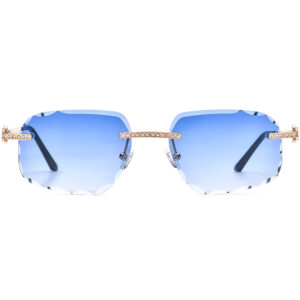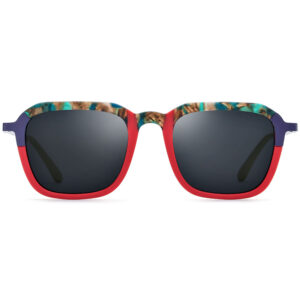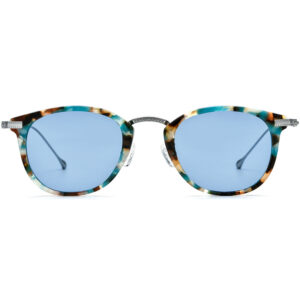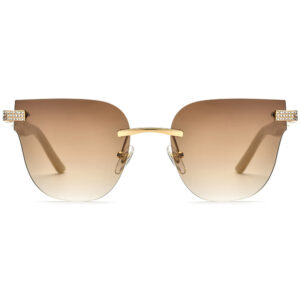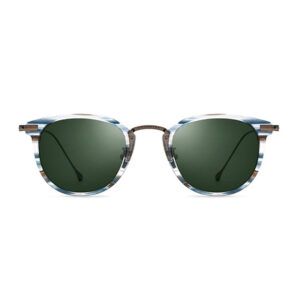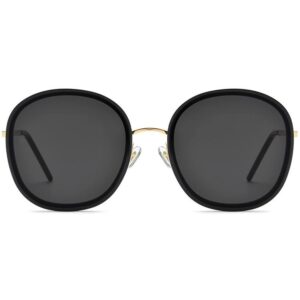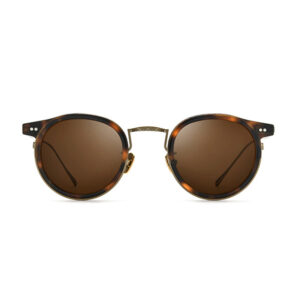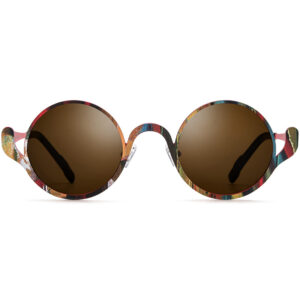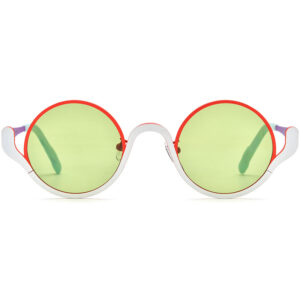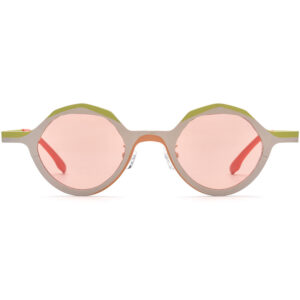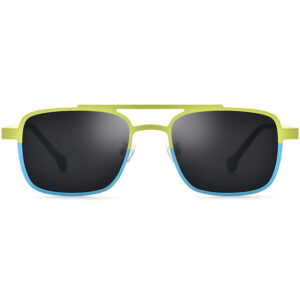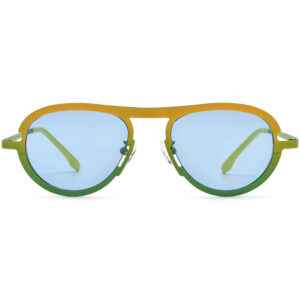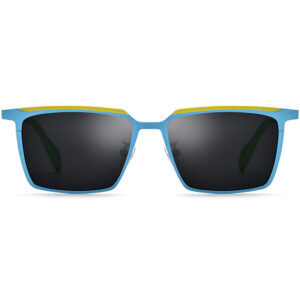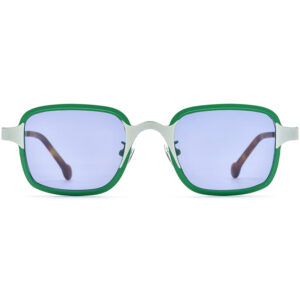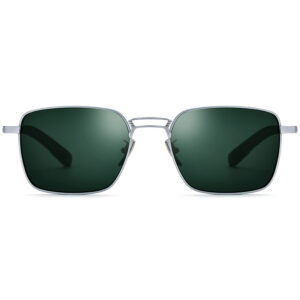
A frame does not become prescription-ready simply because the demo lenses can be removed.
That is one of the easiest mistakes to make when developing eyewear.
A fashion frame may look completely normal with plano demo lenses installed. The lens shape is attractive, the bridge looks balanced, the temples sit correctly, and the frame passes a basic visual inspection.
But a real prescription lens changes the product.
It may be thicker, heavier, flatter, more curved, made from a different material, or require a different edge profile. Depending on the construction, the optical lab may need to bevel, groove, drill, heat, open, glaze, and adjust the frame before the customer ever wears it.
So the real question is not:
Can the demo lens come out?
It is:
Can an optical lab reliably edge, mount, adjust, and later service a prescription lens in this frame without damaging the product or compromising fit?
That is a much higher standard.
A truly prescription-ready frame is not only designed for the person who will wear it. It is also designed for the professional who must finish it later.
Define the Prescription Envelope Before Designing the Frame
Many eyewear projects follow the wrong sequence.
The brand first creates the shape.
Then it chooses the colors.
Then it approves the sample.
Only near the end does someone ask:
Can we make this prescription-ready too?
Sometimes the answer is yes.
Sometimes that late decision forces compromises that could have been avoided earlier.
A better starting point is to define what kind of prescription use the frame is expected to support.
For example:
- single-vision lenses only
- progressive lenses
- prescription sunglasses
- low-to-moderate prescriptions
- higher prescriptions
- high-index lenses
- polarized prescription sun lenses
Not every frame needs to support every possible prescription.
In fact, trying to make every design compatible with every lens type can create unnecessary restrictions on styling.
The more useful approach is to define a realistic prescription envelope.
A slim fashion frame might be perfectly suitable for common single-vision prescriptions but less suitable for strong prescriptions where lens thickness becomes more visible.
A deep optical shape may be intentionally designed to work well with progressive lenses.
A high-wrap sunglass may require a more specialized Rx strategy.
The important point is to know what the frame is supposed to do.
“Prescription-ready” should describe a defined use case, not an unlimited promise.
That makes both product development and supplier communication much clearer.
The Optical Lab Is Your Second Factory
For ordinary fashion sunglasses, the OEM factory is close to the end of the manufacturing chain.
For prescription eyewear, it is not.
Once the frame leaves the eyewear factory, another production process begins.
The optical lab may still need to:
- select the appropriate lens blank
- calculate the prescription lens
- edge the lens
- create the bevel
- cut a groove
- drill holes where required
- insert the lens
- adjust the frame
- check the final fit
That means the OEM factory is not producing a completely finished product.
It is producing a frame that another technical professional must finish later.
This changes the design logic.
A decorative detail that looks harmless in CAD may block access to a screw.
A very thin eyewire may look elegant but create glazing difficulty.
A high-wrap front may create complications once prescription power is added.
A rimless design may depend heavily on the mechanical behavior of the finished lens.
That is why prescription-frame development should consider the optical lab as part of the manufacturing system.
The optical lab is effectively the brand’s second factory.
If the first factory creates a frame that the second factory struggles to work with, the product is not truly optimized for prescription use.
The Lens Opening Is Not Empty Space
Designers naturally think about the lens opening as part of the frame silhouette.
It determines whether the product looks:
- round
- rectangular
- oversized
- narrow
- sporty
- vintage
But in prescription eyewear, that empty space is not really empty.
It becomes the geometry that the prescription lens must fill.
Lens width, lens height, overall shape, bridge relationship, and frame position can all influence what the finished prescription lens looks and feels like.
A larger lens opening may require:
- a larger lens blank
- more finished lens material
- greater edge thickness in some prescriptions
- more weight
- more visible lens projection
A small lens shape may create different limitations.
This is why lens shape should not be approved only as a graphic design element.
The lens opening is an optical manufacturing constraint disguised as a design shape.
That does not mean brands should avoid bold shapes.
It means those shapes should be developed with an understanding of what happens when a real prescription lens replaces the thin demo lens.
Oversized Frames Can Create an Rx Problem Before the Lens Is Made
Oversized eyewear can look excellent in product photography.
With a thin plano demo lens, the frame may appear clean, balanced, and lightweight.
A prescription lens can change that impression.
Depending on the prescription, a larger lens shape can increase:
- visible edge thickness
- total lens weight
- front or rear projection
- lens blank requirements
- cosmetic imbalance
This is especially important for brands positioned around premium design.
The customer does not experience the CAD drawing.
They experience the finished frame with their actual prescription installed.
That means the development team should not ask only:
Does this oversized shape look good?
It should also ask:
What will this shape look like once a realistic prescription lens is fitted?
A frame can be visually beautiful in plano form but much less attractive in certain Rx configurations.
That is not necessarily a reason to reject the design.
It may simply mean the style should have a clearly defined prescription range or lens recommendation.
A frame should be judged with the lens it will eventually carry, not only with the demo lens used to present it.
Design for a Real Prescription, Not Only the Perfect Plano Sample
Sample approval can create another false sense of security.
The development sample usually arrives with:
- thin demo lenses
- perfect symmetry
- no meaningful optical power
- clean edges
That proves the styling.
It does not necessarily prove the prescription architecture.
For an Rx-ready frame, it can be useful to test at least one representative non-plano lens during development.
The goal is not to test every prescription combination.
The goal is to see how the frame behaves when the lens becomes physically more realistic.
A glazing trial can reveal:
- visible edge thickness
- lens projection
- frame distortion
- added weight
- lens retention
- fitting difficulty
- unexpected interaction with the rim
This can be especially valuable for:
- very large lens shapes
- thin eyewires
- rimless designs
- semi-rimless frames
- high-wrap sunglasses
- unusual bridge constructions
The distinction is simple:
Plano approval proves the styling. Rx glazing proves the architecture.
Both matter, but they answer different questions.
Demo Lenses Can Hide Poor Lens-Retention Design
A frame can hold a demo lens perfectly and still be difficult to glaze with a real prescription lens.
That happens because demo lenses and finished Rx lenses do not always behave the same way.
They may differ in:
- thickness
- stiffness
- edge profile
- curvature
- material
- flexibility
This means lens retention should not be judged only by whether the demo lens stays in place.
The frame-lens interface also needs to work when the lab installs an actual edged prescription lens.
Important areas may include:
- groove depth
- groove position
- rim geometry
- bevel compatibility
- insertion force
- frame distortion after glazing
- lens security
- ability to remove and replace the lens later
A frame that requires excessive force to insert a prescription lens may technically hold it securely.
That does not mean the design is good.
Too much force can introduce:
- frame distortion
- lens stress
- coating damage
- difficult servicing
The opposite problem is equally serious.
If the fit is too loose, the lens may move or eventually pop out.
Prescription lens retention is a tolerance relationship, not a tightness contest.
The goal is controlled geometry, not brute force.
Full-Rim, Semi-Rimless, and Rimless Frames Use Different Rx Logic
Different frame constructions transfer different amounts of structural responsibility to the lens.
That matters when selecting materials and validating prescription compatibility.
Full-Rim Frames
In a full-rim design, the frame provides most of the mechanical support around the lens.
Key considerations include:
- eyewire geometry
- groove consistency
- bevel fit
- insertion
- lens replacement
- rim stability
This is often the most straightforward prescription architecture, but that does not mean every full-rim design is automatically easy to glaze.
Very thin rims, unusual corners, or unstable geometry can still create problems.
Semi-Rimless Frames
In a semi-rimless frame, the lens carries more responsibility.
The design may rely on:
- lens edge thickness
- groove position
- nylon cord
- cord tension
- precise edge geometry
This means the lens is no longer just filling the frame opening.
It becomes part of the retention system.
Rimless Frames
In rimless eyewear, that effect becomes even stronger.
The lens itself may carry:
- drilled holes
- mounting hardware
- localized pressure
- bridge and temple connections
Now lens material, hole placement, edge distance, and mounting stress become much more important.
As the frame disappears, the prescription lens becomes part of the chassis.
This is why a rimless prescription program should never be treated as simply a full-rim frame with less material.
It is a different engineering system.
High-Wrap Frames Turn Fashion Geometry Into an Optical Problem
Wraparound sunglasses create another challenge.
In non-prescription fashion eyewear, a strong wrap can be used mainly for:
- styling
- coverage
- sport aesthetics
- facial contour
Once prescription power is added, that curve becomes part of the optical problem.
The brand may now need to consider:
- base curve
- frame wrap
- lens availability
- optical compensation
- peripheral viewing
- finished lens thickness
- final wearer position
A frame that works beautifully with a plano 8-base lens may not accept every Rx solution in the same way.
The brand may need to decide whether to:
- maintain the original wrap
- use a compensated prescription lens
- flatten the Rx version
- limit the supported prescription range
This decision should happen during development.
Not after the first optician discovers the problem.
A fashion curve becomes an optical variable as soon as prescription power is added.
That is why high-wrap Rx eyewear should be treated as its own development category.
Base Curve Is a Frame–Lens Interface Specification
Base curve is often discussed as if it belongs entirely to the lens supplier.
For prescription-ready eyewear, that is too narrow.
The frame is designed around a particular curvature.
The lens must then interact with that curvature.
If the prescription lens needs a different curve from the plano lens used during development, questions appear:
- Will the lens still seat correctly?
- Will the front shape change?
- Will the frame become distorted?
- Will the eyewear sit differently on the face?
- Will the lens project too far forward or backward?
This means base curve should be considered part of the interface between frame and lens.
A brand does not necessarily need to engineer every optical solution itself.
But it should understand what curve the design assumes and what happens when the prescription system changes it.
The frame and lens should negotiate curvature during development, not after the optician begins glazing.
Progressive Compatibility Is a Separate Design Decision
“Prescription-ready” and “progressive-friendly” are not automatically the same thing.
A progressive lens needs sufficient usable lens area and appropriate fitting conditions.
That can make factors such as these more important:
- lens height
- lens shape
- frame depth
- wearer position
- fitting location
- bridge fit
- frame angle
A very shallow fashion frame may work perfectly for many single-vision prescriptions while being less suitable for certain progressive designs.
That does not make the frame defective.
It simply means its intended use should be understood.
A brand that genuinely wants to market a style as progressive-compatible should consider that during development.
It should not add the claim later because the frame happens to accept prescription lenses.
Progressive compatibility belongs in the design brief, not in the marketing copy added after production.
The Frame Must Survive Glazing, Not Just Daily Wear
A prescription frame faces stresses that a finished fashion sunglass may never experience.
The optical lab may need to:
- heat parts of the frame
- open the eyewire
- remove screws
- insert the lens under controlled pressure
- adjust temple angles
- manipulate the bridge
- re-lens the frame later
That means durability should be considered not only during wearing, but also during service.
A beautiful detail can become a problem if it is too fragile for normal optical-lab work.
Examples include:
- brittle decorative components
- very thin endpieces
- weak solder or weld areas
- coatings that are easily damaged during adjustment
- excessive material removal around the eyewire
- inaccessible screws
This leads to a broader quality principle:
Serviceability is part of prescription-frame quality.
A frame may survive two years of ordinary wear but still be a poor prescription product if every lens replacement becomes risky.
That matters for both customer experience and optician confidence.
Some Beautiful CAD Details Become Problems at the Optical Bench
CAD is very good at showing how a frame should look.
It is less good at showing how frustrating the frame may be to work on.
Several design details deserve extra attention.
Very Thin Eyewires
These can create elegant styling, but they may reduce the margin available for lens retention or make glazing more sensitive.
Sharp Lens Corners
They can create strong visual identity but may complicate edging, bevel control, and lens insertion.
Decorative Parts Near the Rim
These can limit access for tools or make local adjustment difficult.
Hidden Screws
A clean exterior may look premium, but inaccessible screws can complicate servicing.
Deep Sculpted Acetate
Heavy sculpting near the lens opening may make consistent groove geometry more difficult.
Extreme Wrap
Strong curvature can create additional Rx limitations even if the plano version looks excellent.
The point is not to remove interesting design.
It is to test whether the design still works when another professional has to service it.
A detail can be beautiful in CAD and frustrating every time an optician has to work on it.
That is an important distinction for brands developing premium optical products.
CAD Lens Thickness Is Not Real Prescription Lens Thickness
In a rendering, the lens is usually represented as a clean, uniform surface.
Real prescription lenses are not always like that.
Depending on the prescription, the finished lens may have:
- thicker edges
- thicker centers
- different front and back projection
- asymmetrical thickness
- different bevel placement
That changes how the frame and lens interact.
For example, a frame that looks perfectly balanced around a thin demo lens may reveal much more lens edge when fitted with a stronger minus prescription.
A strong plus prescription can create a different cosmetic challenge.
This is why brands should be cautious when evaluating frame cross-sections only from CAD.
CAD treats the lens as geometry. Prescription manufacturing turns it into volume.
That volume affects:
- weight
- appearance
- edge exposure
- lens seating
- finished balance
For Rx-focused styles, it deserves to be part of the development discussion.
Prescription-Ready Does Not Mean Every Lens Material Works Equally Well
Lens material and frame architecture should be considered together.
A conventional full-rim frame has different demands from:
- a drilled rimless frame
- a semi-rimless frame
- a high-wrap sunglass
- a heavily exposed shield design
Different Rx lens materials also have different:
- mechanical behavior
- thickness profiles
- impact characteristics
- edge behavior
- drilling suitability
That does not mean the frame brand must dictate one single lens material for every wearer.
It means the expected lens-material range should be realistic for the construction.
Frame architecture and lens-material options should be developed together.
This is especially important when the brand plans to sell:
- prescription sunglasses
- rimless eyewear
- sports Rx frames
- higher-prescription products
The lens is part of the product system.
It should not be treated as an afterthought.
Branding Can Interfere With Optical-Lab Work
Branding is usually designed from the customer’s point of view.
But prescription-ready design should also consider what the optical lab may need to touch.
Potential conflicts include:
- decorative parts blocking access to rim screws
- delicate finishes near adjustment areas
- lens branding too close to an edging area
- temple decoration interfering with heating or alignment work
- hidden hardware that is difficult to service
The question is simple:
After the factory finishes this frame, where will the optician need access?
That can influence where branding and decorative components should be placed.
Prescription-ready design considers where the optician’s tools will go after the factory is done.
This is a small detail, but it is one of the things that separates a frame designed only to photograph well from one designed to function well in the optical channel.
Add an Rx Glazing Trial to Sample Development
If a frame will be sold as prescription-ready, the development process should prove that claim physically.
A practical glazing trial can be simple.
The goal is to confirm that:
- The lens can be edged to the required shape.
- The bevel or groove matches the frame construction.
- The lens can be installed without excessive force.
- The frame remains aligned after glazing.
- The lens remains securely retained.
- The frame can still be adjusted normally.
- The lens can later be removed and replaced.
- The finished prescription appearance remains commercially acceptable.
This does not need to become a full laboratory validation program for every prototype.
But at least one representative Rx glazing test can reveal problems that a plano sample will never show.
If prescription compatibility is part of the product promise, a real prescription lens should be part of development validation.
That makes the claim much more meaningful.
Do Not Rely on a Plano-Only Golden Sample for an Rx Claim
A normal golden sample is still useful for controlling:
- color
- shape
- logo
- polishing
- hardware
- finish
But those characteristics do not prove prescription compatibility.
For a genuinely Rx-focused design, it can be useful to retain two references:
Frame Golden Sample
Used to confirm:
- appearance
- construction
- finish
- branding
Rx-Glazed Engineering Reference
Used to confirm:
- glazing
- lens retention
- geometry after lens installation
- serviceability
- finished prescription appearance
This does not mean every production batch needs to be checked using a prescription lens.
The purpose is to prove the architecture during development.
The golden sample can prove appearance. An Rx-glazed reference proves prescription compatibility.
What Should Be Frozen Before Calling a Frame Prescription-Ready?
Before releasing an Rx-ready frame into bulk production, the important interface decisions should be clear.
Frame Geometry
Confirm:
- lens shape
- eye size
- bridge
- overall frame width
- front curve
- wrap
Lens Interface
Confirm:
- groove or rim construction
- bevel strategy
- drilling where relevant
- mounting system
Fit
Confirm:
- bridge behavior
- temple opening
- frame position
- intended wearer fit
Prescription Envelope
Confirm:
- single vision or progressive intent
- expected prescription use
- high-wrap strategy
- compatible lens families where relevant
Serviceability
Confirm:
- lens installation
- screw access
- frame adjustment
- re-lensing
Validation
Confirm:
- technical drawing
- approved construction
- glazing trial
- development sample
- production revision
This creates a much clearer definition of what “prescription-ready” actually means.
Eight Questions Brands Should Ask Before Approval
Before approving a prescription-ready frame for mass production, brands should ask the factory more than:
Can this take prescription lenses?
Better questions include:
1. What prescription scenarios was this frame actually designed for?
This helps define the intended Rx envelope.
2. Has the frame been glazed with a real prescription lens?
A demo lens alone does not prove the same thing.
3. What base curve is the frame designed around?
This becomes particularly important for sunglasses and wraparound styles.
4. Is the frame intentionally progressive-compatible?
Do not assume all Rx-ready designs are equally suited to progressive lenses.
5. Which prescription lens materials work best with this construction?
This matters more for rimless, drilled, semi-rimless, and other mechanically demanding designs.
6. Can the frame be safely re-lensed later?
Prescription products should be serviceable.
7. Which prescriptions may create cosmetic or fitting limitations?
This is one of the most useful questions a buyer can ask.
A mature supplier should be able to discuss limitations instead of simply saying:
Every prescription is fine.
8. Can you provide an Rx-glazed development sample before bulk production?
If prescription compatibility is an important product claim, it is worth validating physically.
Final Thought: Prescription-Ready Means Designing for What Happens Next
A prescription-ready frame is different from an ordinary fashion frame because the factory is not the last person who will manufacture it.
After the OEM production line, the frame may still need to go through:
optical lab → edging → glazing → adjustment → wearer
That means good Rx frame design must look beyond the factory gate.
It should consider:
- real lens thickness
- lens retention
- curvature
- glazing access
- serviceability
- prescription limitations
- final optical-lab handling
The standard is not:
“Can the demo lens be removed?”
It is:
“Can another professional successfully finish, adjust, and service this product later?”
A prescription-ready frame is not designed only to leave the eyewear factory correctly.
It is designed to survive what happens next.