EXPERT INSIGHT
Author / Expert: Lauren Zhang
Role: Eyewear Product & Manufacturing Specialist
Company: EyewearBeyond – Custom & Wholesale Eyewear Manufacturer
“One mistake I often see with optical chains is assuming that a better bulk price automatically means a better purchasing decision. A frame that sells 30 pieces a month in one store might sell only three in another. If you distribute the same quantity to every location, you’re tying up money in the wrong places. My advice is to keep your proven bestsellers in a shared core collection, but give individual stores room to choose frames that suit their customers. Before placing another large order, look at what’s actually selling, what’s sitting in stock, and which styles can be reordered in smaller quantities. Sometimes improving stock allocation saves more money than negotiating another 5% discount.”
— Lauren Zhang, Eyewear Product & Manufacturing Specialist
👉 Request: Multi-Store Eyewear Purchasing & Wholesale Collection Guide
📧 Email: eyewearbeyondofficial@gmail.com
A 20-store optical chain negotiates a 10% discount on its next frame order. The purchasing team saves $2 per frame, meets its annual cost-reduction target, and reports a successful negotiation.
Three months later, the warehouse is holding hundreds of frames that individual stores aren’t asking for. Meanwhile, several locations are still running out of their bestsellers.
The discount was real. So was the inventory problem.
This is one of the awkward realities of buying eyewear for a retail chain. The bigger the business becomes, the easier it is to negotiate attractive prices—and the harder it can be to make sure those purchases reflect what customers actually want.
It’s also becoming a more important distinction in today’s optical market.
According to The Vision Council’s 2025 Market inSights report, the U.S. optical industry reached $69.5 billion in 2025, even as unit sales declined across most major product categories. More recent figures from the first half of 2026 show a similar pattern: industry revenue has been supported largely by higher prices rather than growing sales volumes.
For optical chains, that creates an uncomfortable question. If customers are buying fewer frames, how much inventory can a retailer afford to hold simply to secure a better wholesale price?
The answer depends on more than negotiating power. It comes down to what each store sells, how quickly successful products can be replenished, and whether suppliers are helping the business respond to demand—or locking it into another large order.
When a 10% Purchasing Discount Becomes an Inventory Problem
Let’s put some numbers behind this.
Consider a hypothetical optical chain with 20 stores. Across the business, it expects to sell approximately 2,000 frames over the next purchasing period.
Its main supplier offers two options: a larger order at $18 per frame or a smaller order at $20 per frame.
Assume the chain sells 2,000 frames under either option, with no additional inventory receipts during the period.
| Purchasing Measure | Volume-Based Order | Demand-Based Order |
|---|---|---|
| Frames purchased | 3,000 | 2,400 |
| Wholesale cost per frame | $18 | $20 |
| Total purchasing cost | $54,000 | $48,000 |
| Frames sold during period | 2,000 | 2,000 |
| Unsold frames | 1,000 | 400 |
| Cost value of remaining stock | $18,000 | $8,000 |
| Sell-through rate | 66.7% | 83.3% |
Illustrative purchasing scenario, not actual retailer or EyewearBeyond performance data. Excludes freight, taxes, markdowns, returns, and differences in sales mix.
The larger order secures a 10% lower unit price, but it requires $6,000 more upfront and leaves $10,000 more at cost tied up in unsold frames.
That doesn’t automatically make the larger order a mistake. If the remaining 1,000 frames are proven sellers and will move over the following weeks, buying ahead might be perfectly sensible.
But what if 300 of those frames are colors that rarely sell? What if another 200 are styles already losing popularity? What if the purchasing team needs fresh designs next season but has less budget available because it bought too deeply into the previous collection?
That is where the apparent saving can begin to disappear.
The calculation also exposes something that unit-price comparisons often overlook: stock that hasn’t sold still represents money the business has committed.
A purchasing director doesn’t need to abandon volume discounts. They need to know which products deserve volume commitments and which don’t.
The Same Frame Can Be a Bestseller in One Store and Dead Stock in Another
For a chain operating across different neighborhoods or cities, company-wide sales figures can hide some fairly expensive mistakes.
Imagine a premium acetate frame that sells 120 units across ten stores in a quarter.
At first glance, that’s a reasonable performer. The buying team might distribute the next order equally, assuming every location has similar demand.
But the actual sales could look like this:
- Two flagship stores sell 30 frames each.
- Three established city stores sell 15 each.
- The remaining five stores sell just three each.
That’s 120 frames sold, but the demand is anything but evenly distributed.
If headquarters sends 15 replacements to every store, the two flagship locations may run short again while the smaller stores receive more than they need.
The problem isn’t the product. It’s the allocation.
This is why purchasing managers should be cautious about treating chain-wide bestseller rankings as universal buying instructions.
Store location, customer demographics, retail price positioning, and even the frames displayed next to a particular style can influence performance.
A titanium frame priced for a premium customer may do extremely well in one location while barely moving in another. A bold acetate design might attract customers in a fashion-focused store but receive little attention at a branch where understated styles dominate.
The practical response is not to let every store buy whatever it wants. That would undermine centralized purchasing and create other problems.
Instead, headquarters can maintain a shared core assortment while allowing part of each store’s collection to respond to local demand.
The most useful decision is often not whether to purchase a frame, but which stores should receive it and in what quantity.
Centralize Supplier Negotiations, Not Every Assortment Decision
Most established optical chains already have good reasons to centralize purchasing. Consolidated supplier relationships make it easier to negotiate pricing, set quality requirements, and control overall spending.
Those benefits shouldn’t be sacrificed.
The trouble begins when centralized purchasing is interpreted as every location carrying an identical selection.
A more useful distinction is between the products that define the chain’s core business and those that give individual stores their local character.
Core products should have demonstrated sales consistency. They might include popular rectangular acetate frames, lightweight metal styles, and familiar everyday shapes.
These products are good candidates for planned replenishment because the company has some evidence of how they perform.
More distinctive designs need a different approach.
A store serving customers who actively seek statement eyewear may benefit from unusual acetate patterns, thicker silhouettes, or distinctive color combinations. Another branch may be better served by refined titanium styles and neutral finishes.
Neither necessarily needs the other’s full selection.
There is also a strong argument for testing unfamiliar collections in selected stores before distributing them across the entire chain.
Suppose a buyer is considering a new collection containing 20 styles. Instead of placing all 20 styles in every location, the chain could introduce selected models in five stores where similar designs have previously performed well.
If those stores show strong sell-through, the buyer has a more credible basis for expanding distribution.
If the collection struggles, the business has limited its exposure.
The retailer still benefits from centralized purchasing. It simply avoids making every store absorb the same product risk.
The Cost of Running Out of the Frames Customers Actually Want
Excess inventory is easy to identify. It’s sitting in the warehouse or on display.
Lost sales are harder to measure.
Consider a 20-store chain where each location misses five potential frame sales per month because a requested style or suitable alternative isn’t available.
Assume each lost frame sale would have contributed $85 after product-related variable costs.
The potential financial impact looks like this:
20 stores × 5 missed sales × $85 = $8,500 in lost monthly contribution
Over twelve months, that would represent $102,000 in potential contribution.
This is a hypothetical sensitivity calculation, not an industry estimate. It also assumes those customers don’t choose another frame, postpone their purchase, or buy through another location in the same chain. Actual losses could be substantially lower.
Still, the calculation is worth making.
Even a small number of missed sales per location can become material when multiplied across a large retail network.
The problem is that a purchasing report may show a frame with disappointing sales without revealing that it was unavailable for much of the month.
A product that sells ten units while remaining in stock for only half the period may deserve closer attention than one that sells twelve units while continuously available.
Before removing a poorly performing frame from the collection, buyers should distinguish weak demand from poor availability.
For fast-moving products, that means tracking not just how many frames were sold but how often stores ran out and how long replacement orders took to arrive.
This is where replenishment becomes a profit issue rather than simply an administrative task.
Why Replenishment Deserves a Different Buying Strategy
Buying a new frame collection and replenishing an established bestseller are two very different decisions.
A new collection requires judgment. Buyers evaluate materials, shapes, price positioning, and likely customer interest. Even with years of experience, there is uncertainty.
Replenishment should involve less speculation.
If a store consistently sells eight units of a particular frame every month, the purchasing team already has a useful demand signal.
It doesn’t necessarily need another complete assortment. It needs enough stock of that specific frame to cover demand until the next reliable delivery.
Take a simple example.
A store sells an average of eight units per month of one frame style. The supplier normally requires three weeks to replenish it.
At a steady sales rate, expected demand over that period is approximately six units. That gives the buyer a starting point for determining when to reorder, before adding a suitable safety allowance for demand variability and delivery uncertainty.
The calculation changes if a supplier takes six weeks instead of three. It changes again if the frame’s popularity is increasing or if the retailer has sufficient stock at another location.
Those details matter more than blindly following a fixed monthly purchasing schedule.
Smaller Orders Are Useful Only When the Total Cost Makes Sense
There’s a tendency to treat flexible minimum order quantities as an automatic advantage.
They can be, but the calculation is not always that simple.
A supplier willing to ship ten frames at a time may help retailers reduce unnecessary inventory commitments. However, if international freight and handling costs are high, repeated small shipments may become inefficient.
For example, if a small shipment incurs $90 in fixed freight and handling charges, ordering ten frames adds $9 per frame before other variable shipping costs. Consolidating 30 frames under the same fixed-charge assumption reduces that portion to $3 per frame.
The better arrangement may be to consolidate replenishment needs across several stores while still ordering only the styles the chain actually requires.
This is why experienced buyers should negotiate replenishment terms as carefully as opening-order prices.
Minimum order quantities, mixed-style availability, shipment consolidation, and product continuity all affect what the retailer ultimately pays to keep popular frames in stock.
-
2026 new acetate-optical-frames export supplier OTW6014
$50.00 Select options This product has multiple variants. The options may be chosen on the product page -
2026-european-thick-frame-acetate-sunglasses factory-direct oversized design 1439S
Read more -
2026-transparent-small-square-acetate-sunglasses b2b distributor cross-border fashion 2725S
Read more -
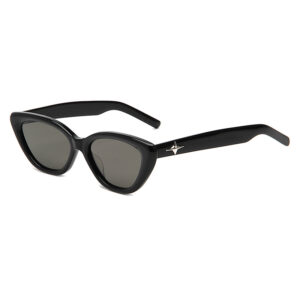
2026-y2k-cat-eye-acetate-sunglasses factory-direct european-style export-grade SOUND NET
Read more -
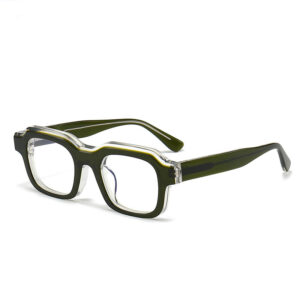
8mm-thick-acetate-optical-frames wholesale manufacturer colorful-trend FLEXXXY
$50.00 Select options This product has multiple variants. The options may be chosen on the product page -

Acetate Eyewear Distributor 19354
$90.00 Select options This product has multiple variants. The options may be chosen on the product page -
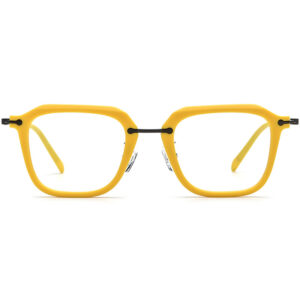
Acetate Eyewear Lots Wholesale – 185843
$30.00 Select options This product has multiple variants. The options may be chosen on the product page -
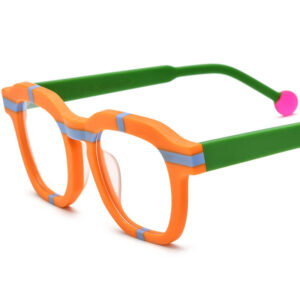
Acetate Eyewear Manufacturer – 19363
$90.00 Select options This product has multiple variants. The options may be chosen on the product page -
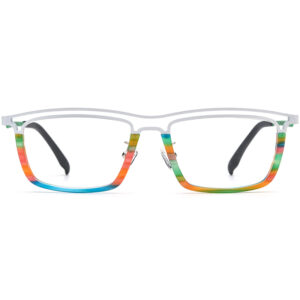
Acetate Eyewear Supplier – 185799
$30.00 Select options This product has multiple variants. The options may be chosen on the product page -
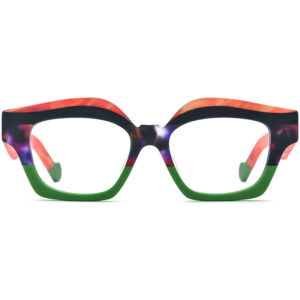
Acetate Eyewear Suppliers In China – 19346
$30.00 Select options This product has multiple variants. The options may be chosen on the product page -
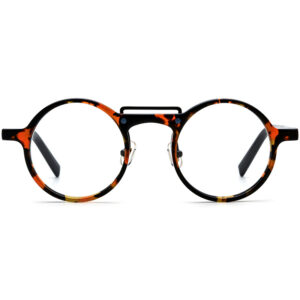
Acetate Eyewear Wholesale Distributors – 19194
$30.00 Select options This product has multiple variants. The options may be chosen on the product page -
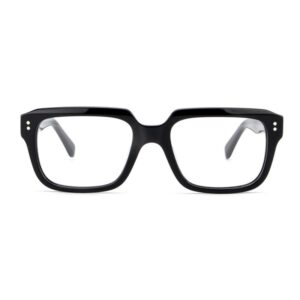
Acetate Eyewear Wholesale Suppliers – LT1115
$80.00 Select options This product has multiple variants. The options may be chosen on the product page -
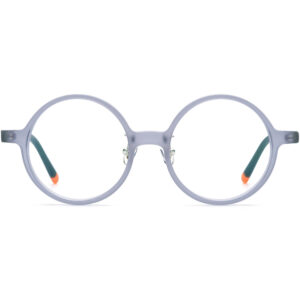
Acetate Eyewear Wholesaler – 19265
$30.00 Select options This product has multiple variants. The options may be chosen on the product page -

Acetate Sunglasses Distributor – 19398T
$30.00 Select options This product has multiple variants. The options may be chosen on the product page -

Acetate Sunglasses Lots Wholesale – 19272T
$30.00 Select options This product has multiple variants. The options may be chosen on the product page -

Acetate Sunglasses Manufacturer – 1857T
$30.00 Select options This product has multiple variants. The options may be chosen on the product page
Before Ordering More, Check What the Other Stores Already Have
One advantage of operating multiple locations is that stock doesn’t always need to be purchased externally.
Sometimes the frame a store needs is already sitting in another branch.
Imagine one location running low on a particular titanium frame while three other stores have a combined 30 units that haven’t sold for several months.
Before placing another supplier order, the purchasing team could review whether some of that stock can be transferred.
If the frame costs $35 wholesale, transferring 20 existing units could avoid $700 in immediate replacement purchases. That is a cash-flow benefit, not a $700 profit, and transfer expenses and stock requirements at the sending stores still need to be considered.
The more interesting question is why those units ended up in the wrong stores in the first place.
An occasional transfer is normal. Repeated transfers of the same styles may indicate that the chain’s original stock allocation is poorly matched to actual demand.
Good inventory reporting should help purchasing managers identify those patterns.
Rather than simply moving stock from one location to another, the company can adjust its next order so the most suitable stores receive more from the beginning.
What Should a Wholesale Eyewear Supplier Actually Deliver?
For an experienced purchasing manager, a large product catalog and a competitive quotation are only the beginning of supplier evaluation.
A chain may already have dependable suppliers for its core assortment. The challenge is often finding additional products that strengthen the collection without duplicating what it already carries.
This is particularly relevant in premium eyewear.
According to The Vision Council’s first-half 2026 research, 92% of surveyed U.S. eye care providers reported carrying frames priced at $350 or more. That doesn’t mean premium frames dominate sales, but it does show that higher-priced eyewear remains part of the offering at many practices, despite wider economic pressures.
For a mature retail chain, the question isn’t simply whether customers will pay more for a frame.
It’s what makes a particular design worth carrying at that price.
A premium acetate frame needs to offer more than a familiar shape in a different color. The proportions, finish, material quality, and overall design should give retail staff something meaningful to present to customers.
The same applies to titanium and other higher-end frame categories.
A supplier with a carefully selected range of distinctive products may be more useful than one offering hundreds of near-identical styles.
However, design is only half the consideration.
Before introducing a new wholesale partner, buyers should establish whether product specifications are reliable, whether chosen styles are available from stock, and what happens when they need to reorder.
A retailer may find an attractive new collection, but if the supplier cannot provide continuity on successful styles, the buyer needs to treat the range as a limited opportunity rather than a dependable core assortment.
This distinction is especially important when rolling products out across multiple stores.
For an established optical chain, the most useful supplier isn’t necessarily the one with the lowest opening price or the largest minimum order. It’s the one whose products and ordering arrangements solve a specific gap in the existing assortment.
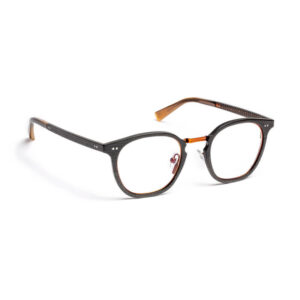
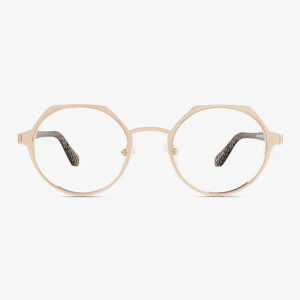
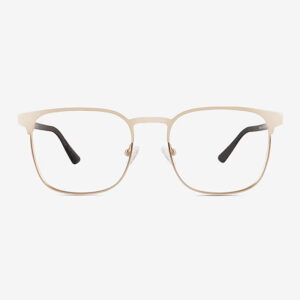
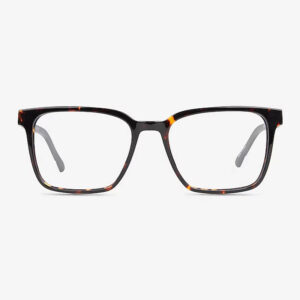
At EyewearBeyond, professional buyers can explore premium acetate, titanium, metal, and designer-style wholesale eyewear collections. Selected ready-stock ranges support flexible purchasing, including published minimums starting from 10 pieces for eligible products, subject to the collection and available stock.
For retailers already working with established suppliers, this type of assortment can provide another sourcing option for testing distinctive designs or expanding selected product categories without immediately committing to a fully customized production run.
The important step is to confirm the actual product selection, available quantities, and repeat-order arrangements before building those frames into a multi-store purchasing plan.
The Purchasing Metrics That Deserve More Attention
There’s no shortage of inventory reports in a modern retail operation. The challenge is deciding which information should influence purchasing decisions.
For a chain buyer, several measures are particularly useful.
Sell-through rate helps reveal how much of a purchased assortment has sold within a defined period. A low figure may point to excessive initial quantities, unsuitable allocation, or weak customer demand.
Stock aging highlights frames that have been sitting for long periods. This is especially important for fashion-led designs, where customer interest may change before inventory is cleared.
Stockout frequency helps identify products whose recorded sales may understate demand because stores repeatedly run out.
Gross margin return on inventory investment (GMROI) goes further by relating gross margin to the average inventory investment. A product may generate attractive sales revenue but still be inefficient if the business must hold substantial quantities to achieve those sales.
These measures shouldn’t be viewed in isolation.
A distinctive premium frame may sell more slowly than a conventional everyday design while still contributing to the store’s positioning and attracting a different type of customer.
Likewise, some core products may justify holding more stock because running out would be commercially costly.
The objective isn’t to force every frame into the same turnover target. It’s to understand why the business carries each category and whether the level of inventory is justified.
A Better Purchasing System Starts With Better Questions
An established optical chain doesn’t necessarily need a new procurement platform, a complete supplier overhaul, or a complicated assortment formula.
It may simply need to challenge a few purchasing habits.
When a supplier offers an additional volume discount, is the saving worth the extra stock commitment?
When a frame performs well across the chain, is demand evenly distributed—or concentrated in a handful of stores?
When a manager requests another order, could existing stock be transferred from another location?
When a new premium collection becomes available, does it fill a genuine gap, or does it duplicate products the chain already struggles to sell?
And when buyers evaluate a new supplier, are they looking only at the opening order, or are they also considering what happens six months later?
These questions sound simple. Answering them consistently across 20, 50, or 100 locations is where the real purchasing discipline lies.
The optical retail market is unlikely to reward indiscriminate inventory expansion when consumers are becoming more deliberate about their purchases.
For mature chains, better margins won’t always come from negotiating another dollar off the wholesale price. They may come from putting fewer of the wrong frames in the wrong stores, keeping proven sellers available, and introducing new designs with a clearer understanding of the financial risk.
That is what efficient multi-store eyewear purchasing should accomplish.
For optical retailers and distributors looking to add distinctive styles to an established assortment, explore EyewearBeyond’s wholesale collections or contact the team to discuss suitable designs, current availability, and purchasing requirements.