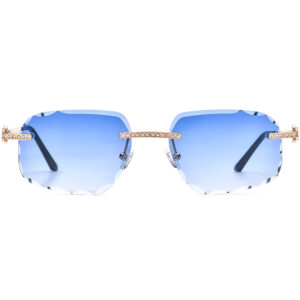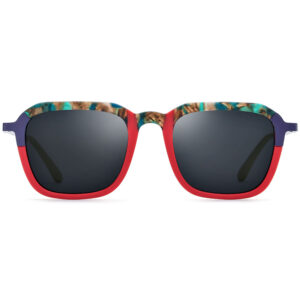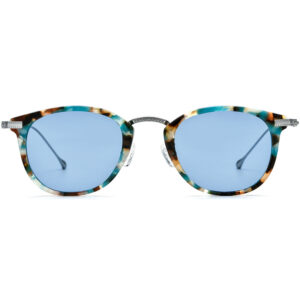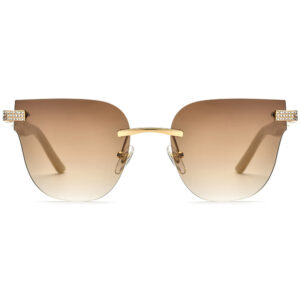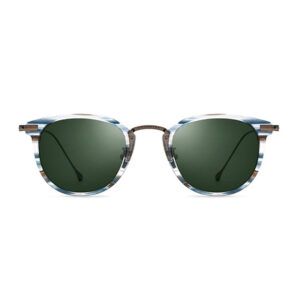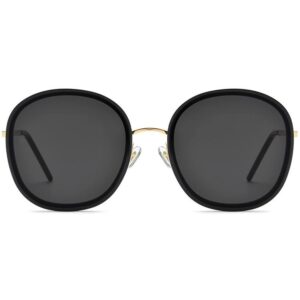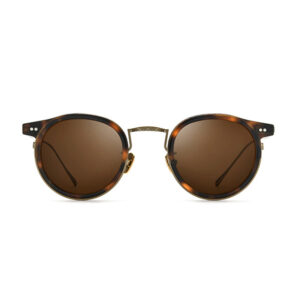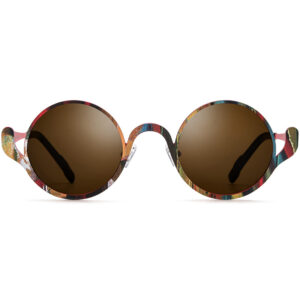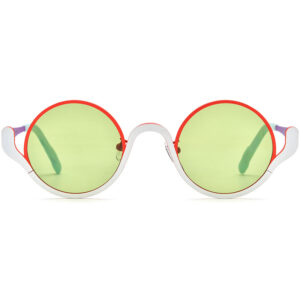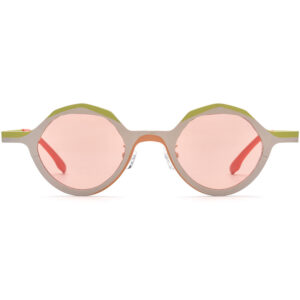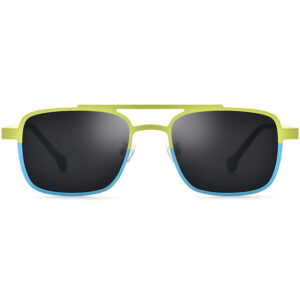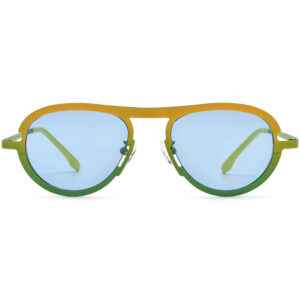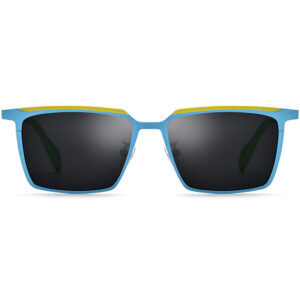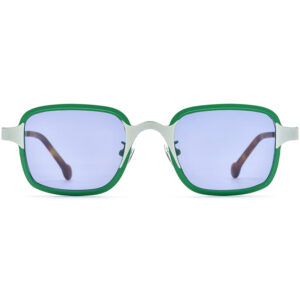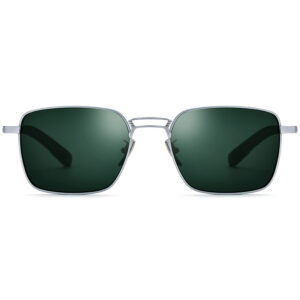
You have a sunglasses concept, several renderings, a few measurements, and maybe a reference frame.
Is that enough to ask a manufacturer for a sample?
Sometimes, yes.
Sometimes, a 20-page presentation is still not enough.
The difference is not how many pages you send. It is whether the manufacturer understands what you have already decided, what still needs development, and what must not be guessed.
That is the real purpose of an eyewear tech pack.
A good tech pack does not need to answer every possible manufacturing question before the first sample is made. It needs to transfer the important product decisions from the brand to the manufacturer without losing the original design intent.
For a custom eyewear project, that normally means answering five questions clearly:
What is fixed?
What is only a target?
What is still open for development?
Which reference takes priority if two files disagree?
What has already been approved?
Get those right, and sampling becomes much easier.
Get them wrong, and even a very detailed drawing can produce the wrong frame.
What Is an Eyewear Tech Pack, and What Is It Actually Used For?
An eyewear tech pack is the working specification that connects a design idea with manufacturing.
It can contain frame drawings, dimensions, materials, lens requirements, colors, logos, hardware, finishes, packaging information, and revision records.
But it should not be confused with a CAD file.
A CAD model primarily describes geometry.
A tech pack defines the product.
A STEP file might tell a manufacturer exactly how the temple is shaped, but it may not tell them whether the exposed metal should be polished or brushed, which lens tint is approved, which logo method should be used, or whether the hinge shown in the model is mandatory or simply an early design placeholder.
This is why a strong development package often includes both technical geometry and written product specifications.
There are also established standards for eyewear measurements. ISO 8624:2020 specifies a measuring system and vocabulary for spectacle frames and remains the current edition after being reconfirmed in 2025.
Standards help create a common language.
They do not replace the need to explain what makes your frame different.
What Type of Eyewear Development Project Are You Starting With?
Not every custom eyewear project starts from the same point.
Some brands arrive with finished engineering files. Others arrive with a hand sketch and a clear idea of what they want the product to feel like.
Both can be workable.
What changes is how much product development still needs to happen before the first meaningful sample.
Do You Already Have Complete CAD Files for Full Custom Development?
This is the most technically developed starting point.
You may already have STEP, IGES, SolidWorks, Rhino, or another usable 3D format together with 2D drawings.
That can reduce interpretation around the frame geometry.
But it does not mean the project is production-ready.
The manufacturer may still need confirmation of materials, lens specification, colors, plating, logo process, hardware, packaging, tolerances, and how the product should fit.
CAD can answer what the object looks like geometrically.
It does not automatically answer how the finished product should be manufactured.
Can You Start Eyewear Development From a 2D Technical Drawing?
Yes.
A good front, side, and top drawing with useful dimensions can provide enough information for a manufacturer to begin engineering the frame in 3D.
The important part is consistency.
If the front view suggests one lens shape while the side view suggests a different front curvature, the factory has to decide which interpretation is correct.
That is exactly the type of decision a tech pack should prevent.
Can a Manufacturer Develop a New Frame From a Reference Sample?
Yes, and this is common.
A brand may like the fit of one frame, the lens shape of another, and the temple construction of a third.
The mistake is simply sending the reference and writing:
“Make something similar.”
A reference frame works much better when the brand explains what should be followed, what should be changed, and what should be ignored.
We will come back to that later.
Can You Start Sampling From a Sketch, Rendering, or Concept Image?
Yes.
A sketch, AI concept, Photoshop rendering, or mood board can be a perfectly reasonable place to start product development.
But the first sample should then be understood as part of the development process, not simply an execution of an already finished product.
The less technical information available at the beginning, the more engineering decisions the manufacturer will need to help resolve.
That is not necessarily a problem.
It just needs to be understood by both sides.
Which Tech Pack Details Should Be Locked, Targeted, or Left Open?
One of the most useful ways to prepare an eyewear tech pack is to stop treating every specification as equally final.
We recommend thinking about information in three categories.
| Status | What It Means | Example |
|---|---|---|
| LOCKED | Must not be changed without approval | Lens shape, logo artwork, signature temple detail |
| TARGET | Desired result, but may be refined during sampling | Weight, temple curvature, front thickness, fit |
| OPEN | Manufacturer can recommend the technical solution | Screw type, internal structure, some hinge details |
This distinction solves a surprisingly common problem.
Imagine a tech pack says:
Temple thickness: 4.0 mm
What does that actually mean?
Is 4.0 mm a critical design requirement?
Is it simply what the designer estimated from a rendering?
Can the factory change it to 4.3 mm if the extra thickness improves strength?
Without context, the manufacturer does not know.
A factory should not have to guess whether a number is a design requirement or an early idea.
That is why the most effective tech packs do more than give specifications.
They show the status of the decision.
What Basic Product Information Should Every Eyewear Tech Pack Include?
Before getting into detailed dimensions, identify the product clearly.
Every frame should have a stable style number or development code.
For example:
Style: EB-SUN-027
Category: Fashion Sunglasses
Target: Unisex
Main Material: Acetate
Development Route: Full Custom
Version: V1.2
Date: September 2026
This may sound administrative, but it becomes important very quickly.
Imagine developing 15 styles.
Each goes through three or four sample rounds.
Some receive new lenses. Others receive revised temples. Two get new hinges. Another changes from V1.1 to V1.2 after fit testing.
Without clear style codes and version numbers, people begin referring to:
“the black sample,”
“the second one,”
or:
“the latest drawing.”
That is where mistakes start.
Which Frame Views Should You Show Before Sampling?
A front rendering is useful for understanding style.
It is rarely enough to understand construction.
At minimum, a custom eyewear development drawing should normally communicate the frame from the front, side, and top.
A three-quarter view is also helpful.
Why?
Because a front view may show the lens shape perfectly while revealing almost nothing about the front curvature, temple bow, hinge construction, nose area, end-piece geometry, or thickness transition.
This becomes particularly important with:
wraparound sunglasses,
thick acetate,
wide temples,
complex end pieces,
and mixed-material frames.
A drawing should not only make the frame look attractive.
It should help another person understand how the object exists in three dimensions.
Which Frame Dimensions Does Your Manufacturer Actually Need?
Most buyers are familiar with the standard frame numbers such as:
52□18-145
These typically communicate lens width, bridge size, and temple length.
They are useful.
They are not a complete custom-frame specification.
Depending on the design, development may also require total front width, lens height, front thickness, rim width, temple thickness, temple width at specific locations, opening width, end-piece dimensions, hinge position, bridge geometry, and curvature.
That does not mean you should place a dimension on every line of the drawing.
More numbers do not automatically create a better tech pack.
A better rule is:
Dimension the features that materially affect appearance, fit, assembly, or component compatibility.
If changing a measurement by 2 mm noticeably changes the product, it probably deserves attention.
If a dimension exists only because someone wanted the technical drawing to look more complicated, it may not add much value.
The purpose is control, not decoration.
How Should Critical Frame Dimensions Be Measured?
A number without a clear reference point can still be ambiguous.
For example:
Logo position: 35 mm from front.
From where?
The front edge of the temple?
The hinge center?
The beginning of the metal core?
And where does the 35 mm measurement end?
At the start of the logo?
Its center?
Its final letter?
A clearer specification might say:
Logo centerline positioned 35 mm from the hinge center along the outer temple surface.
Now both sides understand the same measurement.
The same issue appears with temple width.
If a temple tapers from 12 mm at the hinge to 7 mm in the middle and 5 mm at the tip, simply writing:
Temple width: 10 mm
does not define the product properly.
This is why reference points, or datums, matter.
A measurement without a datum can still be ambiguous.
Are the Standard 52□18-145 Measurements Enough to Define Frame Fit?
No.
Two frames can both be marked:
52□18-145
and still fit very differently.
Frame fit is affected by much more than three printed numbers.
The bridge shape can change how high the frame sits.
Temple opening affects side pressure.
Front curvature changes facial clearance.
End-piece geometry changes effective frame width.
Pantoscopic angle changes how the lenses sit relative to the face.
Weight distribution can make a technically correct frame feel uncomfortable after thirty minutes.
This matters even more with:
low bridges,
high-wrap sunglasses,
oversized acetate,
heavy decorative temples,
and narrow fashion frames.
The numbers printed inside a temple are useful reference data.
They are not a complete description of fit.
How Specific Should Your Frame Material Requirements Be?
“Acetate frame” is a starting point.
It is not always a complete material specification.
If a particular acetate sheet is essential to the design, the pack should identify the supplier or material reference where possible.
If the pattern orientation matters, that should also be explained.
If only the general material category matters, there is no reason to pretend otherwise.
A specification could simply say:
Material family: premium acetate
Final sheet supplier: manufacturer to recommend
Target appearance: translucent smoke grey
The same approach applies to metal.
Instead of simply writing:
Metal frame
consider whether the design requires stainless steel, titanium, another alloy, a particular plating process, or a specific surface finish.
For injected products, the same logic applies to TR90, nylon, and other engineering materials.
Again, the important distinction is:
What has the brand already decided, and what should the manufacturer help choose?
What Should an Eyewear Bill of Materials Include?
A Bill of Materials, or BOM, helps turn the frame into a collection of controllable components.
A simple sunglasses BOM might look like this:
| Component | Specification |
|---|---|
| Front | Acetate, approved sheet reference |
| Temples | Acetate, matching front |
| Hinges | 5-barrel, final specification after engineering review |
| Screws | Stainless steel |
| Core Wire | Custom patterned metal |
| Lenses | Nylon, solid tint |
| Temple Logo | Metal insert |
| Inner Temple Marking | Pad print |
| Case | Custom PU case |
| Cleaning Cloth | Printed microfiber |
The BOM does not need to force the brand to specify technical details it does not understand.
It should simply make every important component visible.
If a component exists in the product, someone should know whether it is:
brand specified,
factory recommended,
or still awaiting approval.
What Lens Specifications Should You Give Your Manufacturer?
“Grey lens” is rarely enough information for a custom sunglass.
Depending on the project, lens specifications may include:
material,
color,
visible light transmission,
UV requirements,
polarized or non-polarized construction,
gradient,
mirror coating,
photochromic function,
base curve,
edge treatment,
and prescription compatibility.
Not every project needs every one of these.
But anything that materially affects appearance or performance should be discussed before approval.
This is especially important with fashion lenses.
A “light brown” lens can mean very different things depending on material, thickness, coating, lighting, and the frame color surrounding it.
Whenever the lens itself is important to the product identity, approve the real lens or assembled sample rather than relying only on a screen reference.
Is “Grey Lens” or “6-Base Lens” Enough Information for Sampling?
Usually not if curvature is important to the product.
The lens base curve, frame-front curvature, and overall wrap of the assembled sunglass are related.
They are not interchangeable terms.
This matters greatly with:
sports sunglasses,
fashion wraps,
shields,
and highly curved acetate frames.
A manufacturer should evaluate the lens and frame as a system.
If the designer only writes:
6-base lens
but the CAD geometry suggests a different frame curvature, the factory may still need clarification before tooling or lens development proceeds.
A final physical sample is often the best way to judge whether the complete geometry produces the intended look and fit.
How Should You Specify Frame Colors and Surface Finishes?
Color names such as:
Wine Red,
Gold,
Tortoise,
or Dark Grey
are useful conversational descriptions.
They are weak production standards.
Whenever possible, provide a better reference.
That might be:
a Pantone number,
an acetate supplier sheet code,
a physical chip,
an approved plating sample,
a lens master,
or an approved frame.
Surface finish also matters.
For metal parts, “gold” does not explain whether the finish should be:
high-polish,
satin,
brushed,
matte,
or somewhere between them.
For acetate, the same color can look different depending on transparency and polishing.
The more visual the requirement, the more useful a physical reference becomes.
Is a Pantone Number Enough to Approve an Eyewear Color?
Sometimes.
Not always.
Pantone can be very useful when communicating printed graphics or certain relatively uniform colors.
It becomes less complete when the material itself changes the appearance.
A Pantone number cannot fully describe:
a translucent acetate,
a layered Havana pattern,
a marble effect,
a mirrored lens,
a gradient tint,
or an irregular tortoise sheet.
In these situations, the physical material is part of the color.
That is why an approved sample can sometimes be a stronger production reference than a color code alone.
What Logo Information Does a Manufacturer Need Before Sampling?
Sending an AI or PDF logo file is only the first step.
The manufacturer still needs to know how the logo belongs on the product.
Useful information can include:
size,
position,
orientation,
color,
application method,
engraving depth,
and, for inserted metal logos, component thickness.
A temple logo could be:
laser engraved,
pad printed,
hot stamped,
embossed,
engraved and filled,
a metal insert,
or another custom component.
Those options can create completely different results even when the artwork is identical.
Positioning also needs a clear reference.
“Place logo 30 mm from the hinge” is better than “put the logo near the front.”
“30 mm from hinge center to logo center” is better still.
Do You Need to Specify the Hinge, Screws, and Every Hardware Detail Yourself?
No.
This is an area where brands sometimes overcomplicate their tech packs.
A designer reads that a professional specification should contain detailed hardware information and then starts choosing engineering components without really knowing why.
That does not necessarily improve the product.
If a particular exposed hinge is central to the frame design, define it.
If the brand requires a spring hinge, say so.
If a decorative screw head is visually important, specify it.
But if the requirement is simply:
A durable hinge with smooth movement suitable for this acetate construction,
it may be better to allow the manufacturer to recommend the appropriate system.
A good tech pack does not force the brand to make engineering decisions it is not qualified to make.
It makes clear who owns the decision.
Does Packaging Need to Be Final Before the First Frame Sample?
Usually not.
If the immediate goal is to evaluate the frame shape, fit, material, and construction, final retail packaging may still be under development.
That is perfectly reasonable.
Packaging can remain:
TBD
during an early frame sample.
Before bulk production, however, packaging becomes part of the finished product specification.
At that stage, details such as the case, cloth, box, labels, polybags, barcode, stickers, manuals, and carton requirements should be confirmed.
This leads to an important distinction.
The tech pack needed to start development is not necessarily the same document needed to control mass production.
What Is the Difference Between a Sampling-Ready and Production-Ready Tech Pack?
A sampling-ready tech pack needs enough information to create a meaningful prototype.
A production-ready tech pack needs enough information to reproduce the approved product consistently.
Those are different standards.
| Information | Before First Sample | Before Bulk Production |
|---|---|---|
| Frame Shape | Clearly defined | Locked |
| Critical Dimensions | Required | Finalized with tolerance where needed |
| Material | Direction required | Exact approved material |
| Lens | Direction required | Exact approved specification |
| Color | Reference required | Approved master |
| Logo | Usually required | Final artwork and application |
| Hardware | Can remain open | Finalized |
| Packaging | Can be TBD | Required |
| QC Requirements | Basic expectations | Final standards |
| Approved Physical Sample | Not yet available | Required where applicable |
This is why writing TBD in the right place can actually be more professional than inventing a false specification.
It tells everyone:
“This decision is still open.”
The problem is not an unfinished decision.
The problem is an unfinished decision that everyone mistakenly thinks has already been made.
Can You Start Eyewear Sampling Without CAD or a Complete Tech Pack?
Yes.
A brand may start with a sketch and measurements.
Another may provide a physical reference frame and modification notes.
Another may send a rendering with a target size.
Another may already have a finished CAD model.
All four can be legitimate development routes.
The difference is how much product engineering remains.
If you do not yet have a complete technical package, focus first on communicating your design intent clearly.
Explain which features are essential.
Explain the target fit.
Explain what makes the frame different.
And explain which areas you expect the manufacturer to help develop.
The less technical information you have, the more important it becomes to communicate what must not change.
If You Send a Reference Frame, How Does the Factory Know What to Copy and What to Change?
This is where a simple framework can prevent a lot of misunderstanding.
Use:
FOLLOW
CHANGE
IGNORE
For example, imagine you send a physical frame because you like how it fits.
Your notes might say:
| Instruction | Requirement |
|---|---|
| FOLLOW | Bridge fit, overall front width, temple length |
| CHANGE | Lens shape, front thickness, temple design |
| IGNORE | Logo, colors, decorative hinge |
Now the factory understands why the sample was sent.
Without this information, a manufacturer may reasonably assume that more of the reference should be reproduced.
A reference product should never be treated as self-explanatory.
Explain what the reference is referencing.
What Should Happen When Your CAD, Drawing, Sample, and Email Instructions Do Not Match?
This happens more often than many brands expect.
The CAD says:
Temple length 142 mm.
The PDF drawing says:
145 mm.
The physical sample measures:
144 mm.
Then a later email asks for:
143 mm.
Which one is correct?
The answer should not be:
“Let the factory decide.”
Your project needs a clear reference hierarchy.
For example:
Latest approved tech pack
takes priority over:
approved CAD
which takes priority over:
earlier development samples
while all obsolete files are clearly marked as superseded.
The exact hierarchy can vary by project.
What matters is having one.
When two references disagree, the factory should never have to decide which one represents the brand’s intent.
How Should You Control Tech Pack Versions During Sampling?
Avoid this:
final.pdf
final-new.pdf
final-new-2.pdf
final-revised.pdf
final-revised-LAST.pdf
The names feel harmless until the factory, product manager, designer, and QC team each have a different “final.”
Use controlled versions instead.
For example:
EB102_V1.0
First development file.
EB102_V1.1
Bridge changed.
EB102_V1.2
Temple thickness changed.
EB102_V1.3
Lens color approved.
EB102_V1.4_APPROVED
Final production reference.
Each revision should ideally record what changed.
You do not need a complicated enterprise system.
You need enough control that everyone knows which document is current.
What Is a Golden Sample, and Why Does It Matter Before Bulk Production?
Some product characteristics are difficult to describe perfectly in text.
A tortoise acetate pattern.
The exact resistance of a hinge.
How a frame sits on the nose.
The final gloss level.
A subtle lens tint.
This is where an approved physical sample becomes extremely valuable.
Many teams refer to this as an:
Golden Sample
or:
Master Sample
It provides a physical reference for what the finished product is supposed to look and feel like.
That does not make the tech pack unnecessary.
The two should work together.
The tech pack tells the factory what to control. The approved sample shows what “correct” looks and feels like.
Should the Tech Pack or the Approved Sample Control Bulk Production?
Ideally, both should agree.
If they do not, the conflict must be resolved before production.
For example, suppose the approved sample has a 4.2 mm temple but the final drawing still says 4.0 mm.
Do not simply start production and hope everyone follows the same interpretation.
Update the documentation.
Record the final approved value.
Then confirm which physical sample represents the production standard.
The production team should not need to reconstruct the history of the project to discover what was intended.
By the time bulk production starts, the important development decisions should have been converted into clear approved standards.
What Should Your Manufacturer Review Before Making the First Sample?
A manufacturer should not only receive the files.
They should review whether the design can reasonably become a physical product.
That review may include:
whether the proposed material supports the geometry,
whether the lens and front curvature are compatible,
whether the hinge has enough space,
whether an extremely thin area is strong enough,
whether a logo process works at the requested size,
whether the target weight is realistic,
whether a decorative feature creates an assembly problem,
and whether the proposed construction fits the intended price level.
This is essentially a manufacturability review.
The best time to identify these problems is before tooling and sampling.
Not after.
Should a Good Manufacturer Simply Follow Your Tech Pack Without Question?
Not always.
If the tech pack is technically sound and fully approved, the manufacturer should follow the agreed requirements.
But during product development, blindly following an obvious problem does not help either side.
Imagine a designer creates a very thin acetate hinge area.
The rendering looks beautiful.
The factory knows from experience that it may crack during assembly or use.
The right response is not:
“The customer drew it, so we made it.”
The right response is:
“This area may create a structural risk. Here is why. We recommend increasing the thickness from X to Y. Would you like us to revise the development sample?”
That is the difference between manufacturing and product development.
A good factory should not silently redesign your product.
But it should identify manufacturing risks early enough for you to make an informed decision.
What Tech Pack Mistakes Most Often Lead to Bad Eyewear Samples?
Did You Send Only a Rendering Without Technical Information?
A rendering is excellent for communicating style.
It may not communicate dimensions, construction, curvature, thickness, or how components connect.
Use it as a visual reference, not as the entire specification.
Did You Provide Only the Standard 52□18-145 Size?
Those three numbers are useful but do not fully define the fit or geometry of a custom frame.
Include the additional dimensions that materially affect the product.
Did You Forget the Side or Top View?
This is especially risky for wrap, thick acetate, unusual temples, and complex bridge structures.
A front view hides a lot.
Are Your Measurements Missing Clear Reference Points?
“30 mm from the front” is weaker than “30 mm from hinge center to logo center.”
Remove unnecessary interpretation.
Did You Write “Same as Photo” Without Explaining What Should Match?
Shape?
Color?
Finish?
Proportion?
Fit?
Hinge?
A reference photo can support a specification.
It should not replace one.
Did You Use Color Names Without a Physical or Standard Reference?
“Champagne,” “burgundy,” and “dark tortoise” can mean very different things to different people.
Use better references wherever possible.
Did You Specify the Frame but Forget the Lens?
For sunglasses especially, the lens is part of the design.
Do not wait until the end of development to decide it.
Are Different Versions of Your Drawings Being Used at the Same Time?
One outdated PDF can undo several rounds of development.
Version control matters.
Are You Specifying Engineering Details You Do Not Fully Understand?
A tech pack should not be a performance of technical knowledge.
If you do not care which internal screw type is used, let the engineer recommend it.
Save your attention for decisions that actually affect the brand and product.
Are You Treating the First Sample as If It Should Already Be the Final Product?
For a genuinely new custom design, the first sample is often where theory becomes reality.
Fit may need adjustment.
Thickness may change.
The lens may look different in the real frame.
A color combination may not work as expected.
That is what sampling is for.
The objective is not to prove that V1 was perfect.
It is to reach a product worth producing.
Is Your Eyewear Tech Pack Ready for the First Sample?
You do not need every bulk-production decision finalized before requesting the first sample.
But you should be able to answer the important questions.
Is the style clearly identified?
Can the manufacturer see the frame from enough angles?
Are the important dimensions defined?
Do measurement references make sense?
Is the material direction clear?
Is the frame color understood?
Is the lens requirement clear enough for the first sample?
Are logo artwork and placement defined if branding is needed?
Does the manufacturer know what is locked and what remains open?
If you supplied a reference product, have you explained what to follow, change, and ignore?
Does the file have a version number?
If the answer to those questions is yes, you are usually in a much stronger position to start meaningful development.
What Additional Information Can Make Eyewear Development Faster?
A complete CAD model can help.
So can physical material chips, Pantone references, an existing frame that represents your target fit, a clear BOM, hardware references, target weight, packaging direction, and a planned launch date.
But these are valuable because they remove uncertainty.
Not because every tech pack needs to look identical.
A small independent eyewear brand developing its first acetate sunglass does not need the same documentation system as a multinational optical company.
The level of specification should match the complexity and maturity of the project.
Which Details Can Your Manufacturer Help You Develop?
A capable eyewear development partner should be able to help resolve areas such as engineering thickness, internal construction, component selection, hinge options, screw systems, manufacturable material alternatives, and some finishing decisions.
This is particularly useful when a designer knows exactly how the frame should look but does not know the best way to engineer a certain detail.
That is normal.
Design intent and manufacturing engineering are different skills.
The purpose of collaboration is to connect them.
What Makes an Eyewear Tech Pack Actually Useful?
The best tech pack is not the one with the most pages.
It is the one that leaves the fewest important decisions ambiguous.
Before sampling, your manufacturer should understand:
What is locked?
What is a target?
What is still open?
Which reference has priority?
What has already been approved?
As development continues, open questions should gradually become approved specifications.
A sketch becomes a drawing.
A material direction becomes an approved sheet.
A lens reference becomes an approved lens.
A first prototype becomes a revised sample.
And eventually:
Sampling-Ready → Revised → Approved Sample → Production-Ready
That is how a tech pack should evolve.
It is not simply a document you prepare once and send to a factory.
It is the record of the decisions that turn an eyewear concept into a repeatable physical product.
If you already have CAD files, technical drawings, or an existing tech pack, Eyewearbeyond can review them before sampling and identify areas that may need clarification or manufacturing adjustment.
If you are earlier in the process and only have sketches, concept images, renderings, or a physical reference frame, that can also be a valid starting point.
The important thing is not pretending that every question has already been answered.
It is knowing which questions need to be answered next.