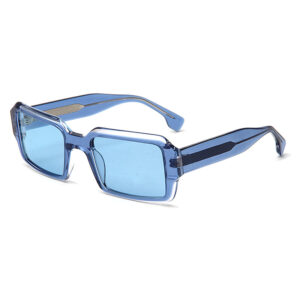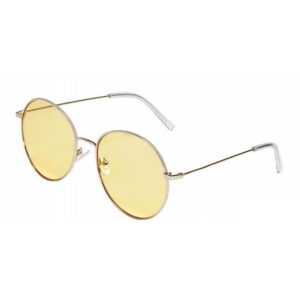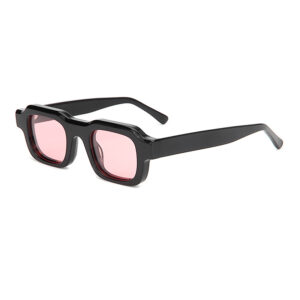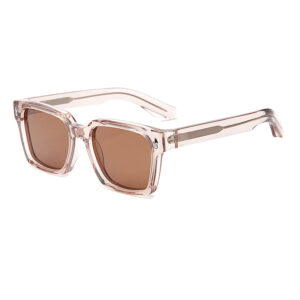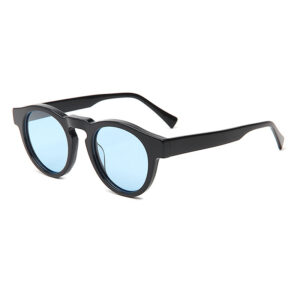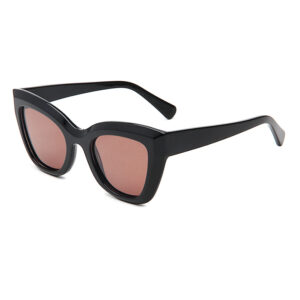
When it comes to rimless eyewear, every detail matters. There’s no frame to hide behind. No bold acetate to carry the look. What your customers see is exactly what you deliver: lenses, temples, screws, and craftsmanship.
That’s why more and more premium brands and optical designers are turning to a quiet, subtle—but incredibly powerful—technique to elevate their rimless frames:
Diamond cutting.
But what is diamond cut in the context of eyewear? Why does it matter for rimless glasses specifically? And what role does it play in product performance, aesthetics, and customer satisfaction?
Let’s take a deep dive.
What is Diamond Cut in Eyewear Manufacturing?
In eyewear production, diamond cut refers to a lens edge finishing process that uses a high-precision, diamond-coated blade or tool to polish and refine the edges of lenses—especially those that are exposed, as in rimless glasses.
The purpose? To transform a raw, functional lens edge into a smooth, clear, high-gloss surface that reflects light beautifully and feels flawless to the touch.
Think of it like jewelry polishing. Rough edges become crystal-like borders. The lens doesn’t just disappear—it shines.
At Eyewearbeyond, we use diamond-edge lens finishing machines specifically calibrated for rimless frames. These machines spin diamond-coated wheels at ultra-high RPMs to create a clean, consistent edge—without warping the lens shape or creating stress fractures.
Why It Matters More for Rimless Glasses
Here’s the core reason:
In full-rim eyewear, the lens edge is hidden inside a plastic or metal frame. The customer never sees it.
In rimless eyewear, the lens edge is visible from all angles.
That means:
- Any flaw becomes obvious
- Any unevenness affects the overall look
- Any chipping or roughness reduces the sense of quality
A diamond-cut edge doesn’t just look better—it proves that the lens was cut and finished with precision.
For customers seeking minimalist, luxury, or professional styles, that visual clarity makes all the difference.
Visual Impact: Clarity, Shine, and Sophistication
Diamond-cut edges offer a distinct aesthetic advantage. Compared to standard-cut lenses, diamond-cut lenses:
- Look clearer, more “premium”
- Reflect light cleanly, creating a crystal-like shine
- Blend better with polished metal temples and bridges
- Elevate the overall feel of the glasses—even without logos or colors
In the showroom or on camera, diamond-cut rimless frames catch light subtly. They look refined. Modern. Quietly luxurious.
This is especially important in:
- High-end optical stores
- Direct-to-consumer eCommerce photography
- Designer collaborations
- Glasses intended for professionals or executives
A diamond-cut edge can be the difference between “just glasses” and a piece of product design.
Comfort and Wearability: It’s Not Just About Looks
Diamond-cutting also improves physical experience.
Raw-cut lenses often have:
- Microscopic burrs or sharpness
- Tiny edge irregularities
- Increased friction when touching skin
These flaws may not hurt, but they can irritate customers who wear glasses for 8+ hours a day.
A diamond-finished lens edge:
- Feels smoother on contact
- Reduces pressure points on temples or cheeks
- Minimizes friction during adjustment
- Slides more comfortably into cases or cloth pouches
In short: it’s a better experience for the customer—even if they don’t know why it feels better.
Engineering Advantage: Less Chipping, Longer Lifespan
From a manufacturing perspective, diamond edge polishing reduces long-term risk.
Rimless lenses are drilled, tensioned, and supported only by screws or compression systems. That means the lens edge takes the mechanical load.
If the edge is too rough or uneven, over time you risk:
- Hairline cracks forming at stress points
- Chips at the edge from friction or impact
- Micro-fractures during cleaning or adjustment
Diamond cutting smooths the edge at a microscopic level. This reduces the likelihood of edge fractures, especially in polycarbonate and Trivex lenses, which are most common in rimless models.
It also improves screw mounting stability, because the contact point between metal and lens is more uniform.
How to Know If You’re Getting Diamond-Cut Lenses
Not all rimless frames are diamond-cut—especially at the budget end of the market.
Here’s how to tell:
✅ Visual signs:
- Edge looks glossy, clear, almost glass-like
- No fogginess or haze
- Edge reflects light in a uniform band
- No visible machining lines
✅ Tactile signs:
- Feels smooth, not grainy or sharp
- No “plastic squeak” when rubbed gently
- Uniform curvature without kinks or resistance
✅ Supplier transparency:
- Supplier can confirm “diamond edge polishing” or “diamond lens cut” on invoice or spec
- Machines used are not standard grinder-polishers but diamond-edged rotary polishers
At Eyewearbeyond, all of our rimless OEM and private label collections include diamond edge finishing by default—because we know how much it matters to your end user.
When Should You Use Diamond Cut in Your Rimless Line?
Always, if:
- Your brand is positioned as premium, minimalist, or comfort-driven
- You sell to professionals or luxury buyers
- Your frames are priced above $30 wholesale or $100 retail
- Your rimless lenses have visible lens edges as a design element
- You’re planning to use Trivex or high-index lenses
Diamond cut should also be standard in:
- Product launch campaigns (especially DTC)
- Capsule collaborations with designers
- Eyewear sold in developed markets (e.g. US, Germany, Japan)
- Lenses with custom shapes (where edge symmetry is part of the visual appeal)
Cost Consideration: Is It Worth It?
Yes.
Diamond edge cutting adds $0.20–$0.50 per frame at the manufacturing stage depending on material and volume.
But the perceived value uplift is far greater.
Customers associate edge polish with:
- Higher design quality
- Premium manufacturing
- Optical precision
- Better wear comfort
You can easily price rimless glasses with diamond cut at 15–25% higher MSRP, making it a profitable upgrade with real return on investment.
Common Mistakes to Avoid
When working with a rimless supplier, avoid these pitfalls:
- Assuming diamond cut is standard—it often isn’t
- Choosing CR-39 lenses and expecting perfect polish (PC/Trivex are better)
- Using ultra-thin lenses (<1.5mm edge) and demanding high gloss
- Forgetting to align lens shape and polishing curve—results in inconsistent shine
- Letting assembly teams buff edges manually—leads to uneven finishing
If you want a repeatable, premium result, diamond edge cutting must be done by machine and under QC supervision.
Why Eyewearbeyond Standardizes Diamond Edge Finishing
We’ve built rimless frames for more than 100 international clients.
Here’s what we’ve learned:
Customers notice the lens edge. Retailers notice consistency. Brands notice reviews.
That’s why we made diamond-cut edges a standard in all of our rimless production—custom or stock.
What you get with Eyewearbeyond:
- High-gloss, CNC-symmetric edge polish
- Drill-safe lens materials with anti-chip edges
- Matching polish across sample and production units
- Packaging that protects the lens finish during shipping
- Optional micro-logo etching at edge zone (for signature editions)
We don’t charge extra unless special beveling or edge color treatment is needed. Why? Because diamond cut isn’t a luxury anymore—it’s a requirement for world-class rimless eyewear.
Conclusion: Diamond Cut Is a Small Detail with Big Impact
In rimless eyewear, you don’t have loud colors or chunky frames to impress the customer.
You have clarity. Precision. Quiet luxury.
And nothing embodies that better than a diamond-cut lens edge. It proves care. It shows refinement. It delivers comfort. And it turns a simple pair of glasses into a high-end product your customers can trust.
If you want your brand to stand for elegance, attention to detail, and long-term value—start with the edge.