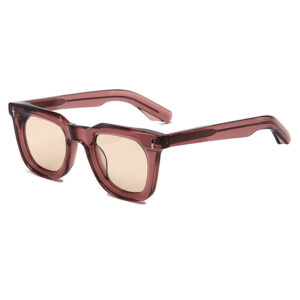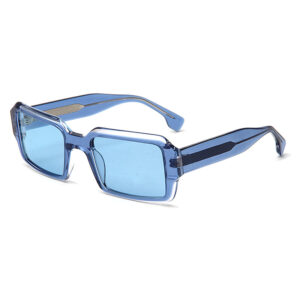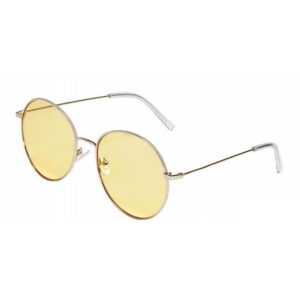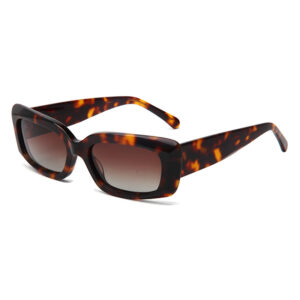
Why Acetate Matters — And Why You Can’t Fake It
Let’s be real: not all acetate is the same. Some looks great in pictures but warps after three months on the shelf. Others feel premium the moment you touch them. The difference? Materials, technique, and most importantly — whether your supplier actually knows what they’re doing.
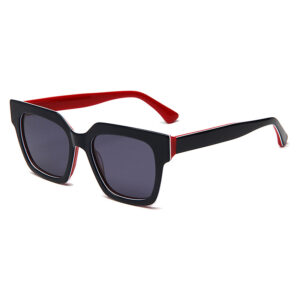
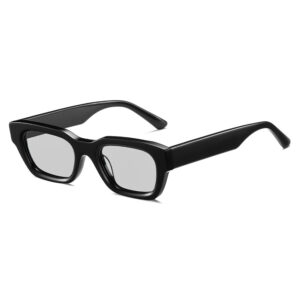
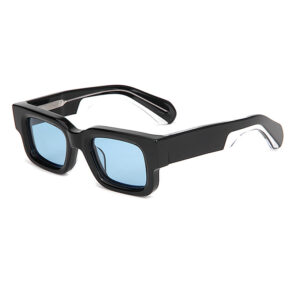
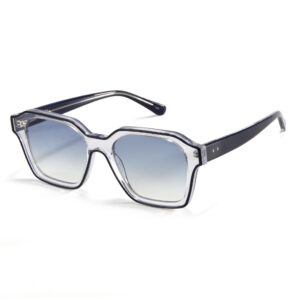
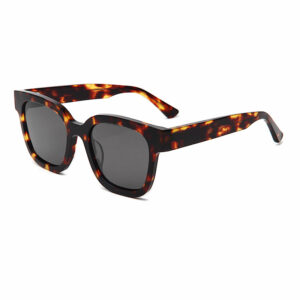
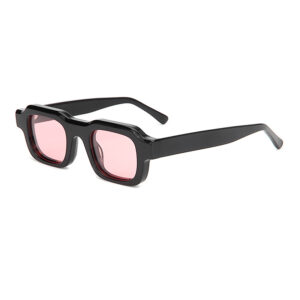
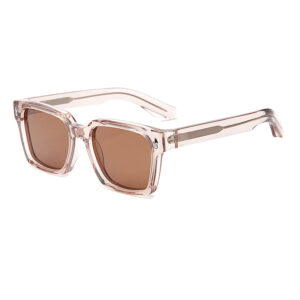
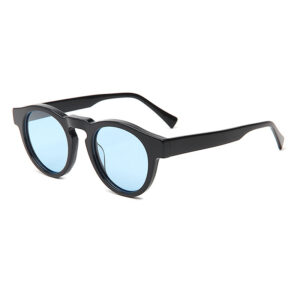
Acetate isn’t just a “better plastic.” It’s a plant-based sheet material that’s cut and polished, not poured into molds. It’s what most high-end sunglasses use — from Ray-Ban to niche boutique brands. If you want your frames to look expensive, last longer, and feel solid in hand, acetate is the standard.
But before you jump in, here’s the catch: most factories can say “we do acetate,” but very few do it right.
2. What Is Acetate, Really? (And What It’s Not)
Acetate is made from cotton and wood pulp — that’s why people say it’s “eco-friendly.” But don’t be fooled by the label. Some factories mix recycled plastic into it, some skip the drying process (to save time), and some buy cheap, brittle sheets just to quote you lower prices.
Real acetate is layered, aged, and polished. It gives you:
- Colors that won’t fade or peel
- Texture that feels solid, not hollow
- Frames that hold their shape over time
- Freedom to customize shape, logo, and even patterns
If you’ve ever held a true acetate frame vs. an injected plastic one, the difference is night and day.
3. Thinking About Making Acetate Sunglasses? Read This First
If you’re launching your own brand or distributing under private label, acetate can make or break your positioning. Done right, your product feels like $100. Done wrong, your returns pile up.
In this guide, you’ll learn:
- How acetate sheets are made (and why drying time matters)
- Which brands of acetate are actually worth the cost
- What affects pricing (with real factory-based price ranges)
- How to avoid common sourcing traps in China
- Whether acetate fits your business model (not just your vision board)
Let’s cut through the marketing talk and get into the stuff that matters.
4. How Acetate Sheets Are Made — And Why It Matters for Quality
If you’re producing acetate sunglasses, you’re not just buying a finished frame — you’re buying a piece of sheet, cut, shaped, and polished. That sheet is everything.
Here’s what most suppliers won’t tell you:
The quality of your final frame is already decided at the sheet level.
The Real Process (For High-Quality Acetate):
- Natural cellulose (from cotton or wood pulp) is mixed with color pigments and plasticizers
- The material is pressed into solid, thick sheets — not molded
- For special patterns (like tortoise), multiple colored layers are laminated by hand
- Drying & aging: Sheets are stored in low-temperature rooms for 30 to 90 days to stabilize
- Only after curing are the sheets cut and used to make frames
Shortcuts = Problems
Factories trying to cut lead times will skip or shorten the drying step. You get frames that warp under heat, twist over time, or crack near the hinges.
What You Should Ask Suppliers:
- What acetate brand do you use? (Mazzucchelli, Jinyu, RZ — real ones have batch IDs)
- How long are the sheets dried before cutting?
- Can I see video proof of your material stock and storage?
If your supplier stutters on these, that’s a red flag.
5. Which Acetate Sheet Brands Are Actually Reliable? (And Worth Your Money)
There are dozens of acetate suppliers out there, but only a few names you can actually trust — especially when you’re producing for export markets.
Let’s break it down 👇
Mazzucchelli 1849 – The Icon (And the Most Expensive)
- Why it’s famous: Deep colors, ultra-clean layers, luxury feel
- Used by: Ray-Ban, DITA, Gucci, basically everyone at the top
- Price impact: Adds $4–$6 per frame, just on material
- Good for: Premium collections, small-batch boutique brands, high-margin eyewear
Reality check: Unless you’re selling your sunglasses at $100+ retail, you might not need it for every SKU. But for one “hero” model in your collection? Totally worth it.
🇨🇳 Jinyu Acetate – Best Overall Value (For B2B Orders)
- Why we use it: Stable supply, rich colors, clean lamination, and better price control
- Popular in: Custom private label orders from USA, EU, and Southeast Asia
- Price impact: Adds ~$2–$3 per frame
- Good for: Middle to high-end sunglasses brands looking to scale with quality
Real talk: If you’re doing rebranding or private label at $39–$79 price points, Jinyu is the smart pick. Most of our customers stick with it.
🇨🇳 Other Chinese Brands to Know:
- RZ Acetate – Clean surface, popular for OEM mass production
- Kingpong / ZHJ – Entry-level pricing, okay for basic SKUs
- YUNKUANG – Trendy patterns, fast on custom sheet colors
Pro tip: Ask your factory if they really stock the brand they quote. Some small shops will name-drop “Mazzucchelli” but actually use domestic blends unless you check.
6. Is Acetate Worth the Extra Cost? Pros, Cons, and Real Use Cases
Let’s not sugarcoat it — acetate is more expensive than TR90 or injected plastic. But here’s the key: your customer can feel the difference. And if you’re positioning your product above the “grab-n-go” category, the extra dollars actually come back as profit.
Why Acetate Is Worth It (When Used Right)
- It looks expensive — because it is
Acetate frames have a natural shine and depth that plastic can’t fake. That “heft” in hand? Customers notice. - The color doesn’t fade or scratch off
It’s not painted. It’s part of the material. Which means no peeling after sun, sweat, or rubbing. - Better comfort = less return rate
Acetate is hypoallergenic, less irritating, and easier to wear all day. That means fewer complaints and better reviews. - Custom branding actually makes sense
Because acetate can be CNC-cut and hand-polished, it’s built for private label — from logos to temple shapes to layered colors.
When Acetate Might Be Overkill
- If your customers are buying sunglasses for $10 resale
- If your goal is to move bulk volume with no brand building
- If you’re doing giveaways, supermarket bundles, or promo items
In those cases, TR90 or injected plastic gets the job done cheaper.
Bottom Line:
If you’re trying to build a brand — not just sell sunglasses — acetate pays off.
You’ll charge more, have fewer returns, and get better reviews.
Most of our buyers selling at $39+ retail stick to acetate for 80% of their SKUs. They know what it’s worth.
7. How Customizable Is Acetate for B2B Orders? (A Lot — If You Pick the Right Factory)
This is where acetate really shines. Unlike plastic injection, where all frames come out of the same mold and just change color, acetate gives you full creative control — shape, color, logo, finish, even texture.
Let’s break down what you can customize
1. Colors & Patterns — Not Just “Pick from Our Catalog”
- Want a custom tortoise mix? Transparent + solid layer combo? Gold flakes in clear acetate?
No problem. If you can describe it, a good factory can blend it. - You can even create your own sheet, minimum about 300–500 pcs per color/model
- Trendy finishes like matte, crystal clear, or gradient layer are also possible
This is how boutique brands stand out — their color isn’t sold on Alibaba.
2. Logo & Branding — Subtle or Bold, Your Call
- Engraved logo inside the temple
- Hot-stamped gold/silver logo
- Embedded logo under clear acetate
- Even custom shape logos at the end tip — all possible
If you want people to remember your brand name, this is where it starts.
3. Frame Shape & Hardware — Go Beyond Generic
- You can start from a standard model and tweak the front shape, temple curve, or bridge
- Or provide your own drawings / samples and we CNC-cut your mold
- Mix acetate with metal cores, spring hinges, titanium accents for a designer-level look
4. Packaging & Labeling — Retail-Ready
- Custom printed boxes, pouches, barcodes
- Pre-labeled with your SKU
- Ready to ship to Amazon FBA or direct to stores
MOQ & Lead Time
- MOQ: 300 pcs per model/color for full customization
- Lead time: 35–45 days depending on sheet stock
- Samples: Usually 10–15 working days
And yes — at Eyewearglobo we support small batch custom production, especially for growing brands that don’t want to be stuck with 10,000 pcs of generic black.
8. So… How Much Does an Acetate Sunglass Really Cost? (And What Are You Actually Paying For?)
Let’s get straight to it: a properly made acetate sunglass frame is going to cost you anywhere between $7.80 and $16.00 FOB — depending on what you ask for.
That’s not cheap. But that’s exactly the point. You’re not buying plastic junk. You’re buying quality that sells at $39–$129 retail, with repeat orders and fewer returns.
Average Price Range (Based on Factory Quotes)
| Product Type | Typical Unit Cost (USD) | Includes |
|---|---|---|
| Entry-Level Acetate (Chinese sheet, stock design) | $7.80 – $9.50 | Ready mold, basic color, no logo |
| Custom Acetate Frame (color/logo/hardware) | $10.00 – $13.50 | Your brand, unique acetate, hand polish |
| Premium Acetate (Mazzucchelli + full custom) | $14.00 – $18.00+ | Italian sheet, custom mold, premium hinges |
Lenses, packaging, shipping not included. Add:
+$1.50–$2.50 for standard lenses
+$3.00+ for polarized
+$0.80–$1.50 for box + pouch
What Actually Drives the Cost
- Sheet brand: Mazzucchelli will cost you +$4–$6 per frame vs. Chinese brands like Jinyu
- Polishing: Machine-polished frames are cheaper, but they look dull. Hand polishing adds ~$1.00 per unit but makes the product shine (literally)
- Logo + hardware: Engraving, hot stamp, core wires, spring hinges — each adds ~$0.50–$1.50
- Batch size: Over 3000 pcs? You’ll get better material yield and pricing. Under 300 pcs? Expect a setup fee or MOQ adjustment
How to Spot a “Too Good to Be True” Quote
If someone quotes you $4.50 for an “acetate frame” — here’s what might actually be happening:
- They’re using recycled acetate or blended plastic
- The frame is not hand-polished, maybe not even cured properly
- They’ll cut corners on hinges, logo, or lens coating
- Or they’re quoting ex-works (EXW) with no freight, lens, or packaging
If you’re rebranding and selling to real customers, saving $2 today could cost you 3x in chargebacks, bad reviews, and returns.
What B2B Buyers Like Sam Are Doing
Buy at $10–$12, rebrand + bundle + retail at $59–$89.
Result? Clean profit margins, premium product positioning, and long-term customers.
9. Common Pitfalls When Buying Acetate Frames (And How to Spot a Bad Supplier Fast)
Acetate sounds great on paper — but if you choose the wrong factory, the result is warped frames, faded color, or worse — a big box of “can’t sell” inventory sitting in your warehouse.
Here are the top mistakes we’ve seen (and helped fix) for clients over the years:
1. Taking the Word “Acetate” at Face Value
“Yes, we do acetate”
Sure — but is it real? Pure? Properly aged?
Some suppliers mix in recycled plastic, skip drying time, or use super low-grade sheets just to hit a price. Looks fine in photos, but 3 months later? Warped, bent, or cracked.
How to avoid it:
- Ask for the sheet brand (e.g. Mazzucchelli, Jinyu, RZ)
- Ask for video of the material stock + cutting process
- Do a boiling water test on sample: poor acetate will twist instantly
2. Overlooking the Polishing Process
A good acetate frame must be polished, either by hand or tumbled for hours. This is what gives it that “glossy, high-end finish.”
Cheap suppliers either skip it, or do a rough 5-minute job.
What to ask:
- “Is this hand-polished or machine only?”
- “Can you show me unpolished vs. polished samples?”
3. Believing in Fake Certifications
You’ll see “CE”, “FDA”, “ISO” on half the Alibaba listings. But most of those certificates? Copied, expired, or just printed on the box.
What to do:
- Ask for a real test report, with product photos + testing date
- Google the cert agency (SGS, TUV, Intertek = reliable)
- For large orders, ask for batch-specific certificate or send to lab yourself
4. Thinking All Customization Is the Same
Some factories just slap a laser logo on the temple and call it “custom.” Real customization is:
- Your own color acetate
- Your own mold
- Your own packaging
And that takes experience, not just a sales rep saying “yes.”
Look for factories that:
- Show past custom work (real photos)
- Have in-house CNC or mold-making capability
- Offer tech drawings or samples before mass production
5. Chasing the Lowest Price
Every dollar you shave off your frame might save budget now—but cost you in returns, poor reviews, and brand damage later.
Golden rule:
Pay for real material + real QC. If your customer is paying $59+, your cost needs to reflect quality.
“Buy cheap, sell once. Buy right, sell again and again.”
10. Is Acetate Right for You? Here’s the Real Answer
Let’s not overcomplicate it. Acetate is not for everyone. It’s not the cheapest, fastest, or easiest material to work with. But if you’re building something long-term — a brand, a name, a reputation — it’s one of the best investments you can make.
Let’s look at 3 typical business types👇
1. You’re a Rebranding Distributor (Like Sam)
- You sell under your own brand
- You need better finish than plastic
- You care about returns, shelf life, and margins
Acetate is 100% for you.
You’ll resell at $59–$129 retail, stand out from your competitors, and build a product people remember.
2. You’re Launching a New Private Label Brand
- You want to look premium from day one
- You don’t want your frames to look like generic dropshipping stock
- You want to control color, shape, and branding
Acetate gives you design freedom.
MOQ from 300 pcs, your own shape, your own style. This is how brands are born.
3. You’re Doing Mass Market / Promo Business
- Your target resale price is under $20
- You’re moving volume, not building brand
- You need the lowest cost, fastest delivery
Don’t use acetate.
Use TR90 or injection plastic. You won’t benefit from acetate’s advantages — and it’ll just kill your margin.
Bonus: You’re a Sustainable Brand?
Then bio-acetate is your new best friend. Especially Mazzucchelli M49 or phthalate-free Chinese sheets. It helps you win eco-conscious customers without sacrificing quality.
Quick Rule of Thumb:
| If you sell under $20 retail | → TR90 / plastic |
|---|---|
| If you sell $39–$129 retail | → Acetate |
| If you care about branding, fit, finish | → Acetate |
11. Final Words: Acetate Is a Long-Term Play — If You’re Serious About Quality
You’ve made it this far, so here’s the short version:
If you’re building a brand, if you care about how your product looks and feels in your customer’s hands, and if you want fewer returns and better reviews — acetate is your move.
It’s not cheap. It takes time. But it pays off.
And if you’re just getting started, or tired of dealing with flaky suppliers, we get it. At Eyewearbeyond, we’ve worked with startups doing 300 pcs, and with distributors doing 50,000+ units. We speak your language, and we know the balance between budget and quality.
Want to test some acetate frames before diving in?
Need help picking the right sheet or customizing your first collection?