💡 EXPERT INSIGHT
Author / Expert: Lauren Zhang
Role: Eyewear Product & Manufacturing Specialist
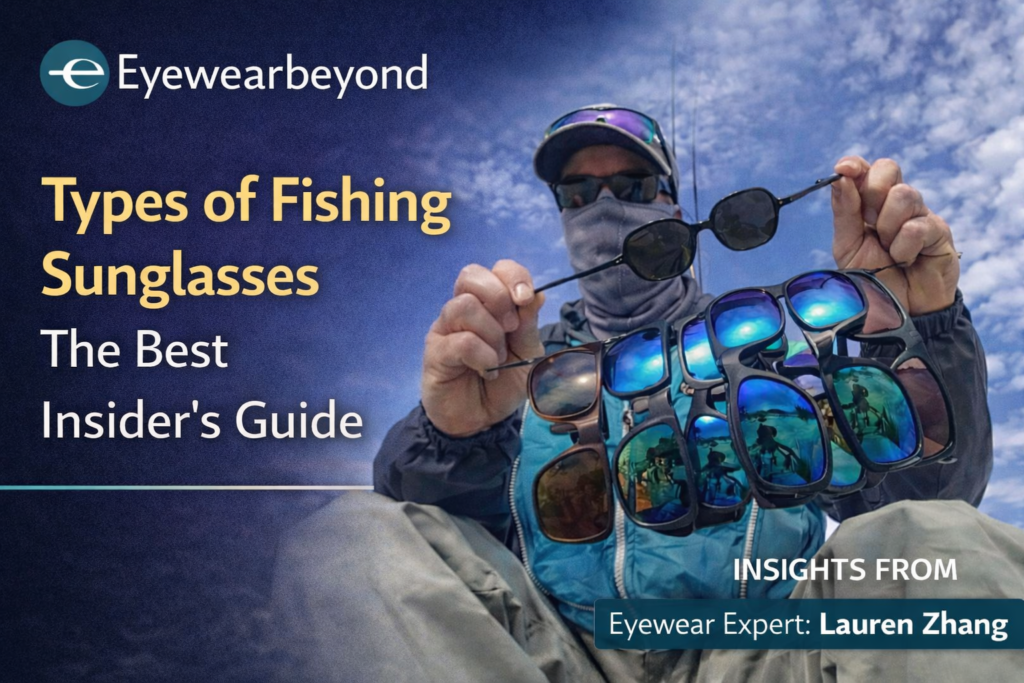
Company: Eyewearbeyond – Custom & Wholesale Eyewear Manufacturer“‘Types’ of fishing sunglasses shouldn’t be classified by frame shape first—they should be classified by use case. Offshore glare, flats sight-fishing, and river conditions demand different lens colors, wrap coverage, and coating durability. For brands, the practical move is to build a small, clear lens lineup (2–4 core tints) and match it with stable frame platforms that you can produce consistently and reorder without drift.”
— Lauren Zhang, Eyewear Product & Manufacturing Specialist
👉 Request: Fishing Lens Tint & Frame Platform Guide (B2B)
📧 Email: eyewearbeyondofficial@gmail.com
Whether you’re casting a line at high noon or waiting patiently on the boat at sunrise, one thing is clear — the right pair of fishing sunglasses isn’t optional, it’s essential.
At EyewearBeyond, we’ve worked with dozens of global outdoor brands, helping them develop fishing sunglasses that do more than just look good — they block water glare, enhance contrast, and hold up in harsh outdoor conditions.
But not all fishing sunglasses are created equal. From wrap-around frames for offshore trips, to photochromic lenses that adapt to changing light, to RX-compatible designs for older anglers — each style solves a different pain point.
If you’re a brand owner, retailer, or wholesaler looking to expand your fishing eyewear line, this guide is made for you. We’ll break down:
- The 7 most popular types of fishing sunglasses
- Which lens colors and coatings work best in real-world fishing conditions
- Key design and fit features buyers care about
- What materials and custom options help your products stand out
By the end of this guide, you’ll be ready to make smarter product decisions — and if you’re ready to launch your own line, EyewearBeyond is here to help.
Let’s get started.
2. Why Polarization Matters in Fishing Eyewear
When it comes to fishing, polarized lenses aren’t a luxury — they’re a must. The water’s surface reflects sunlight intensely, creating harsh glare that not only tires your eyes but also blocks your view of what’s happening beneath the surface.
That’s why most premium fishing sunglasses — including the ones we help develop at EyewearBeyond — are equipped with high-quality polarized lenses.
Here’s what polarization does:
- Cuts surface glare so you can see through the water
- Reduces eye fatigue, especially on long fishing trips
- Improves contrast and depth perception in bright environments
- Enhances your ability to spot fish movements, structures, or floating debris
Polarization is useful for:
- Shore fishing: clearer sightlines into shallow water
- Boat fishing: reduces glare from sun bouncing off the waves
- Fly fishing: allows precise spotting of underwater action
- Deep sea fishing: improves visibility under powerful midday sun
Bonus tip: Not all polarized lenses are created equal. The best ones use TAC or polycarbonate with multi-layer filters, ensuring durability and optical clarity in rugged outdoor conditions.
Whether you’re sourcing fishing sunglasses for pros or weekend warriors, polarized lenses are a non-negotiable feature — and they’re a key selling point when building your own brand.
3. What Are the Most Popular Types of Fishing Sunglasses Today?
Walk into any tackle shop or scroll through outdoor gear catalogs, and you’ll see it — fishing sunglasses aren’t just one-size-fits-all. There are multiple styles, and each has its own purpose depending on where you fish, how long you’re out, and what kind of customer you’re serving.
If you’re thinking about developing your own fishing eyewear line, knowing the most in-demand types can save you from over-designing or offering something nobody actually wants.
Let’s break them down — minus the jargon.
Wraparound Frames: The Classic Angler Look
You’ve seen them everywhere — snug-fitting frames that curve around the face. They’re not just for style.
Wraparound fishing sunglasses are all about full coverage. No light sneaks in from the side. No surprise glares. Just full-focus on the water. These are ideal for offshore boat fishing or high-glare environments.
They also tend to stay put better than standard frames, especially when your customer’s out on choppy water or sweating under a hot sun. If your end user is a serious angler, this style should absolutely be in your collection.
Semi-Rimless Styles: Lightweight + Wide View
Some anglers don’t want anything getting in their way — literally. That’s where semi-rimless frames come in.
The bottom half of the lens is open, which gives a wider field of downward vision — important when watching lure movement or tying knots. They’re also lighter in weight, making them perfect for long hours out on the water.
If your brand targets comfort-focused weekend anglers or bass fishermen, these strike a great balance between function and style.
Interchangeable Lens Systems: One Frame, Many Scenarios
Weather changes. Light changes. Fishing spots change.
That’s why interchangeable lens systems are gaining popularity — especially in markets like North America and Northern Europe where anglers deal with very different conditions across a single trip.
This style lets the user swap out lenses depending on the environment: darker mirrored lenses for bright midday sun, amber lenses for overcast, even clear lenses for night fishing.
If your brand wants to highlight versatility, this is a strong feature to develop.
Photochromic Fishing Sunglasses: Smart Light Adaptation
Some customers don’t want to deal with switching lenses. They want the sunglasses to do the thinking.
Photochromic lenses darken and lighten automatically based on ambient light. Perfect for anglers moving between shaded coves and open water. Or for those early-morning-to-noon sessions where light conditions change fast.
It’s a premium feature — but one that’s increasingly appreciated by seasoned fishermen. For higher-end SKUs, it’s worth considering.
RX-Insert Compatible Frames: For the Nearsighted Angler
A lot of anglers are over 40. Many wear glasses. Not all of them want to wear contact lenses on a boat.
That’s where RX-insert compatible fishing sunglasses come in. These have a small frame inside the lens area that holds prescription lenses, allowing anglers to see clearly without compromising performance.
If you’re building a brand targeting an older, loyal audience — this is a winner. Plus, it saves them from paying for full custom prescription sunglasses.
Women’s Fit Models: More Than Just a Smaller Frame
Let’s be clear: offering women’s fishing sunglasses isn’t just about shrinking the size and painting it pink.
Many female anglers look for:
- A better fit for narrower faces
- Softer nose pads that don’t leave red marks
- Style that balances performance with subtle curves
Brands that ignore this segment are leaving money on the table. If your line is meant to be inclusive, a women-specific SKU isn’t just nice to have — it’s strategic.
Youth & Junior Sizes: Start Them Young, Equip Them Right
More parents are bringing their kids into the outdoors — which means safety gear scaled for smaller faces is more in demand than ever.
Kids’ fishing sunglasses need to be:
- Lightweight
- Shatter-resistant
- Flexible enough to survive a tackle box or backpack
Bonus if you offer bold colors or branding that appeals to youth anglers. And let’s be real — the younger they love your brand, the longer they’ll stay loyal.
4. Fishing Lens Color Options & Usage Scenarios
If you’ve ever fished on a cloudy morning, then again under a blazing afternoon sun, you already know: lens color matters.
A good pair of fishing sunglasses doesn’t just block UV light — it filters specific wavelengths, boosts contrast, and helps the angler “read” the water better. Different lens colors serve different fishing environments, and choosing the right one can mean the difference between spotting that bass or missing it completely.
So if you’re building your brand’s product line, offering multiple lens tints isn’t overkill — it’s expected.
Let’s talk about the most popular lens colors, and when to use them:
Gray Lenses – For Bright, Sunny Conditions
This is the most neutral lens color. It reduces brightness without distorting color perception.
When to use:
- Deep sea fishing
- Midday fishing trips
- High-glare open water
Best for: General use in consistently sunny areas. Great for customers who want an “all-day, everyday” lens.
Amber / Brown Lenses – Contrast Boosters
Amber and brown lenses enhance contrast and depth perception, especially in low-light or partially cloudy conditions. They make greens and blues pop — which means better visibility into shallow water or around structures.
When to use:
- Overcast or hazy days
- Freshwater fishing in rivers or lakes
- Early mornings / late afternoons
Best for: Anglers targeting bass or sight-fishing in vegetation-heavy waters.
Green Mirror Lenses – Shallow Water Game Changer
Green mirror lenses usually have a brown or amber base, plus a reflective green coating. This combo kills glare and sharpens contrast — especially in inshore and flats fishing.
When to use:
- Saltwater flats
- Mangrove-lined shorelines
- Shallow bays
Best for: Tarpon, redfish, snook, or anything you’re hunting in shallows.
Blue Mirror Lenses – Offshore and Open Water Favorite
These lenses use a gray base with a blue reflective mirror finish. Great at handling intense sunlight reflecting off ocean surfaces.
When to use:
- Deep sea fishing
- Open water boat trips
- Bright, cloudless days
Best for: Tuna, marlin, or any offshore species. A must-have in your higher-end SKUs.
Yellow / Gold Lenses – Low-Light Heroes
Yellow-tinted lenses brighten up your view and increase contrast in very low-light or foggy conditions.
When to use:
- Early mornings before sunrise
- Late dusk fishing
- Foggy lake conditions
Best for: Anglers who love first light or don’t mind staying out till dark.
Photochromic Lenses – Adapt to Light Automatically
We touched on this in the lens types section, but it’s worth repeating: photochromic lenses adapt to changing light throughout the day. One lens, multiple lighting scenarios.
They’re more expensive, but many experienced anglers prefer them because of the flexibility.
Tip: For B2B customers, offering at least 3–4 tint options (gray, brown, green mirror, blue mirror) gives your product line both breadth and professional appeal. Bonus if you match them with specific product names or fishing scenarios — “Inshore Pro” or “Bluewater Shield” sounds a lot better than “Model 318.”
5. Frame Design & Fit Features That Actually Matter
Let’s be honest — most fishing sunglasses look tough. But whether they actually perform when it gets hot, sweaty, or windy out there? That comes down to the frame design.
Anglers wear their sunglasses for hours at a time — squinting into the sun, casting under pressure, reeling through waves. A good frame shouldn’t just sit there — it should stay there. And it should feel good the entire time.
Here are the small but powerful design details that make a big difference (and that your customers will notice):
Adjustable Nose Pads: Because Not Every Face Is the Same
A common reason sunglasses get returned? They don’t sit right on the nose.
Some people need more lift. Others want a lower profile. And when there’s sweat, sunscreen, and movement involved — non-adjustable pads often slip.
That’s why soft, adjustable nose pads are worth the extra effort. Whether it’s rubberized, silicone, or memory material, it improves comfort and ensures a secure fit.
Pro tip: Consider pads with ventilation or anti-slip texture for added performance in humid or salty conditions.
Temple Grip & Arm Length: Hold Without Pressure
The temples (a.k.a. the arms of the glasses) are your second anchor point — and they do more than just wrap around the ears.
Quality fishing eyewear should feature:
- Rubberized temple tips to prevent sliding, especially when wet
- Flexible hinges or memory arms for a snug but not painful hold
- Arm length that works with or without a hat or helmet
The goal is balance — firm grip without pinch, even after hours on the water.
Helmet & Hat Compatibility: A Must-Have for Real-World Use
Sounds small, but it’s not: if your fishing sunglasses don’t play nice with hats, they won’t get worn.
Most anglers wear caps or wide-brimmed hats to protect from the sun. If the glasses push the hat up, or the hat interferes with temple arms, it’s game over.
Good design here means:
- Slightly curved arms that slide under caps smoothly
- Low-profile frame tops that don’t bump into visors
- Enough clearance to sit comfortably without distorting vision
You’d be surprised how many brands overlook this — but when your line nails it, users feel the difference immediately.
In short: yes, lens tech matters. But fit is what keeps sunglasses on the face — and keeps customers coming back for repeat orders.
6. How to Choose the Right Type for Different Customers
Fishing sunglasses aren’t just about style — they’re tools. And just like you wouldn’t use the same rod for fly fishing and deep-sea trolling, you can’t expect one frame or lens type to satisfy all anglers.
If you’re a brand, distributor, or wholesaler planning your eyewear collection, it’s crucial to think in user scenarios rather than just product specs.
Let’s break it down into real-world customer types — and what styles they actually want (and need).
For the Hardcore Pro or Competitive Angler
These customers fish hard, fish often, and notice the smallest performance details.
What they look for:
- Wraparound or semi-rimless frames that stay locked in
- Polarized lenses (100% non-negotiable)
- Green/blue mirror tints for inshore or offshore clarity
- Photochromic options for full-day light changes
- Anti-fog, anti-slip everything
Your best move? Offer a “Pro Series” line that’s durable, lightweight, and built to be worn 6+ hours at a time.
For Mountain Lake or River Anglers
Freshwater fishing is about movement, visibility, and long hours outdoors — but not necessarily high sun intensity.
What they value:
- Amber or brown lenses to spot depth and color contrast
- Flexible frames with adjustable pads for long comfort
- Ventilation and anti-fog coating for humid mornings
- RX insert compatibility (especially for aging anglers)
These customers might be older or more relaxed, but they still care deeply about quality and clarity.
For Urban Weekend Warriors / Recreational Use
Not every buyer is a pro — and not every collection should be. Weekend or casual anglers want gear that looks good, works well, and doesn’t cost a fortune.
Smart design options:
- Sleek, lifestyle-influenced frames that double as daily sunglasses
- Polarized lenses, yes — but not overly mirrored or technical
- Gray lenses or light tints for general purpose use
- Lightweight TR90 material that’s comfy and casual
If your brand serves sporting goods stores or lifestyle retailers, this style sells well in volume.
For Prescription Glasses Wearers
Many serious anglers wear glasses. And not all of them want to switch to contacts just to enjoy their time on the water.
What matters here:
- RX-insert models that are easy to use, lightweight, and fog-resistant
- Generous internal space without distorting peripheral view
- Bonus points for photochromic or mirror lens compatibility
These buyers are loyal — if your brand helps them see better and fish better, they’ll stick with you.
For Youth or Family-Oriented Customers
The outdoor industry is leaning younger — and parents are bringing their kids into the sport early.
Ideal features:
- Scaled-down frames that fit snugly but comfortably
- Shatterproof lenses (safety is a top priority)
- Vibrant colors or fun mirror finishes
- Rubberized parts that survive rough use
Launching a youth line not only builds brand loyalty early — it also expands your SKUs in a very strategic way.
In short: One-size-fits-all doesn’t work for fishing sunglasses. Your product line should reflect the diverse needs of real-world anglers — and the more clearly you define who each product is for, the easier it is to sell.
7. Customization Options for Fishing Sunglasses Brands
Let’s be real: in today’s eyewear market, especially for niche categories like fishing sunglasses, “white-label” just doesn’t cut it anymore.
Whether you’re a startup brand or an established outdoor gear supplier, customization is the only way to stand out — both on shelves and in the minds of customers. The good news? Fishing sunglasses offer a lot of flexibility when it comes to tailoring your product to your brand.
Here are some smart, high-impact customization options worth considering — many of which we help clients implement every day at EyewearBeyond:
Lens Color & Mirror Finish: Functional Style That Sells
Customization isn’t just about looking good — lens color has real performance value, too.
You can select:
- Tints based on use-case (gray, brown, green, blue, yellow, photochromic)
- Mirror coatings for added light protection and bold visual appeal
- Anti-fog or anti-scratch treatments to extend product life and user satisfaction
Combining mirror style + lens function is a great way to differentiate SKUs by environment (e.g. “Open Water Edition” vs. “Freshwater Series”).
Logo Printing Options: Show Off Your Brand Proudly
Let’s not pretend logos are just decoration. On sunglasses, the right logo placement equals free advertising — every time your customer wears them.
Here are common branding placements:
- Laser-etched logos on the lens (subtle and premium)
- Silkscreen printing on the inside or outside of the frame
- Custom woven or rubber logos on the temple strap (great for sport styles)
- Microbranding on the nose bridge or end tips
We recommend picking at least two logo spots — one obvious, one subtle — to balance visibility with taste.
Packaging That Feels Like a Product Extension
Packaging matters. A lot.
Even if you’re selling wholesale or bulk to distributors, good packaging helps your brand feel complete and adds value instantly. For DTC brands, it’s even more critical.
Options include:
- Custom-printed EVA hard cases with your logo
- Neoprene or microfiber pouches in your brand colors
- Instruction/warranty cards with care tips or fishing-focused messaging
- Retail-ready color boxes with UPCs, hook holes, and product highlights
Plus, if you’re targeting the gift market (Father’s Day, Christmas, etc.), premium packaging can push buyers to pay more — even if the product inside is the same.
Bottom line? Whether you’re starting small or scaling fast, these custom touches create product value, brand recall, and higher perceived quality. And when done well, they don’t just look good — they sell better.
8. Materials Commonly Used in Fishing Sunglasses
When it comes to fishing sunglasses, design is important — but materials are what determine long-term quality.
After all, fishing isn’t a clean, easy sport. We’re talking about saltwater, sweat, UV rays, impact, temperature changes, and gear being thrown in and out of boats or backpacks. If your sunglasses can’t handle it, they’re not worth selling.
So, whether you’re developing a performance-focused collection or a stylish outdoor range, here’s what you need to know about the materials that actually hold up — and what your customers expect.
TR90 Frames – Lightweight, Durable, and Flexible
TR90 is the gold standard for fishing eyewear frames. It’s a nylon-based material that’s lightweight, flexible, and incredibly durable.
Here’s why brands love TR90:
- Won’t break easily — even if dropped or bent
- Memory flexibility means the frame can bend and bounce back
- Lightweight for all-day wear without pressure
- Can handle heat — won’t warp under the sun
- Available in matte, gloss, or even electroplated finishes
If your goal is to deliver premium comfort and high performance, TR90 is your go-to material.
Polycarbonate Lenses – Tough, Lightweight, Polarized-Ready
For lens material, polycarbonate is hands-down the best option for fishing sunglasses.
It’s:
- Shatter-resistant — far safer than glass or standard plastic
- Naturally blocks UV rays
- Compatible with polarized filters and mirror coatings
- Lighter than CR39 or acrylic lenses
- Ideal for curved or wraparound lens shapes
Whether you’re designing a classic frame or a full-coverage wraparound model, polycarbonate gives your customers the protection and clarity they need on the water.
TPE Rubber – Soft Grip for Nose Pads and Temples
Comfort and fit make or break user experience. That’s where TPE rubber (Thermoplastic Elastomer) comes in — used on nose pads and temple tips for a secure, no-slip grip.
Why it’s great:
- Sweat-resistant and skin-friendly
- Soft but firm — helps keep glasses stable during movement
- Durable in both freshwater and saltwater conditions
- Customizable in color and texture
Some premium styles may also use silicone or memory foam for these areas, especially for high-end or RX-compatible models.
In short: if you’re building a reliable, market-ready fishing eyewear line, TR90 + polycarbonate + TPE rubber is the winning combination. It’s what serious anglers expect — and what repeat customers will appreciate.
Up next, we can continue with Section 9: Where to Source High-Quality Fishing Sunglasses, unless you’d like to insert a materials comparison chart or sustainable material options. Let me know!
10
Great — here’s Section 10: Maintenance Tips for Fishing Sunglasses, written in natural, professional English for brand owners, wholesalers, and retailers. It’s practical, easy to read, and valuable for your customers or user guides.
9. Where to Source High-Quality Fishing Sunglasses?
Once your designs and specs are clear, the next big step is figuring out who’s actually going to make your fishing sunglasses — and make them well.
For many brands, sourcing is where things get tricky. There are thousands of suppliers out there, but very few can actually deliver consistency, flexibility, and long-term reliability — especially for niche products like polarized sports eyewear.
Let’s walk through your options.
OEM vs. ODM vs. Private Label – What’s the Difference?
Understanding these three models can help you plan your sourcing and branding strategy smarter:
- OEM (Original Equipment Manufacturer)
You bring the design, and the factory handles production. Perfect for brands that want full control over features, specs, and appearance. - ODM (Original Design Manufacturer)
The supplier provides ready-made designs that you can tweak and rebrand. Ideal for faster time-to-market or if you’re testing a new product line. - Private Label
You choose from an existing catalog and simply add your logo and packaging. Lower MOQ, lower investment, less flexibility.
Which one to choose?
If you’re a startup or testing the waters, ODM or private label is a safe place to begin. But if you’re building a long-term brand or targeting premium markets, OEM with full customization is the way to go.
Best Countries for Manufacturing Fishing Sunglasses
Let’s be honest — not all “Made in” labels are created equal. Here’s what you should know:
- China: Still the global leader in eyewear manufacturing. Offers the best balance of cost, quality, and speed — especially for polarized lenses, TR90 frames, and complex custom work.
- Vietnam: Growing fast, but mostly focused on low-MOQ lifestyle sunglasses and simple SKUs.
- Italy: Premium craftsmanship, great for luxury or fashion-focused fishing sunglasses. Expect higher pricing and longer lead times.
If you’re looking for a scalable partner with both ready stock and custom capabilities, China remains the most efficient and reliable option — particularly for sports and performance eyewear.
Key Questions to Ask Your Supplier
Before signing a deal, make sure to ask the right questions. These will save you a lot of headaches later:
- Can I customize lens color, coating, and frame material?
- Do you offer polarized and photochromic options?
- What’s your typical MOQ for OEM and ODM orders?
- Can you support logo placement on lenses, frames, straps, and packaging?
- What are your lead times — both for samples and bulk production?
- Do you offer lab reports or certifications (UV protection, ANSI, CE, etc.)?
- What’s your defect return or quality assurance policy?
A good supplier will not only answer clearly — they’ll walk you through solutions before you even ask.
Pro Tip: If your factory contact replies slowly, dodges customization questions, or can’t show actual production samples — walk away. Time and transparency are as valuable as price.
Once you have the right manufacturing partner, everything else becomes smoother — from branding to logistics to long-term growth.
10. Maintenance Tips for Fishing Sunglasses
Let’s face it — fishing sunglasses take a beating.
Between saltwater spray, sunscreen smudges, and muddy boat decks, these lenses see it all. And while high-quality materials make a difference, proper care is what keeps them performing — and extends product lifespan.
Whether you’re creating your own eyewear brand or selling in bulk, it’s worth sharing care instructions with your customers. Not only does it reduce returns, it also builds trust.
Here’s what we recommend:
10.1 Cleaning the Lenses Safely
Never let customers use T-shirts, paper towels, or just tap water. That’s the fastest way to scratch a good lens.
Best practices:
- Always use a microfiber cloth — ideally the one provided with the glasses
- For smudges or salt buildup, use lens-safe cleaning solution or warm water + mild soap
- Avoid alcohol-based cleaners, especially on polarized or mirror-coated lenses
Bonus tip: Include a branded cleaning cloth and instructions inside the packaging — adds value and improves the user experience.
10.2 Storage and Anti-Scratch Tips
Most damage happens outside of use — like when glasses are tossed in a backpack unprotected.
Help your customers avoid this:
- Store sunglasses in a hard-shell EVA case or soft pouch when not in use
- Never leave them on a hot dashboard — heat can warp the frame or delaminate coatings
- Rinse with fresh water after saltwater exposure, especially around the hinges
If you’re a brand, consider customizing the case or pouch — it’s an easy upgrade that customers will appreciate.
10.3 Anti-Fog Care Methods
Fogging is a common issue — especially during humid or cold-weather fishing.
Here’s how to keep visibility clear:
- Use anti-fog wipes or spray, especially before morning trips
- Choose sunglasses with built-in ventilation or dual-layer lens tech
- Recommend customers avoid touching the inner lens (that’s where anti-fog coatings usually are)
You can even offer a small anti-fog wipe or spray as an add-on or upsell item — it’s useful and shows attention to detail.
Pro tip for your brand: Add a small “Lens Care Guide” inside your packaging. Not only does it reduce complaints and damage — it makes your brand look smarter, more professional, and more premium.
11. Common FAQs About Fishing Sunglasses
When customers shop for fishing sunglasses — especially high-performance or customized models — they usually come with a few questions. And answering these clearly can make or break the sale.
Here are the most common questions your customers might ask — and the answers your brand should be ready to give:
11.1 Can I Use Regular Sunglasses for Fishing?
Technically, yes — but not if you care about performance.
Regular sunglasses may block some sunlight, but they usually don’t include polarization, which is essential for cutting glare off the water. Plus, they’re often not made for active movement or extended wear.
Fishing sunglasses are built specifically for:
- Glare reduction on water surfaces
- Full UV protection
- Comfort under hats or helmets
- Fit stability in wet or sweaty conditions
If you fish more than twice a year, get the real thing.
11.2 What Lens Color Is Best for Cloudy Days?
For overcast or low-light conditions, lens colors like amber, copper, or yellow are best. These tints help enhance contrast and brighten your field of view, making it easier to spot fish movement or changes in water depth.
Gray or dark lenses may look cool, but they can make things appear flat or dull when the sun’s not out.
11.3 Do Polarized Lenses Really Make a Difference?
Absolutely — especially when you’re fishing.
Polarized lenses block horizontal light waves, which is the glare that reflects off water surfaces. That means you can see beneath the surface more clearly, spot fish faster, and reduce eye strain during long days outside.
Without polarization, you’re basically fishing blind.
11.4 What If I Wear Prescription Glasses?
Good news — there are two great solutions:
- RX insert-compatible sunglasses: These frames allow you to pop in a custom prescription insert behind the lens. Clean, discreet, and flexible.
- Direct prescription lenses: Some brands offer full custom lens cutting with prescription strength, polarization, and tints all in one.
For brands, offering RX solutions is a great way to serve an often overlooked (but loyal) customer base.
11.5 How Do I Prevent Fogging During Early Morning or Winter Trips?
Fogging usually happens due to temperature changes and humidity — especially when you go from a warm car to a cold boat.
Here’s how to prevent it:
- Use anti-fog spray or wipes before heading out
- Choose frames with ventilation ports or open bridge designs
- Avoid touching the inside of the lenses — that’s where most anti-fog coatings are applied
- Keep glasses dry when not in use, and let them air out between sessions
Tip: If you’re selling fishing sunglasses as a brand, consider printing these FAQs on your product insert or uploading them to your website. It reduces returns, builds confidence, and adds value without extra cost.
Ready to move to the final section — the conclusion? I can wrap everything up in a short, punchy ending that ties it all together for your audience. Just let me know.
In Conclusion
Fishing sunglasses aren’t just accessories — they’re part of a serious angler’s toolkit.
From wraparound frames to interchangeable lenses, from mirror coatings to adjustable nose pads, there’s a world of detail behind each pair. And if you’re a brand, retailer, or distributor, understanding these details is exactly what separates a forgettable product from a best-seller.
Design, materials, functionality, lens performance — it all matters. But what matters most? Partnering with a manufacturer who understands the fishing industry, your brand vision, and the importance of getting it right the first time.
Whether you’re planning to launch your first outdoor eyewear line or scale up with new SKUs, quality, fit, and features are what your customers will remember — long after the purchase.
Ready to build fishing sunglasses that sell and perform? Let’s make that next move smarter.