1. Introduction
Thinking about launching your own sunglasses line with custom features? Whether you’re a brand owner, distributor, or retailer, “custom eyewear” sounds exciting — but it’s not as simple as slapping a logo on a frame and calling it your own.
In the real world of eyewear manufacturing, customization affects everything: from materials, molds, and lens options to lead times, packaging, and final pricing. And if you’re producing in bulk — especially overseas — you’ll need to know exactly what’s possible, what’s realistic, and what’s just marketing fluff.
We’ve worked with eyewear startups and global wholesalers alike, and here’s the truth: custom production can absolutely take your business to the next level — if you plan it right.
In this guide, you’ll learn the real ins and outs of custom eyewear: what options are available, how to choose specs based on your business model, what kind of costs to expect, and how to work with suppliers to avoid surprises. Whether you’re building a high-end brand or just want something unique to stand out from the crowd, this article is for you.
2. Why Customization Matters in Eyewear
2.1. Branding Value of Custom Sunglasses
In today’s saturated market, generic frames just don’t cut it. Your customer can find the same shape, same style, and same price on dozens of websites. What sets you apart? Brand identity — and that starts with customization.
Custom eyewear allows you to:
- Add your logo to the temples, lenses, or packaging
- Choose colors that match your brand’s tone
- Design unique shapes or features that no one else is selling
- Create a story behind your product line
Whether you’re building a premium optical brand or launching a capsule fashion collection, customization gives your product personality — and personality sells.
2.2. How Customization Affects Retail Pricing
Let’s talk money. A generic $6 frame might retail for $29. But a customized $9 frame with branding, packaging, and polarized lenses? That could sell for $59, $89 — even more, depending on your market.
Custom eyewear gives you pricing power. It justifies a higher MSRP, improves brand perception, and gives your distributors or retailers more room for profit.
Even better? If your product becomes recognizable, you can start to build repeat customers who come back not just for “sunglasses” — but for your brand.
2.3. Common Misunderstandings About “Custom”
A lot of new buyers think “custom” means “anything is possible.” In reality, true custom eyewear has limits — and knowing them can save you headaches:
- Some shapes require new molds, which add cost & time
- Not every supplier can handle CNC cutting or titanium
- Lens colors, frame colors, and accessories often have MOQ (Minimum Order Quantity)
- Changing materials (like from acetate to TR90) may require a different production line
Custom doesn’t always mean complex. Sometimes small changes — like logo placement, special coating, or packaging upgrades — can make a big difference, without blowing your budget.
If you want your sunglasses to stand out in a competitive market — whether in retail stores or online — customization isn’t optional. It’s your secret weapon.
3. 4 Main Customization Options for Sunglasses
When you hear “custom sunglasses,” you might think of logos or lens colors. But real customization goes deeper — and if you know what to ask for, you can create a product that truly reflects your brand while staying within budget.
Let’s break down the 4 most common (and valuable) areas of customization.
3.1. Frame Material & Style
This is where everything starts — the foundation of your product.
Common frame materials:
- Acetate: Durable, premium look, wide color range
- TR90: Lightweight, flexible, affordable
- Stainless steel / Titanium: Sleek, strong, ideal for minimalist or luxury designs
- Aluminum / Mixed materials: Great for sports or fashion hybrids
What you can customize:
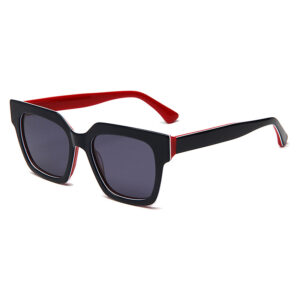
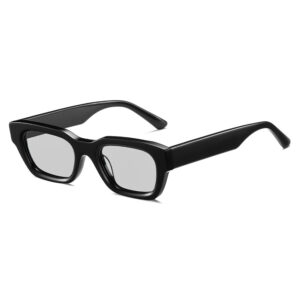
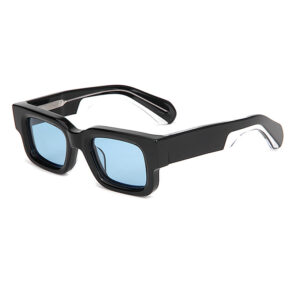
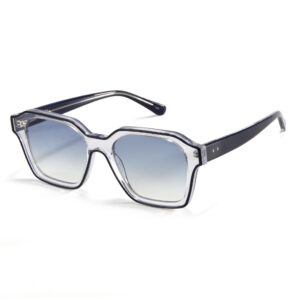
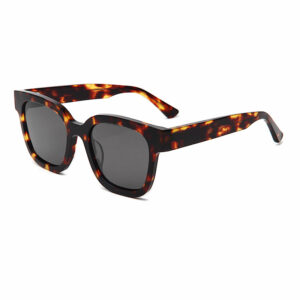
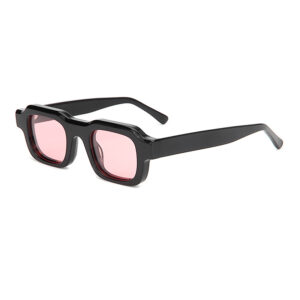
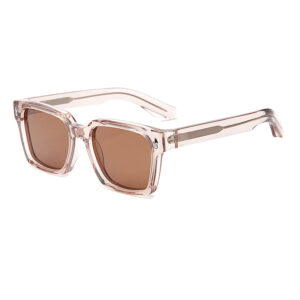
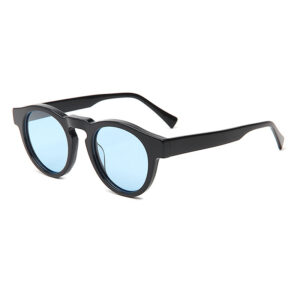
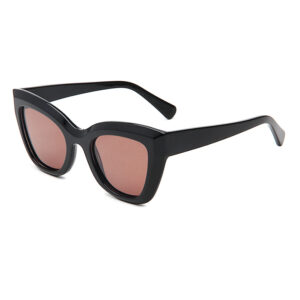
- Frame shape (aviator, square, cat-eye, round, etc.)
- Temple design (straight, curve, metal inlay, thickness)
- Nose pads (built-in or adjustable)
- Color (solid, transparent, gradient, patterned)
Tip: If you’re new, start by choosing from supplier catalogs and making tweaks. Full-custom molds are great, but they come with cost and MOQ.
3.2. Lens Type & Coating
The lens isn’t just functional — it’s part of the user experience.
Common lens customizations:
- UV400 protection (standard, required for most markets)
- Polarized lenses (reduces glare — popular for driving, sports, beachwear)
- Mirrored lenses (stylish, adds perceived value)
- Gradient tint (popular for fashion and women’s styles)
- Anti-scratch / Anti-reflective coatings
- Prescription lens compatibility (if selling optical-sun hybrids)
You can also choose custom lens colors to match your brand aesthetic — think rose gold, blue mirror, ice grey, etc.
3.3. Logo & Branding Position
Your logo is what turns a pair of sunglasses into a product of your brand — and yes, you have options.
Typical logo placement options:
- Temple (side arm): Most common, can be laser-etched, engraved, printed, or metal inlay
- Lens (corner): Subtle branding via silk-screen or laser
- Inside temple: Great for model code, brand slogan, or size info
- Hinge or nose bridge: For luxury detailing
Common logo methods:
- Silk screen printing (affordable, basic)
- Laser engraving (permanent, classy)
- Metal logo embed (premium look, higher cost)
Be clear on logo color, size, and finish — and always test with pre-production samples.
3.4. Accessories & Packaging
Packaging isn’t just protection — it’s part of the unboxing experience and a huge part of brand perception.
What can be customized:
- Case: PU leather, hard case, soft pouch, metal box — in your brand’s color
- Cleaning cloth: Custom logo or design print
- Outer box: Branding, QR code, eco-friendly packaging
- Insert card: Instructions, care info, or brand story
- Hangtags / barcodes for retail stores
Tip: If your sunglasses cost $10 to produce, spending an extra $1–2 on premium packaging could justify a $20+ higher retail price.
When done right, these four areas turn your sunglasses into a complete brand experience — not just another pair of frames.
4. How to Choose the Right Customization for Your Brand
Customizing everything sounds great — until the quote comes back and it’s way over budget. That’s why successful brands don’t just customize more — they customize smart.
Here’s how to choose the right custom elements for your product line without overcomplicating the process or blowing your margins.
Step 1: Know Your Brand Level and Target Price
Start by asking yourself:
- Am I creating a high-end brand or a mid-range product line?
- Who are my customers — fashion-focused, functional buyers, or gift/promo customers?
- What’s my ideal retail price — $25, $59, or $129?
Now reverse-engineer your customization based on this.
| Retail Price Range | Recommended Custom Elements |
|---|---|
| $20–$40 | Ready-made frame shape + custom logo + basic packaging |
| $40–$80 | Custom lens (e.g. polarized), unique frame color, branded case |
| $80+ | Custom mold or shape, premium coating (IP, anodized), full box set |
Step 2: Prioritize What Matters to Your Customers
You don’t need to customize everything — just what your customer notices.
For example:
- Selling on Instagram? → Prioritize style + packaging (strong visuals win)
- Selling in stores? → Focus on touch & fit (frame material, lens clarity)
- Selling in bulk to gift clients? → Logo visibility + fast production is key
Rule of thumb: Don’t waste budget on hidden features that don’t increase perceived value.
Step 3: Start with Low-Risk Customization
If it’s your first run or you’re testing the market, go with:
- A stock frame shape + custom color or logo
- Your own packaging (easy to switch or upgrade later)
- Polarized lenses (adds value without huge cost)
Once you get customer feedback and sales data, you can invest in full custom molds or premium materials confidently.
Step 4: Talk to Your Supplier Early
Your factory partner (like Eyewearglobo) sees dozens of custom projects a month — and can guide you toward what works and what’s overkill.
Ask your supplier:
- Which styles are trending in your target market?
- What’s the MOQ for custom lenses vs. custom frames?
- What’s the most cost-effective way to get a premium look?
A good supplier won’t just take your order — they’ll help you make smarter choices.
In short: choose what gives your product identity and value — not just what looks cool on paper.
5. Comparison of Ready-Made vs. Custom-Made Sunglasses
Not sure whether to go fully custom or start with existing styles? You’re not alone. Many buyers — even experienced ones — wrestle with this decision.
Let’s break it down clearly:
Quick Comparison Table
| Ready-Made (Stock + Logo) | Fully Custom (OEM/ODM) | |
|---|---|---|
| Lead Time | 7–15 days with logo | 40–60 days (sampling + production) |
| MOQ | 100–300 pcs/style | Usually 500–1000 pcs/style |
| Cost per Unit | Lower | Higher (due to mold, setup, etc.) |
| Brand Uniqueness | Limited (shared styles) | High (exclusive look & identity) |
| Design Flexibility | Frame color, logo, lens options | Full control over shape, size, material |
| Risk Level | Low | Higher (due to volume & investment) |
| Best For | Test runs, promos, beginner brands | Mature brands, high-end launches |
So… Which One Should You Choose?
Go Ready-Made If You:
- Want to test market reaction quickly
- Are working with a limited budget
- Need fast turnaround for seasonal or promotional sales
- Are launching your first collection and want low risk
Go Fully Custom If You:
- Are building a long-term brand with strong identity
- Plan to sell at higher price points ($60+)
- Want to own your design and prevent copycats
- Already know your audience and what sells
Pro Tip: Many successful brands start with ready-made customization, then gradually shift into full OEM once they build confidence and customer loyalty.
At Eyewearbeyond, we offer both options — so you can scale from low-risk to high-impact at your own pace.
6. How to Choose Custom Specs for Different Business Models
Custom eyewear isn’t “one size fits all.” A luxury fashion brand and a promo gifting agency need very different things from their sunglasses. The good news? When you match your specs to your business model, you save time, reduce waste, and make more money.
Let’s look at how to approach customization depending on what kind of buyer you are.
6.1. For Premium Private Labels
These brands focus on look, feel, and long-term identity. Their customers are paying for design and brand story.
Recommended Specs:
- Full OEM frames with original design
- Premium materials like acetate, titanium, or beta titanium
- Polarized lenses with anti-scratch and AR coating
- Custom logo (engraved or metal insert)
- Luxury packaging (rigid boxes, magnetic closures, foil-stamped branding)
MOQ Tip: 500 pcs/style minimum, but you can scale with color variations.
✅ Best for: Boutique eyewear brands, fashion designers, influencer labels
6.2. For Promotional Product Buyers (Gifting, Events, Merch)
Speed, price, and logo visibility matter most. These clients usually need quick production and don’t want complex options.
Recommended Specs:
- Use ready-made frames from supplier catalog
- Add simple logo printing (1–2 color) on temples or lenses
- Opt for basic lenses with UV400 (non-polarized to save cost)
- Include pouch + logo card, or even ship without case
MOQ Tip: 100–300 pcs/style is often acceptable
✅ Best for: Corporate gifts, brand activations, festivals, school events
6.3. For Optical Chain Stores
These clients value fit, lens quality, and consistency across bulk orders. They often need multiple size options and reorder reliability.
Recommended Specs:
- Standardized frame shapes (aviator, square, wayfarer) with flexible fit
- Option to insert prescription lenses
- Lens lab compatibility (use screws or flexible hinges)
- Multiple SKUs (by size, color, or gender)
- Retail-ready packaging (with barcode and specs)
MOQ Tip: 500+ pcs per style, often with reorders over seasons
✅ Best for: Optical stores, sunglass kiosks, regional distributors
6.4. For Startups or Small Batch Orders
If you’re just getting started, your focus should be speed to market, low MOQ, and testing real customer response.
Recommended Specs:
- Ready-made frames + custom lens or color
- Printed or laser logo on one position
- Standard polarized lens to stand out
- Basic packaging (branded pouch or soft case)
MOQ Tip: Start with 100–200 pcs per style, validate with sales or samples.
✅ Best for: New online brands, social media sellers, Kickstarter campaigns
🔧 Bottom Line: There’s no “perfect” spec — only the right spec for your budget, brand, and buyer.
7. How to Start the Custom Sunglass Production Process?
You’ve got your design idea. You know your budget. You’ve picked your supplier. Now what?
Starting custom eyewear production can seem overwhelming — but if you follow the right steps, it’s actually pretty smooth. Here’s what the process usually looks like :
Step 1: Share Your Custom Requirements
You’ll need to prepare basic info, such as:
- Reference photos or sketches
- Frame material & shape preference
- Lens type, color, and function
- Logo position & style (e.g. engraving or printing)
- Packaging preferences
- Target quantity and delivery timeline
💡Tip: The more specific you are, the fewer back-and-forth emails you’ll need.
Step 2: Get a Quotation & Timeline
After reviewing your specs, the factory will provide:
- Per-unit cost based on quantity
- Mold fee (if applicable for custom shapes)
- Estimated sampling time
- Bulk production lead time
- Shipping method and estimated freight
👉 Expect quotes to vary depending on whether you use stock molds or need full custom tooling.
Step 3: Sampling / Prototype Stage
This is your first real look at your product.
- Typical sample time: 7–15 days for stock customization, 20–30 days for full OEM
- Factory will send physical samples (or HD video if you’re remote)
- You check: logo quality, hinge tension, lens clarity, fit, weight, packaging
✅ Don’t skip this — approving a sample avoids costly mistakes in bulk production.
Step 4: Confirm and Place Bulk Order
Once the sample is approved, you:
- Sign off on final specs
- Pay deposit (usually 30%)
- Production begins
💼 Note: Bulk lead time ranges from 30 to 60 days depending on materials, custom complexity, and order volume.
Step 5: Final QC & Shipment
Before shipping:
- Factory conducts internal quality check
- You may book a third-party inspection if needed
- Balance payment is made
- Shipment arranged via your forwarder or factory’s logistics partner
📦 Don’t forget to plan your shipping timeline around seasonal peaks like holidays, summer, or back-to-school.
🎯 Real-World Tip: Build in extra time for revisions during the sampling phase. It’s better to spend a few extra days perfecting your prototype than to rush into bulk and regret it.
8. 3 Custom Production Models You Should Know
When it comes to producing custom sunglasses, not all manufacturing partnerships work the same way. Your supplier might offer OEM, ODM, or even OBM — but what does that actually mean for you?
Let’s break down the three most common custom production models so you can choose what fits your business best.
8.1. OEM (Original Equipment Manufacturer)
You bring the idea — the factory makes it.
In an OEM model, you provide:
- Your own design or reference sample
- Specific requirements for material, size, finish, etc.
- Brand/logo and packaging concept
The factory’s job is to turn your vision into a real product, using their equipment and production lines.
Best for:
- Brands that want a unique, proprietary product
- Fashion houses or creative startups
- Distributors building an exclusive collection
✅ Pros:
- High level of control
- Fully custom output
- No duplicate design in market
❌ Cons:
- Higher cost
- Longer lead time
- Requires more input from your team
8.2. ODM (Original Design Manufacturer)
The factory provides existing designs — you customize and rebrand.
ODM is a faster, lower-risk path. You choose from the supplier’s existing models and:
- Add your logo
- Adjust frame color, lens color, or packaging
- Optionally tweak small design elements
Best for:
- Buyers who need speed and simplicity
- Promo customers, private label brands, startups testing the market
✅ Pros:
- Fast lead time (sometimes 2–3 weeks)
- Lower MOQ
- Less development cost
❌ Cons:
- Shared designs — not exclusive
- Less flexibility for innovation
8.3. OBM (Own Brand Manufacturer)
You buy from the supplier’s in-house brand collection.
This is when the factory already owns a brand — they produce, market, and package under their own name. You act more like a reseller or distributor.
Best for:
- Retailers who want fast inventory
- E-commerce sellers who care more about margin than product control
✅ Pros:
- Ready-to-ship
- Factory-tested and proven designs
- No development work needed
❌ Cons:
- No customization
- You’re promoting someone else’s brand, not your own
🧠 Which One Should You Choose?
| Model | Best for | Customization | Lead Time | MOQ |
|---|---|---|---|---|
| OEM | Long-term brands | Full control | Long (45–60+ days) | High |
| ODM | Mid-level resellers | Partial (logo/color) | Medium (15–30 days) | Medium |
| OBM | Retail resellers | None | Short (7–15 days) | Low |
👉 At Eyewearglobo, we offer all three models — you choose how much control (and commitment) you want.
9. What’s the Cost of Custom Sunglasses for Your Business?
Let’s face it — price matters. Whether you’re building a high-end brand or a fast-moving promotional product, you need to understand where your money is going and how to control your margin.
So, how much do custom sunglasses really cost? That depends on how deep you go into customization.
9.1. Cost Range by Customization Level
| Customization Level | Price per Unit (FOB China) | Typical MOQ | Lead Time |
|---|---|---|---|
| Light Custom (ODM) | $6 – $10 | 200–300 pcs | 10–20 days |
| Mid Custom (ODM/OEM hybrid) | $9 – $14 | 300–500 pcs | 20–35 days |
| Full Custom (OEM) | $15 – $25+ | 500–1000 pcs | 40–60 days |
Add-on costs to consider:
- Polarized or photochromic lenses: +$1.5–$4
- Logo engraving or metal insert: +$0.5–$1.5
- Custom packaging (hard case + cloth): +$0.8–$2.5
- New mold for original frame shape: One-time fee of $200–$500
💡 Note: These are export-quality prices based on Eyewearglobo’s B2B experience — not factory-gate rates for domestic-grade products.
9.2. What Affects Final Cost the Most?
- Frame material: Titanium or acetate costs more than TR90 or monel
- Lens type: Polarized, gradient, mirror, photochromic — they all vary
- Logo technique: Pad print is cheap, laser is mid-range, metal inlay is premium
- Production quantity: The higher the volume, the lower the per-unit cost
- Finishing: Brushed, anodized, IP-plated — these surface treatments add value and cost
9.3. How to Maximize Margin
You’re not just buying glasses — you’re building margin. Here’s how smart buyers make more profit per unit:
✅ Bundle value: Polarized + premium packaging makes a $10 product feel like $50 retail
✅ Use tiered pricing: Offer basic, mid, and premium options to serve different customers without changing suppliers
✅ Pre-sell or test demand: Use samples or mockups to get preorders before placing bulk
✅ Don’t overspend on invisible details: Customers notice packaging and lenses more than hinge material
🎯 Example Case:
You buy 500 pcs of mid-level custom sunglasses at $11 each, total $5,500
You brand them well and retail at $49.
Even with packaging and shipping, your cost lands around $13.
Profit per unit = ~$36 → Gross margin ~73%
10. 4 Tips for a Smooth Custom Production Process
Custom sunglasses can give your brand a huge edge — but only if the production process goes smoothly. Delays, miscommunication, or quality issues can eat up your budget and damage your timeline.
Here are four practical tips to keep your custom project on track:
10.1. Start with a Clear Brief — Not Just an Idea
Before you message your supplier, organize the following:
- Reference images or drawings
- Material preferences (frame & lens)
- Logo file (vector format: .AI or .PDF preferred)
- Estimated order quantity and delivery deadline
- Budget range (so the supplier recommends realistically)
🎯 Tip: If you’re not a designer, use a sample or similar model as your starting point — it saves tons of time.
10.2. Lock Down the Sample Before Moving to Mass Production
Never skip or rush the sampling process.
During sampling, check:
- Logo quality (is it sharp and correctly placed?)
- Hinge tension and frame fit
- Lens color and clarity
- Finish quality (polish, coating, etc.)
- Packaging accuracy
✅ Approve the sample in writing — with photos or video confirmations — to protect both parties before bulk begins.
10.3. Communicate Frequently — and Professionally
Custom projects have details that can easily be misunderstood. Be proactive:
- Use clear email threads to track decisions
- Ask for weekly updates during production
- Confirm timeline milestones (sampling, production start, QC, shipping)
- Use video calls or photos if needed — especially for packaging and logo checking
🧠 Pro tip: Good communication = fewer surprises.
10.4. Plan Your Timeline with Cushion Days
Even with the best factory, custom orders take time. Build in buffer days to avoid disaster.
Suggested production timeline:
- Sampling: 10–25 days (depending on complexity)
- Bulk production: 30–45 days
- Logistics (air): 5–10 days / (sea): 25–35 days
📦 Always plan around peak seasons (summer, Q4, holidays). Don’t place your order last minute.
🧩 Bonus Tip: Work with a factory that understands export requirements.
If you’re selling in the EU or USA, your supplier should already meet CE, FDA, UV400, or REACH standards — otherwise you risk delays or customs issues.
11. Conclusion
Custom eyewear isn’t just about making something look cool — it’s about building a product that reflects your brand, fits your customer, and makes financial sense for your business.
Whether you’re launching a premium label, selling to retail chains, or testing a new collection online, the right customization strategy can set you apart in a crowded market. But smart custom production requires more than just ideas — it needs clear planning, the right supplier, and a process you can trust.
From frame materials to logo placement, packaging to production models — now you’ve got the full picture. So when you’re ready to bring your custom sunglasses to life, you’ll know what questions to ask, what specs to prioritize, and how to avoid costly mistakes.
✨ With the right factory partner (like Eyewearbeyond) and a well-thought-out approach, custom eyewear can be more than a product — it can become the core of your brand story.