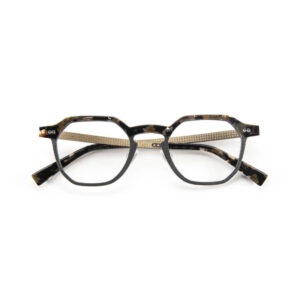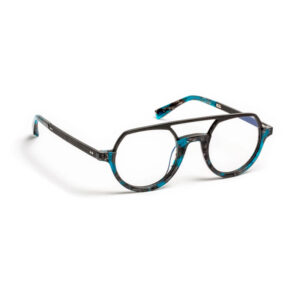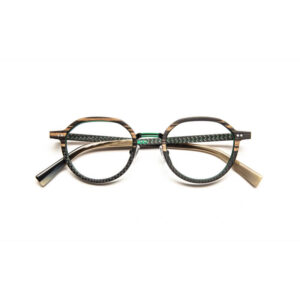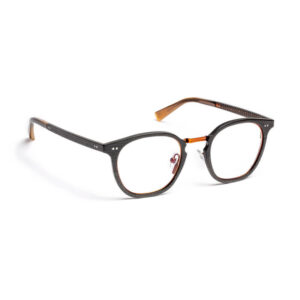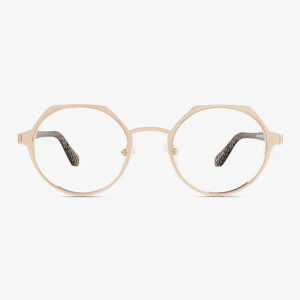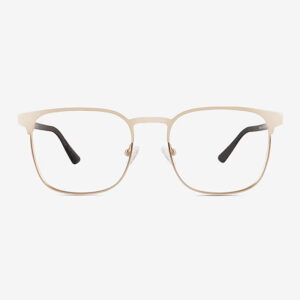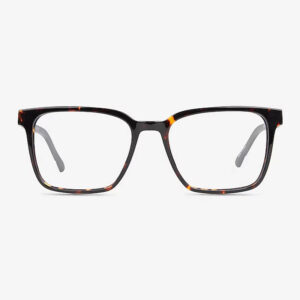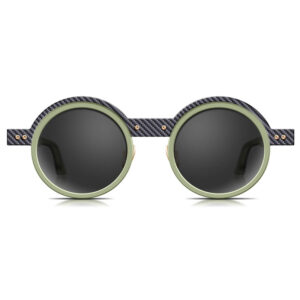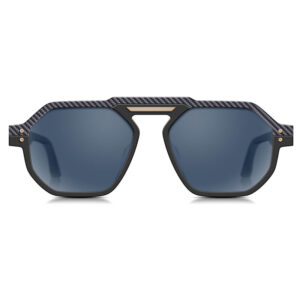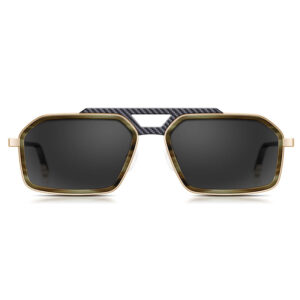
Yes, wood and buffalo horn eyeglass frames can be extensively customized for private label brands. From frame shapes and natural material combinations to hinges, logos, lenses, and packaging, brands have considerable freedom to create eyewear that reflects their own design identity.
But working with natural materials is different from developing a conventional acetate frame.
A design that looks straightforward on paper may require careful engineering when wood and buffalo horn are involved. Both materials have their own physical characteristics, and their natural variations can affect appearance, machining, and production consistency.
For eyewear brands, the real question is not simply whether customization is possible. It is how much can be customized without compromising the frame’s construction, comfort, or long-term quality.
This guide explains the available customization options, practical design limitations, development process, and key purchasing decisions involved in creating private label wood and buffalo horn eyewear.
1. Can Private Label Brands Fully Customize Wood and Buffalo Horn Eyeglass Frames?
Private label customization can range from adding a logo to an existing frame design to developing an entirely new collection with exclusive shapes, materials, and structural details.
The right approach depends on how much originality the brand requires, its development budget, and the complexity of the proposed design.
What Does Fully Customized Mean for Wood and Horn Eyewear?
In eyewear manufacturing, full customization generally means developing a frame according to a brand’s own specifications rather than selecting a finished product from an existing collection.
For wood and buffalo horn frames, those specifications may include:
- Original frame shapes and dimensions
- Selected wood species and natural horn colors
- Custom material combinations and layered construction
- Temple shapes and hinge configurations
- Brand logos and decorative details
- Optical or sunglass lens specifications
- Custom cases, packaging, and accessories
However, full customization does not mean every design can be manufactured exactly as drawn.
For example, a designer might propose an extremely thin wooden frame front with a large lens opening. While the appearance may be attractive, the remaining material around the eyewire could be insufficient for the intended construction.
In that situation, the manufacturer may recommend adjusting the thickness, changing the internal structure, or introducing reinforcing components.
The objective is to preserve the design concept while making the product suitable for manufacturing and everyday use.
What Is the Difference Between Logo Customization and Full OEM Development?
Not every private label project requires a completely new frame.
Some brands begin with existing designs and customize selected elements. Others need an exclusive product developed from the beginning.
| Customization approach | What can typically be changed | Best suited for |
|---|---|---|
| Logo customization | Brand logo, selected finishing details, packaging | Brands testing a new product category |
| Modified existing design | Materials, selected colors, temples, certain dimensions or details | Brands seeking faster product development |
| Full OEM development | Original shape, structure, dimensions, materials, components and branding | Established brands and original design collections |
The actual scope depends on the manufacturer’s existing construction and production capabilities.
A logo customization project may require relatively little engineering work.
An original wood and horn frame, however, can involve CAD development, material trials, structural adjustments, multiple prototypes, and more extensive quality evaluation.
For brands that want exclusive designs, full OEM development provides greater creative control, but it also requires more preparation.
Which Parts of a Wood and Buffalo Horn Frame Can Be Customized?
Most visible components can be considered for customization, provided the design is structurally feasible.
| Frame component | Possible customization |
|---|---|
| Frame front | Shape, size, thickness, material arrangement |
| Wood material | Species, grain appearance, finishing |
| Buffalo horn | Color range, pattern selection, placement |
| Temples | Length, shape, material combination, decorative details |
| Hinges | Type, position, mounting construction |
| Nose area | Bridge dimensions, nose support design |
| Lenses | Optical or sunglass lens compatibility |
| Branding | Engraving, selected inlays, temple markings |
| Packaging | Cases, boxes, cleaning cloths, printed materials |
This flexibility allows brands to develop eyewear that goes beyond a standard frame with a different logo.
The important first step is identifying which details are essential to the brand’s identity and which can be adjusted during engineering.
2. What Design and Material Options Are Available for Custom Wood and Horn Eyewear?
Material selection is often one of the most interesting stages of developing wood and buffalo horn glasses.
Unlike synthetic materials with controlled color patterns, natural wood and horn offer unique visual characteristics that can influence the entire design.
Can Brands Choose Different Wood Species and Buffalo Horn Colors?
Yes. Brands can specify preferred wood species and horn color ranges, subject to material availability and manufacturing suitability.
Different woods offer noticeably different appearances.
Walnut is a popular design reference for warm brown tones and visible natural grain. It can complement amber and dark brown horn sections particularly well.
Ebony offers a deeper appearance, making it useful for designs that emphasize contrast between dark wood and lighter horn.
Maple provides lighter tones that can work with cream, honey, or translucent horn patterns.
However, material selection should not be based entirely on appearance.
A wood species must also be evaluated for its density, grain direction, dimensional stability, workability, and suitability for the intended frame construction.
Buffalo horn requires a similar selection process.
Natural horn can display black, dark brown, amber, cream, and layered color patterns. Some pieces have relatively consistent coloring, while others show distinctive transitions and markings.
These variations can be particularly attractive in premium eyewear, but they also make exact color matching more difficult.
A practical approach is to approve actual material samples and establish acceptable appearance ranges before production.
Can Frame Shapes, Sizes and Thicknesses Be Customized?
Wood and horn frames can be developed in a variety of shapes, including:
- Round and oval frames
- Square and rectangular styles
- Panto-inspired designs
- Geometric frames
- Oversized statement frames
- Contemporary minimalist styles
The challenge is balancing the desired appearance with the material’s structural requirements.
For instance, a thick, angular front may provide more space for layered materials and mechanical connections.
A very thin frame may require a different construction to achieve adequate strength around the lens opening and hinge areas.
Dimensions such as lens width, bridge width, frame height, and temple length can also be customized.
For brands planning to offer multiple sizes, the manufacturer should assess whether the same construction can be maintained across the size range.
Simply enlarging or reducing a design does not always produce the best fit or structural result.
Can Wood, Horn and Titanium Be Combined in One Private Label Design?
Yes. Adding titanium components can create additional design possibilities.
One option is to use buffalo horn for the front, wood for selected decorative or temple sections, and titanium for structural components.
Another is to create a layered wood and horn front connected to titanium temples.
Titanium can also be considered for certain bridge, hinge, or support components, depending on the frame design.
The benefit is not simply combining three premium materials. Each material should serve a clear purpose.
Wood may provide the desired grain and warmth. Horn can introduce natural color depth. Titanium may offer a suitable lightweight metal structure for specific components.
The final performance depends on the complete construction rather than the presence of any single material.
For brands considering complex combinations, an early engineering review is particularly important. The way the components connect will affect manufacturing difficulty, repairability, and long-term stability.
Can Brands Select Different Hinges, Nose Pads and Lens Options?
Frame hardware is another area where customization can make a meaningful difference.
Brands may want a particular hinge appearance, opening resistance, or temple design.
However, hinge selection must account for the material surrounding the mounting area.
Wood and buffalo horn do not behave like metal or conventional acetate, so standard hinge mounting methods may not always be appropriate.
The nose area also deserves attention.
Depending on the design, a frame may use a shaped natural-material bridge, separate nose-support components, or adjustable nose pads mounted through a suitable structure.
Lens compatibility should be discussed before the front frame is finalized.
A frame intended for prescription lenses may require different eyewire dimensions, groove geometry, or structural allowances than one designed for plano sunglass lenses.
Brands should confirm the intended lens type, prescription range, and fitting requirements during development rather than after the sample is completed.
3. How Can Private Label Brands Customize Logos and Signature Design Details?
For established eyewear brands, customization is not limited to shape and material.
Small details often play an important role in creating a recognizable product identity.
With wood and buffalo horn, these details need to complement the natural materials rather than distract from them.
Can Logos Be Laser-Engraved on Wood and Buffalo Horn Temples?
Logo engraving is one possible branding method, but the result depends on the material and the selected processing technique.
Laser engraving can produce visible markings on certain wooden surfaces. The appearance will depend on factors such as wood species, grain pattern, surface finishing, and engraving settings.
Natural buffalo horn requires separate evaluation because its reaction to heat and surface processing differs from wood.
For some horn components, a different marking method or a separate branding element may provide a better result.
Before approving the logo, brands should consider:
- Logo size and line thickness
- Placement on the temple
- Material color and grain pattern
- Engraving depth and visibility
- Surface finishing requirements
- Appearance after repeated handling
A detailed logo with very fine lines may not reproduce equally well on every natural material.
A physical sample is therefore more reliable than a digital rendering when approving branding details.
Can Brands Use Metal Inlays, Custom Temple Tips or Decorative Details?
Yes, subject to design and manufacturing feasibility.
Metal inserts, decorative details, and custom temple components can help create a consistent visual identity across a collection.
For example, a brand might use a small metal emblem near the hinge, a distinctive temple-tip shape, or a contrasting decorative element between the horn and wood sections.
The challenge is integrating these details without weakening the frame.
A decorative metal insert may require machining a recess into the surrounding material. If the material is already thin, that recess could reduce the available structural section.
Similarly, a custom temple shape needs to account for balance, comfort, and the hinge connection.
The best decorative details are usually planned during the initial design stage rather than added after the frame has already been engineered.
Can Custom Packaging and Serial Numbers Be Added to a Luxury Collection?
Packaging is an important part of a private label eyewear collection, particularly when the frame uses distinctive natural materials.
Brands may consider:
- Custom eyewear cases
- Branded outer boxes
- Cleaning cloths
- Material information cards
- Care instructions
- Product identification labels
- Limited-edition numbering
Serial numbers can be particularly interesting for small, exclusive collections.
However, brands should distinguish between decorative edition numbering and a formal product traceability system.
If individual identification is required for manufacturing records, warranty management, or product tracking, the numbering process needs to be integrated into production and quality control.
For a premium collection, packaging should also provide suitable protection during storage and transportation.
Wood and horn frames may require particular care when exposed to excessive heat, humidity, or pressure. Appropriate case construction and product care information should therefore be considered alongside the visual design.
4. What Are the Limitations of Fully Customizing Natural Wood and Buffalo Horn Frames?
Natural materials offer considerable creative freedom, but they also have limits.
Understanding those limits early can prevent unnecessary prototype revisions and production problems.
Why Can’t Every Natural Wood or Horn Pattern Be Replicated Exactly?
Unlike manufactured color sheets, natural wood and buffalo horn vary from piece to piece.
Two pieces of walnut may have different grain directions, color intensity, or visible markings.
Buffalo horn may show different shades, translucent sections, or natural patterns even when selected from a similar color category.
This means that an exact reproduction of a particular natural pattern may not be realistic across a large production order.
Brands have two practical options.
The first is to define a relatively narrow appearance range and accept that material sorting may reduce usable yield.
The second is to embrace natural variation as part of the collection’s identity.
For a luxury collection, individual variation can be an attractive characteristic, provided customers understand what to expect.
The important point is to establish those expectations before production.
How Do Material Thickness and Frame Construction Affect Design Freedom?
The shape and thickness of a frame determine how much space is available for structural connections and lens installation.
Some proposed designs may require adjustments around:
- The eyewire
- The bridge
- The hinge mounting area
- Thin decorative layers
- Sharp corners
- Material transition points
For example, a design with a narrow wooden section surrounding a large lens opening may not leave enough material for the intended lens-retention construction.
Similarly, a thin buffalo horn temple may require a different hinge arrangement from a conventional acetate temple.
These limitations do not necessarily mean the design must be abandoned.
Often, a manufacturer can suggest changes that preserve the original visual concept while improving feasibility.
What Design Adjustments May Be Needed to Prevent Cracking or Deformation?
Wood and buffalo horn respond differently to environmental changes and mechanical stresses.
Wood can absorb and release moisture, which may affect its dimensions.
Buffalo horn also has material-specific responses to environmental conditions and processing.
When the materials are joined, differences in movement can place stress on the connection.
Manufacturers may need to adjust:
- Material thickness
- Grain orientation
- Bonding surfaces
- Joint geometry
- Reinforcing components
- Machining and finishing methods
The exact solution depends on the selected materials and construction.
For a new combination, prototype evaluation and appropriate durability testing are essential before approving bulk production.
How Can Brands Maintain Consistency Across a Premium Collection?
Consistency does not necessarily mean making every natural-material frame look identical.
Instead, it means defining which characteristics must remain controlled and which variations are acceptable.
| Feature | Recommended control |
|---|---|
| Wood color | Approved reference samples and acceptable variation |
| Horn appearance | Defined color categories and pattern tolerances |
| Frame dimensions | Approved technical specifications |
| Layer thickness | Defined production tolerances |
| Material joints | Inspection criteria for gaps and separation |
| Surface finishing | Approved appearance and touch standards |
| Logo placement | Fixed positioning and size requirements |
These requirements should be documented after sample approval.
Without clear standards, a manufacturer and brand may have different expectations about what constitutes an acceptable finished product.
5. How Does the Custom Development Process Work for Wood and Buffalo Horn Eyewear?
Developing a custom frame involves several stages, from the initial concept to production approval.
For complex material combinations, each stage helps reduce uncertainty before larger quantities are manufactured.
Step 1 – Share Design Sketches, References and Brand Requirements
A brand can begin with a completed technical drawing, a simple sketch, or reference images showing the desired product.
At this stage, it is helpful to explain the intended market positioning.
Is the collection designed for established luxury optical retailers? Is it a small limited-edition release? Or is the brand introducing a new natural-material product category?
These details influence material selection, construction choices, and production planning.
The initial information should ideally include frame shape, approximate dimensions, material preferences, branding requirements, and expected quantities.
Step 2 – Confirm Materials, Dimensions and Frame Construction
Once the concept is understood, the next step is reviewing manufacturing feasibility.
The manufacturer should assess whether the selected materials are suitable for the proposed design.
This may involve discussing:
- Wood species and available material dimensions
- Buffalo horn color and thickness
- Layered or separate-component construction
- Hinge type and mounting positions
- Lens fitting requirements
- Surface finishing and branding
Any significant engineering concerns should be identified before expensive sample work begins.
For highly customized designs, this stage may also require reviewing alternative construction methods.
Step 3 – Develop CAD Drawings and Physical Prototypes
CAD drawings can help translate the initial concept into a more precise manufacturing specification.
They provide a clearer understanding of dimensions, component relationships, material thickness, and assembly points.
A physical prototype is then used to evaluate the actual design.
This is particularly important when combining natural materials because their appearance and physical behavior cannot be fully assessed through digital renderings.
A prototype may reveal that a material transition should be adjusted, a hinge position changed, or a temple thickness refined.
Such revisions are a normal part of developing a new eyewear construction.
Step 4 – Review Samples and Approve Production Specifications
Before approving a sample, brands should examine more than its overall appearance.
The frame should be checked for:
- Correct dimensions and symmetry
- Material appearance and finishing
- Secure joints and hinge mounting
- Proper temple movement
- Lens fitting
- Wearing comfort
- Branding accuracy
For complex material combinations, additional testing may be needed to evaluate structural stability and durability.
Once the sample is approved, the manufacturer and brand should confirm the final production specifications.
Those specifications become the reference for subsequent manufacturing and inspection.
Step 5 – Begin Bulk Production and Quality Inspection
Bulk production should begin only after the relevant materials, construction details, and quality requirements have been approved.
Because wood and horn are natural materials, incoming material inspection is particularly important.
Manufacturers need to identify unacceptable defects and confirm that selected materials fall within the agreed appearance and quality standards.
During production, attention should be given to machining accuracy, material joints, hinge assembly, frame alignment, and finishing consistency.
Final inspection should compare completed frames against the approved specifications rather than relying solely on visual impressions.
For private label brands, this process helps reduce unexpected differences between approved samples and delivered products.
6. What Are the MOQ, Sampling Costs and Lead Times for Custom Wood and Horn Frames?
Minimum order quantities, development costs, and production schedules depend on the level of customization and the manufacturing process.
There is no single standard that applies to every wood and buffalo horn eyewear project.
Does MOQ Change Between Logo Customization and Full OEM Development?
It often does.
Adding a brand logo to an existing frame generally requires less development than manufacturing an entirely new design.
A full OEM project may involve special materials, new machining programs, custom hardware, and additional testing.
These requirements can affect the minimum practical production quantity.
Brands should also ask whether the MOQ applies to the total order, each model, or each material combination.
This distinction matters when planning a collection with several frame shapes or color variations.
What Determines the Cost of Custom Wood and Buffalo Horn Eyewear?
Material selection is one important factor, but it is not the only one.
Several elements influence manufacturing cost.
| Cost factor | Why it matters |
|---|---|
| Wood species | Material availability, grading and workability |
| Buffalo horn | Quality, size, pattern selection and usable yield |
| Frame complexity | Machining time, assembly and finishing requirements |
| Material construction | Additional preparation, joining and testing |
| Hardware | Hinge design, metal components and custom fittings |
| Branding | Engraving, decorative elements and packaging |
| Order quantity | Production efficiency and setup costs |
Natural material yield deserves particular attention.
A brand requesting a narrow range of horn colors or exceptionally consistent patterns may require more material sorting.
Similarly, designs with complex contours or layered sections may generate more waste during machining.
A reliable quotation should therefore be based on the approved design and material specifications rather than a generic price per frame.
How Long Does Sampling and Bulk Production Usually Take?
Development time depends on the starting point and complexity of the design.
A project using an established construction may require fewer engineering changes than one combining wood, horn, and custom metal components in an entirely new structure.
The timeline may include:
- Design and feasibility review
- Material selection
- CAD development
- Prototype production
- Sample evaluation and revisions
- Final approval
- Material preparation and bulk manufacturing
- Quality inspection and packaging
Natural material availability can also influence the schedule.
If a particular horn color or wood species is difficult to source, material approval may take longer than expected.
Brands should request a project-specific timeline that separates development, sampling, and production rather than relying on a single estimated delivery date.
Can Brands Start with a Small Collection Before Scaling Production?
A smaller initial collection can be a practical way to evaluate the market before committing to a broader range.
For example, a brand might begin with one or two core frame shapes and a limited selection of wood and horn combinations.
This allows the team to evaluate customer responses to frame shape, material appearance, price positioning, and product presentation.
However, small-quantity development should still follow an appropriate engineering and quality approval process.
A limited order does not eliminate the need to confirm material stability, hinge performance, and manufacturing consistency.
Before proceeding, brands should discuss the manufacturer’s actual minimum quantities and whether additional orders can use the same approved construction.
7. How Should Brands Choose a Manufacturer for Custom Wood and Buffalo Horn Eyewear?
Choosing the right manufacturing partner is particularly important when developing frames that combine different natural materials.
A supplier experienced in conventional acetate frames may not necessarily have the same experience with wood and buffalo horn construction.
The goal is to find a manufacturer capable of evaluating the design, explaining technical limitations, and producing frames according to agreed specifications.
What Manufacturing Capabilities Should Brands Verify?
Start by examining the supplier’s relevant product development experience.
Useful questions include:
- Have you manufactured frames combining wood and natural horn?
- Can you develop original frame shapes from sketches or CAD files?
- How do you evaluate material compatibility?
- What methods are used to join different components?
- How are hinges integrated into natural-material frames?
- Can you provide relevant prototypes or manufacturing examples?
- What testing is performed before bulk production?
It is also worth asking whether certain processes are completed internally or through specialized subcontractors.
Outsourcing is not necessarily a problem, but responsibilities for material quality, engineering, and final inspection should be clearly defined.
What Quality Checks Are Important Before Approving Bulk Orders?
Quality requirements should be discussed before production begins.
For wood and buffalo horn frames, the inspection plan should address both material appearance and mechanical performance.
Important areas include material defects, dimensional accuracy, bonding integrity, hinge attachment, lens fitting, and surface finishing.
Brands may also need documented testing for specific durability or regulatory requirements, depending on the intended product and destination market.
A manufacturer should be able to explain which tests are applicable, how they are conducted, and what acceptance criteria will be used.
Vague promises of premium quality are not a substitute for measurable specifications.
What Information Should Be Included in a Custom Eyewear RFQ?
A clear request for quotation helps a manufacturer understand the project and provide a more relevant response.
An RFQ for custom wood and buffalo horn eyewear should ideally include:
- Brand or company background
- Reference photos, sketches, or technical drawings
- Desired frame shapes and dimensions
- Preferred wood species and horn colors
- Material combination and structural preferences
- Hinge and lens requirements
- Logo and packaging specifications
- Estimated order quantity
- Target market and relevant compliance requirements
- Expected development and delivery schedule
If some technical details are not yet decided, brands can identify them as areas requiring manufacturer recommendations.
This is often more productive than specifying a construction method without knowing whether it is suitable for the selected materials.
Expert Insight: Develop the Construction Before Finalizing the Appearance
Kevin Lyu
Eyewear Product & Manufacturing Specialist
Eyewearglobo – Custom & Wholesale Eyewear Manufacturer
“For a custom frame combining wood and buffalo horn, I would start with three decisions: where each material is used, how the components connect, and what appearance variation the brand will accept. These choices affect almost everything that follows.
A common development risk is approving an attractive rendering before checking the hinge structure, material thickness, and lens installation requirements. I recommend reviewing those details in CAD and then confirming them with a physical prototype.
For natural materials, I also suggest approving a range of acceptable colors and patterns rather than relying on one perfect-looking sample. That makes the final collection easier to manage without removing the natural character that makes the product special.”
Frequently Asked Questions
Can I Create an Exclusive Wood and Buffalo Horn Frame Design for My Eyewear Brand?
Yes. A manufacturer may be able to develop an original frame based on your sketches, drawings, or design references.
The proposed construction must first be evaluated for material suitability and manufacturing feasibility.
Brands seeking exclusive designs should also clarify ownership of design files, tooling, and any relevant intellectual property before development begins.
Can I Customize Wood and Buffalo Horn Frames Without Providing CAD Drawings?
Yes, some manufacturers can begin development from sketches, reference photographs, or existing frame samples.
However, detailed drawings and dimensional specifications will normally be needed before producing an accurate prototype.
Can Private Label Brands Request Specific Natural Horn Colors?
Yes. Brands can specify preferred color ranges and patterns.
Because natural buffalo horn varies, it is generally more practical to approve representative material samples and acceptable variation ranges than to expect every frame to have identical coloring.
Can the Same Custom Frame Design Be Produced in Multiple Sizes?
Potentially, yes.
However, each size should be evaluated for fit, lens dimensions, frame thickness, and structural suitability.
A design that works at one size may require adjustments when scaled.
Can I Approve Material Samples Before Developing a Complete Frame?
Yes. Material approval is a useful early step, especially for collections with specific wood species or horn color requirements.
Brands can review physical material samples before committing to the full frame construction.
Can Custom Wood and Buffalo Horn Glasses Be Made for Prescription Lenses?
Yes, provided the frame is designed for the intended lens requirements.
The manufacturer should assess the lens groove, eyewire construction, frame dimensions, and suitable prescription range.
Not every design is appropriate for every lens type or prescription.
Conclusion: Turning a Natural-Material Concept into a Private Label Collection
Wood and buffalo horn offer eyewear brands considerable opportunities for custom design.
Brands can explore original shapes, layered material combinations, distinctive temple details, customized hardware, and carefully coordinated packaging.
But the most successful projects treat design and engineering as connected decisions.
Material selection affects appearance and manufacturing. Frame dimensions affect structural strength and lens installation. Branding details affect machining and finishing. Natural variation affects how the collection should be inspected and approved.
For private label brands, the objective should be to create a frame that is not only distinctive in a prototype but also practical to manufacture consistently.
Develop Your Custom Wood and Buffalo Horn Eyewear with Eyewearglobo
At Eyewearbeyond, we support OEM/ODM eyewear projects involving custom designs, material selection, prototype development, and manufacturing coordination.
If you are planning a private label collection using wood and natural buffalo horn, share your design sketches, reference images, preferred materials, and estimated order quantity with our team.
We can review your project requirements and discuss suitable development options, manufacturing feasibility, and the next steps toward sampling.