An experienced eyewear buyer usually doesn’t need much help understanding a frame catalog.
They know the difference between acetate and titanium. They can recognize an attractive design, compare quotations, and understand why certain products cost more than others.
What becomes more important over time is everything surrounding the order.
Can the supplier confirm which colors are actually available? Will they mention a production change before shipping a repeat order? If a retailer reports a problem with a hinge, is there a straightforward way to handle it?
These details don’t usually appear in a supplier’s marketing materials. Yet they can determine how smoothly a wholesale relationship works.
For established optical retailers, distributors, and eyewear brands, a useful supplier offers more than competitive prices and a large selection of frames.
They provide accurate information, realistic commitments, and support that fits the way the buyer already operates.
That doesn’t mean every supplier must offer unlimited flexibility or guarantee that nothing will ever go wrong. It means buyers should understand what they can reasonably expect—and receive consistent answers when those expectations are discussed.
1. Product Information Should Be Clear Enough to Make Real Buying Decisions
A Good Catalog Needs More Than Attractive Frame Photos
A well-photographed eyewear collection can make a strong first impression.
But when a professional buyer starts selecting products, photographs are only the beginning.
They need model references, color codes, frame dimensions, material information, and details about the supplied lenses and packaging.
Those specifications become especially important when an order includes several designs in different colors.
An optical chain may need to enter the products into its inventory system. A distributor might prepare a product sheet for its retail accounts. A premium boutique may want to compare the dimensions of a new frame with models that are already selling well.
If the supplier’s information is incomplete, the buyer ends up doing additional work.
Sometimes that means sending several messages just to establish whether a particular model has a 17 mm or 19 mm bridge. Other times it means discovering that the same frame appears under different names or codes in separate catalogs.
None of this is particularly complicated to fix.
Consistent product references and accurate technical details can make a wholesale collection much easier to purchase and manage.
Explain What Can Actually Be Customized
The word customization can mean very different things in eyewear.
A supplier may offer logo printing on an existing frame. Another may be able to change the acetate color during a new production run. A manufacturer might support original frame development, including new shapes, components, and tooling.
These are not the same service.
For an established buyer, the distinction matters because each option involves different quantities, costs, and timelines.
A product already sitting in the warehouse may be ready to ship but unsuitable for certain modifications.
An existing model might support private labeling, although adding the branding could require a separate production process.
And a completely original design may need samples and technical development before anyone can provide a reliable bulk production schedule.
A supplier should be comfortable explaining these differences.
It saves both sides from discussing a project that doesn’t fit the product or the available manufacturing process.
Product Changes Shouldn’t Come as a Surprise
Imagine a distributor reorders an established frame.
The model number is the same. The color description hasn’t changed. But the new shipment arrives with a different temple tip or a slightly altered hinge construction.
Even if the change seems minor, it can create problems.
Retailers may have older and newer stock on the same display. Replacement components may no longer be interchangeable. Customers who previously purchased the design may notice the difference.
Not every manufacturing adjustment requires a lengthy discussion, but changes that affect specifications, appearance, fit, functionality, or interchangeability should be communicated appropriately.
This is one reason accurate product records are valuable.
Good product information doesn’t stop being useful after the first order. It becomes part of how the collection is managed.
2. Stock Availability Should Be Honest, Even When the Answer Is No
Available Today Doesn’t Mean Available Next Season
Ready-stock eyewear gives retailers and distributors the opportunity to buy existing products without waiting for a new manufacturing run.
That’s useful when a store needs fresh designs or a wholesaler wants to add a few distinctive models to its collection.
But available stock and ongoing supply are two separate things.
A supplier may have thirty pieces of a particular acetate frame today. That doesn’t necessarily mean the same model will be available six months from now.
Some products belong to continuing collections. Others may be limited production runs, remaining inventory from earlier seasons, or styles that the supplier doesn’t intend to reorder.
An experienced buyer should be able to ask about that distinction.
If the product is likely to remain available, the supplier can explain the expected replenishment arrangement.
If future availability is uncertain, saying so is more useful than suggesting that reordering will probably be fine.
Tell Buyers About Partial Stock Before They Commit
A buyer selects a frame in black, tortoiseshell, and transparent brown.
The supplier confirms the model is available.
Later, after the purchase order has been prepared, the buyer discovers that the transparent brown is out of stock.
It’s a small communication problem that can create unnecessary work.
Perhaps the distributor has already offered the three-color assortment to its retail customers. Perhaps the missing color was the reason for choosing that model in the first place.
A professional supplier should identify shortages before the order is finalized whenever possible.
That gives the buyer the chance to reduce the quantity, choose another color, select a substitute, or postpone the purchase.
A substitution should be agreed upon, not assumed.
The same applies to partial shipments. Sending the available products immediately might be helpful for one customer and inconvenient for another.
The buyer should have enough information to make that decision.
A Discontinued Model Needs a Different Conversation
Discontinuation is a normal part of eyewear wholesale.
Materials change, factories revise their collections, and demand for certain shapes or colors eventually declines.
No supplier can reasonably promise that every design will remain available indefinitely.
What established buyers appreciate is knowing when continuity is at risk.
If a popular frame is being phased out, an early notice may allow a distributor to place a final order or introduce an alternative before its retail customers are affected.
For certain models, it may also be worth discussing whether a planned production order is possible.
That depends on the design, ownership rights, available components, and minimum quantities. Not every discontinued stock frame can be reproduced.
An honest answer may disappoint the buyer in the short term.
But it prevents a much larger problem: promising downstream retailers products that cannot be supplied.
3. Ordering Terms Should Match How Established Businesses Actually Buy
Not Every Buyer Orders Eyewear in the Same Way
A regional distributor purchasing for dozens of retail accounts operates differently from an independent premium optical boutique.
The distributor may need consistent model codes, quantities arranged by color, and regular replenishment.
A boutique could be more interested in several distinctive designs purchased in smaller quantities.
A multi-store retailer may prefer consolidated purchasing but want products distributed to different locations.
None of these approaches is inherently better.
They simply reflect different operating models.
A supplier doesn’t need to accommodate every possible arrangement, but it should explain what its ordering system supports.
Can customers combine models? Are minimum quantities calculated by color or by style? Can products from several categories be included in one shipment?
Those details are often more useful than a generic promise of flexible ordering.
Low MOQ Is Only Helpful When the Rules Are Clear
Minimum order quantity gets a great deal of attention in wholesale eyewear.
But the headline number can be misleading without context.
A minimum of ten pieces might apply to an entire order, a single model, or one color. Another collection may allow mixed styles only after a minimum order value is reached.
For custom development, separate minimums may apply to frame production, special acetate sheets, lenses, logos, or packaging.
An experienced buyer doesn’t necessarily expect every minimum to be negotiable.
They want to understand how the quantities are calculated so they can plan the order correctly.
A supplier that explains those rules at the beginning is easier to work with than one that changes them after the buyer has completed a selection.
Repeat Orders Shouldn’t Feel Like Starting Over
Reordering a familiar product should usually require less discussion than purchasing it for the first time.
The supplier already has the previous model codes, color selections, quantities, and shipment information.
If the product remains available and the specifications haven’t changed, much of that information can be reused.
Of course, prices, freight costs, and availability may need to be reconfirmed.
But a buyer shouldn’t have to explain the entire product history every time they request another shipment.
For established distributors, this matters because repeat purchasing often involves many individual models.
A supplier that maintains usable order records can reduce unnecessary correspondence and minimize the chance of selecting the wrong version.
The improvement may seem administrative, but it affects how efficiently the business operates.
4. Quality Support Should Continue After the Frames Are Delivered
Eyewear Isn’t Just Another Fashion Accessory
Optical frames have practical requirements that go beyond appearance.
They need to accommodate the intended lens configuration, suit the applicable dispensing process, and function as wearable products.
An attractive frame with poor alignment or an unsuitable construction can create difficulties for the optical store.
This is why professional buyers often ask more detailed questions about frame materials, hinges, nose pads, dimensions, and adjustment possibilities.
A supplier should provide accurate information about what the product is designed to do.
If the frame has specific limitations, those should be explained rather than left for the retailer to discover.
The same principle applies to sunglasses.
Lens type, applicable performance requirements, coatings, and intended use need to be described accurately.
Professional buyers don’t necessarily need an extensive technical report for every model. They do need information that reflects the actual product.
Defect Claims Need a Workable Process
Even a carefully managed supply chain can encounter product problems.
A retailer might report a loose component, a damaged finish, a frame alignment issue, or another defect.
What happens next often determines how the buyer feels about the supplier.
Is there a clear person to contact?
What evidence is required? Are photographs and model numbers sufficient for an initial review, or does the product need to be returned?
How are manufacturing defects distinguished from transport damage, improper adjustment, or ordinary wear?
The answers should be established through reasonable commercial terms.
A good supplier isn’t necessarily one that approves every claim without investigation.
It’s one that has a consistent way to assess problems, explain its conclusions, and agree on appropriate remedies when responsibility is established.
For a distributor dealing with multiple retail accounts, that clarity is valuable.
It helps the company respond professionally rather than leaving the customer without an answer.
Replacement Parts Can Be More Useful Than Another Discount
For some optical frames, a replacement temple, nose pad, or hinge component can resolve a problem without replacing the entire product.
That possibility matters to retailers offering fitting and after-sales services.
It is especially relevant for premium frames that customers may want to keep wearing for years.
However, replacement parts aren’t universally available.
Some designs use standard components. Others rely on specific constructions or proprietary parts that can only be serviced through designated channels.
A supplier should clarify what support is available for the particular collection.
If replacement parts cannot be provided, it’s better for the buyer to know that before making commitments to retailers.
After-sales support is part of the product offering, but its scope must be understood.
5. Commercial Communication Should Respect the Buyer’s Experience
A Professional Question Deserves a Professional Answer
An experienced buyer sends a message:
“Is this frame available in color C3, and can you confirm the temple length?”
They’re not asking for a company presentation.
They need a stock answer and a specification.
Yet some supplier conversations become unnecessarily complicated because every question turns into another sales pitch.
A full catalog arrives. Then a list of new products. Then a message explaining how competitive the supplier’s prices are.
Meanwhile, the original question remains unanswered.
There is nothing wrong with introducing products when they are relevant.
But professional communication should begin with understanding what the buyer actually requested.
Direct answers save time, particularly when the purchasing team is handling several suppliers at once.
Knowing When to Say No Is Part of Good Service
Wholesale buyers sometimes request changes that are technically difficult, commercially impractical, or incompatible with the product.
A particular acetate color might require a separate material order. A logo position may not work with a specific temple structure. A very small quantity may be unsuitable for a newly developed frame.
The easiest response is to promise that everything can be arranged.
It’s rarely the most useful one.
A supplier that understands its products should be able to explain the constraint and, where appropriate, offer another workable option.
Perhaps a similar existing design can meet the requirement.
Maybe the buyer can choose from available finishes rather than developing an entirely new color.
Or the project might need a larger order quantity to justify production.
An experienced customer can make decisions around honest limitations.
What is much harder to manage is a promise that changes after money, samples, or planning time have already been committed.
Problems Should Be Raised While There Are Still Options
A production delay is inconvenient.
A production delay discovered just before the expected shipment can be far more disruptive.
The same is true of a stock discrepancy, an unavailable component, or a change to an agreed specification.
Early communication gives the buyer more options.
They may adjust the shipment, prioritize certain products, notify retail accounts, or revise a launch schedule.
The supplier may not always have an immediate solution.
But describing the problem clearly is still more useful than waiting until the original commitment can no longer be met.
Experienced buyers generally understand that manufacturing and international trade involve uncertainty.
What they need is reliable information about that uncertainty.
6. A Wholesale Supplier Should Understand the Business Behind the Order
An Optical Chain and a Premium Boutique Need Different Things
Consider two customers buying optical frames.
One operates a network of stores and needs a dependable range that can be managed across several locations.
The other runs a premium independent optical boutique and wants distinctive designs that customers won’t see in every competing shop.
Both purchase wholesale eyewear.
But their product requirements are quite different.
The retail chain may value consistency in model selection, replenishment, and product information.
The boutique may prioritize design individuality, smaller selections, unusual materials, and the flexibility to update part of its assortment.
A supplier that treats both customers identically may miss opportunities to provide genuinely useful products.
Understanding the customer’s business doesn’t require knowing every detail of its finances.
It starts with knowing the kind of customers they sell to and the role the new eyewear will play in their collection.
Recommend Products That Fill a Gap
Experienced eyewear buyers usually have existing supplier relationships.
They already sell established collections and know which products perform well.
A new wholesale supplier shouldn’t assume the buyer needs hundreds of additional designs.
Often, the opportunity is much narrower.
A distributor may have plenty of conventional metal frames but very little distinctive titanium eyewear.
A premium boutique may already carry several classic acetate brands yet want a small collection with stronger color or more sculptural shapes.
Another retailer might be looking for a different fit range rather than another design style.
A useful supplier can help identify products that complement the existing assortment.
That requires more thought than sending the latest catalog and asking which models the customer likes.
It also means recognizing when a design is too similar to something the buyer already sells.
Sometimes the Best Recommendation Is a Smaller Order
This may sound unusual coming from a wholesale supplier, but recommending more frames isn’t always the right answer.
If a buyer is testing an unfamiliar design category, a limited assortment may provide enough information to decide whether to expand later.
If the buyer already has a strong core collection, a few carefully chosen additions may be more useful than an entirely new range.
And if an existing product is selling slowly, introducing several similar alternatives may not solve the underlying issue.
For mature buyers, purchasing discipline is part of good assortment management.
A supplier that understands this can focus on helping customers choose appropriate products rather than simply encouraging higher order quantities.
That approach may not produce the largest opening order.
But it can support a more sensible long-term purchasing relationship.
7. What Should a Long-Term Wholesale Relationship Actually Look Like?
The First Order Establishes the Process; Repeat Orders Test It
The first wholesale order often receives plenty of attention.
Both sides confirm products, negotiate terms, arrange payment, and monitor the shipment.
It’s the repeat orders that reveal whether the relationship is genuinely efficient.
Can the buyer request familiar models without unnecessary explanations?
Are product codes and specifications consistent?
Does the supplier provide accurate stock updates? When something changes, is it communicated clearly?
And when a problem occurs, do both sides know how to resolve it?
A long-term relationship doesn’t have to be complicated.
In many cases, it becomes valuable precisely because fewer things need to be explained repeatedly.
Buyers Should Know What Support Is Included
Not every service belongs in the standard product price.
Additional inspection, special packaging, customized branding, unusual shipment arrangements, and product development may involve separate costs.
An experienced buyer usually understands that.
The important thing is knowing what is included before the work begins.
A supplier should distinguish normal wholesale order handling from services requiring additional materials, labor, or third-party support.
For custom projects, the same applies to sample development, revisions, tooling, and changes after approval.
Clear boundaries make commercial discussions easier.
They also reduce the risk of disagreements based on assumptions neither side intended.
A Practical Reference for Wholesale Buyers
The expectations below are useful points to clarify before entering a continuing supply arrangement.
| Area | What Buyers Should Reasonably Expect | What Should Be Confirmed |
|---|---|---|
| Product information | Accurate, usable specifications | Model codes, colors, dimensions, materials |
| Stock availability | Clear information about current inventory | Available quantities and future continuity |
| Ordering terms | Consistent purchasing rules | MOQ by model, color, or order |
| Delivery | Realistic preparation and shipping arrangements | Dispatch timing, freight terms, partial shipments |
| Quality support | A defined process for reporting issues | Evidence, claim period, remedies |
| Replacement components | Accurate information about service options | Available parts and supported models |
| Customization | Clear explanation of feasible modifications | Scope, sampling, quantities, added costs |
| Communication | Relevant answers and timely updates | Main contact and escalation arrangements |
These aren’t universal guarantees that every supplier must provide.
They’re the kinds of questions that help experienced buyers establish a workable relationship before a problem arises.
Where EyewearBeyond Fits Into an Established Buyer’s Supply Network
An established eyewear business doesn’t necessarily need to replace its existing suppliers.
Sometimes it needs an additional source for products that are difficult to find within its current range.
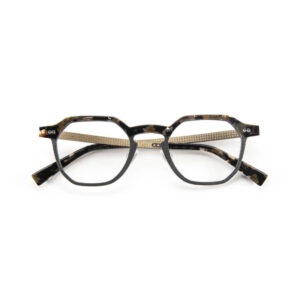
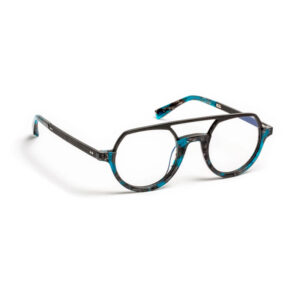
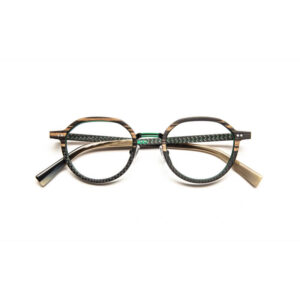
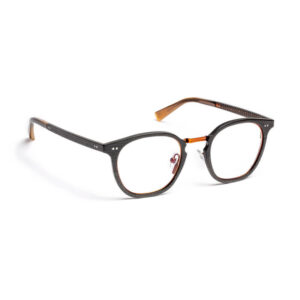
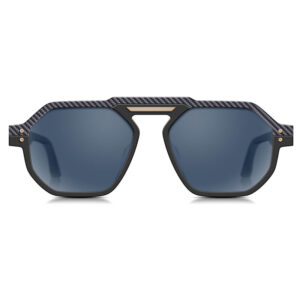
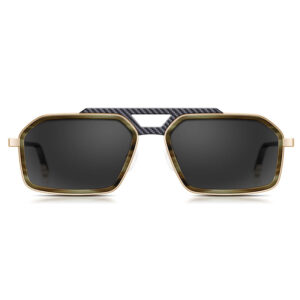
That could mean distinctive acetate eyewear, refined titanium frames, premium metal designs, or a smaller selection of unusual styles that complement an established retail assortment.
Other buyers may be looking for a manufacturing partner for a private-label or original custom eyewear project.
At EyewearBeyond, we work with professional eyewear buyers seeking wholesale frame collections as well as suitable branding and custom manufacturing options.
Our product offering includes selected ready-stock collections alongside project-based customization.
For certain ready-stock series, published minimum quantities begin at ten pieces per model or color, depending on the collection. Mixed-order arrangements and availability should be confirmed for the selected products.
Private-label and fully customized eyewear follow different purchasing requirements, including project-specific minimums, sample development, and production planning.
That distinction is important.
A retailer looking for twenty distinctive ready-stock frames has different requirements from a brand developing several hundred pieces of an original acetate collection.
We believe those conversations should begin with the customer’s actual purchasing needs.
What styles are missing from the existing assortment? Is the priority current stock availability or original development? Are the products intended for independent boutiques, multiple retail locations, or a branded wholesale collection?
The answers help determine which products and purchasing arrangements are appropriate.
EyewearBeyond may serve as a complementary wholesale source for an established collection or a potential partner for a specific custom development project. The right arrangement depends on the models, quantities, specifications, and confirmed service terms.
For buyers who already know their market, that is a more productive starting point than a generic promise to supply every type of eyewear.
Final Thoughts: A Good Supplier Makes the Buying Process Easier
Experienced eyewear buyers don’t expect perfection.
They know that a popular color can sell out, a production schedule can change, and not every design request will be commercially practical.
What they do expect is clarity.
Accurate product information. Honest stock updates. Ordering conditions that make sense. A reasonable process for handling problems. And communication that respects the buyer’s time.
Those qualities are rarely as eye-catching as a new frame collection.
But they determine whether working with a supplier remains practical after the excitement of the first order has passed.
For an established eyewear business, the most valuable supplier isn’t necessarily the one with the biggest catalog or the lowest opening quotation.
It’s the one whose products, processes, and commitments fit the way the business needs to operate.
Experienced buyers don’t need a supplier who promises everything. They need one whose promises they can actually plan around.
Explore EyewearBeyond’s wholesale eyewear collections or contact our team with your preferred styles, purchasing quantities, and sourcing requirements to discuss suitable ready-stock, private-label, or custom eyewear options.