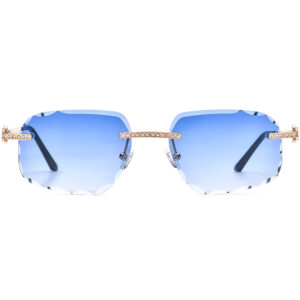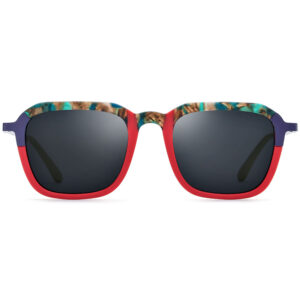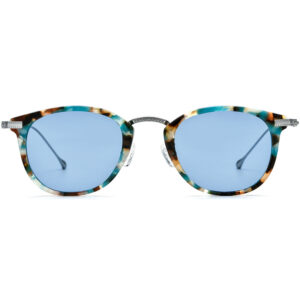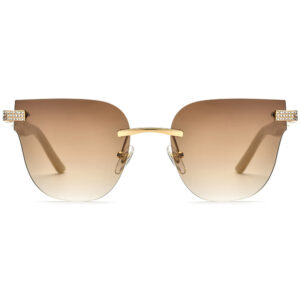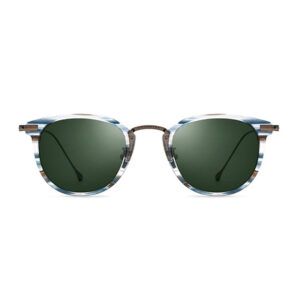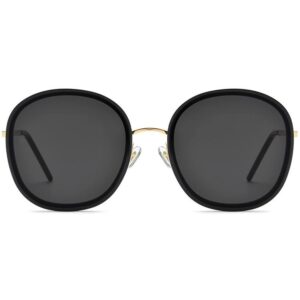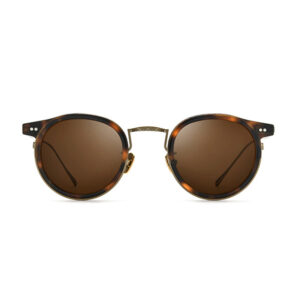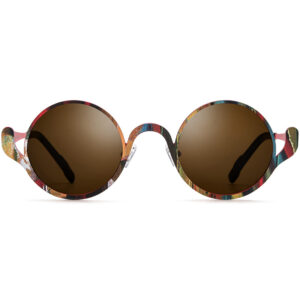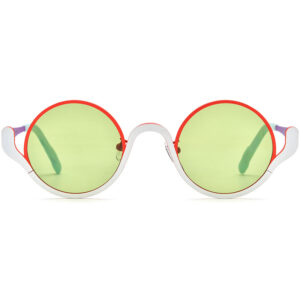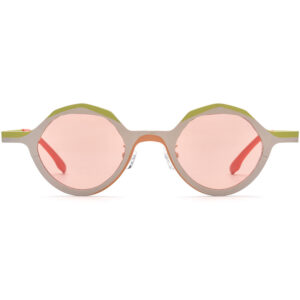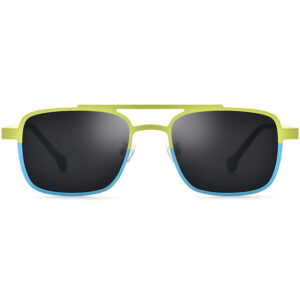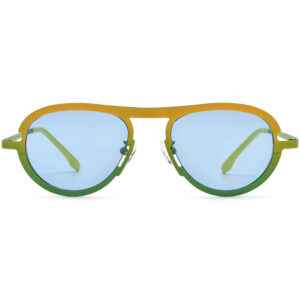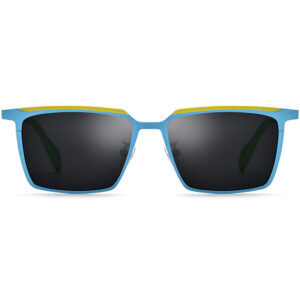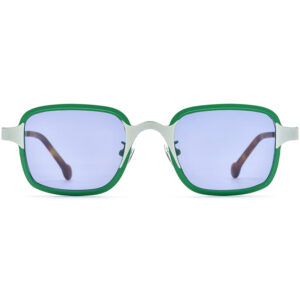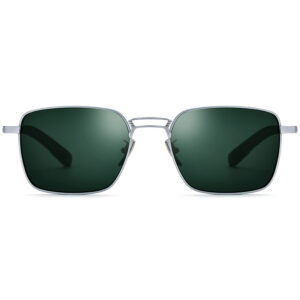
A good eyewear sample can create false confidence.
The frame looks right. The lens color is close. The logo is clean. The hinges feel acceptable. The brand team tries it on, likes it, and says:
“Approved. Please start production.”
That sounds efficient, but it can be risky.
A sample is not truly ready for mass production just because one physical piece looks good.
Before production starts, the buyer and factory need to close the decisions that could otherwise change during bulk manufacturing.
That means approving more than appearance.
It means confirming:
- design
- construction
- materials
- lens specification
- fit
- hardware
- finishing
- branding
- acceptable variation
- production references
The real purpose of sample development is therefore not simply to produce one attractive pair of sunglasses.
It is to turn a design into a reproducible production standard.
A useful way to think about sample approval is:
Can we make one?
versus:
Can we make the same result repeatedly?
Those are two very different questions.
First, Know What Type of Sample You Are Approving
One of the most common problems in eyewear development is that every sample is simply called a “sample.”
But different samples have different jobs.
If the buyer does not know what a sample is supposed to prove, approval becomes vague.
Concept or Appearance Sample
A concept sample may be used to confirm:
- overall silhouette
- proportions
- lens shape
- color direction
- design language
At this stage, the sample may not use the final material, final hinge, final lens, or final production process.
That can be completely normal.
Its job is to answer:
Does this design direction work?
It should not automatically become the production reference.
Engineering or Development Sample
A development sample goes deeper.
It may be used to confirm:
- frame dimensions
- temple thickness
- hinge construction
- lens fit
- bridge geometry
- assembly
- frame balance
- component compatibility
Its job is to solve technical questions.
A frame may look visually correct at this stage while still needing engineering changes.
Pre-Production Sample
The pre-production sample, often called a PPS, should be much closer to the intended bulk product.
Ideally, it should use:
- approved materials
- approved lenses
- intended hinges and hardware
- approved branding method
- approved finish
- intended construction
- production-relevant dimensions
Its job is different from the first two.
It asks:
Is this the product we are prepared to reproduce in bulk?
That distinction matters.
Every sample should have a job. If you do not know what the sample is meant to prove, approval becomes vague.
Do Not Approve the Entire Sample With One “Yes”
A simple approved/rejected decision is often too broad.
One sample can be correct in one area and still wrong in another.
For example:
- the frame shape may be approved
- the hinge may still need changing
- the lens color may be approved visually
- the lens performance may still be unconfirmed
That is why sample approval works better when separated into layers.
The Five-Layer Sample Approval Model
1. Design Approval
This confirms what the customer can immediately see.
Typical points include:
- silhouette
- lens shape
- bridge proportions
- temple shape
- visible thickness
- overall frame balance
The key question is:
Does the sample look like the product we intended to create?
A design can pass this stage even if the construction still needs work.
2. Construction Approval
This looks at how the product is built.
Typical areas include:
- hinge
- screw
- lens groove
- temple construction
- nose pad
- bridge connection
- internal reinforcement
- decorative components
The key question is:
Is the product built in a way we are prepared to reproduce?
This is where hidden technical decisions matter.
3. Material and Finish Approval
This confirms whether the actual materials and visible finishes are acceptable.
That may include:
- acetate
- stainless steel
- alloy
- titanium
- lens material
- plating
- coating
- polishing
- hardware finish
The key question is:
Are these the exact materials and finishes that bulk production should follow?
4. Functional Approval
This confirms how the eyewear behaves.
Examples include:
- hinge opening and closing
- lens retention
- frame alignment
- temple symmetry
- fit
- nose contact
- lens function
- polarization or other lens requirements
The key question is:
Does the product work correctly, not just look correct?
5. Production Reference Approval
This is the most important layer before bulk production.
It asks:
Can this sample become a real QC reference?
In other words:
- are the materials final?
- are the dimensions final?
- is the construction final?
- is the branding final?
- can the factory reproduce this result consistently?
A sample may pass design approval while still failing production approval.
That is why one word—“approved”—is often not enough.
“Looks Good” Is Not an Approval Standard
Many sample comments begin with subjective language:
- looks premium
- hinge feels good
- lens should be darker
- logo feels too far back
- polish needs improvement
This kind of feedback is useful during development.
But before mass production, the feedback should be converted into something the factory can repeat.
For example:
Subjective
The logo looks too far back.
Controlled
Move logo centerline 3 mm toward hinge. Sample 3 position approved.
Subjective
The lens should be darker.
Controlled
Sample 2 grey lens approved as the production color reference.
Subjective
The temple feels too thick.
Controlled
Temple thickness revised from 5.0 mm to 4.5 mm and approved in Sample 2.
This conversion is one of the main purposes of sampling.
Sampling converts subjective design language into production references.
Without that conversion, the same arguments often return during bulk production.
Approve What Customers See — and What They Never See
Most sample reviews focus heavily on visible details.
That is understandable.
Buyers naturally notice:
- frame shape
- lens color
- logo
- polishing
- plating
- surface finish
But some expensive failures begin in areas the customer never sees.
These can include:
- hinge specification
- screws
- temple core
- lens groove
- nose pad attachment
- weld or solder points
- internal hardware
- reinforcement
A sample can look perfect and still contain a temporary or unsuitable hidden construction.
For example, the sample maker may manually adjust a hinge to create a smooth feel.
The result looks excellent.
But if that same hinge construction becomes inconsistent in a 2,000-piece order, the sample did not prove that the construction was production-ready.
Some of the most expensive production problems are hidden inside a sample that looks perfect.
This is why buyers should ask not only:
Does it look right?
but also:
Is this how the factory intends to build the production version?
Approve Frame Geometry Before Surface Details
Sampling becomes inefficient when too many things are changed at the same time.
A buyer may spend the first sample round discussing:
- logo color
- polishing
- lens tint
- packaging
while the frame geometry is still unstable.
That is backwards.
A better sequence is usually:
Geometry → Construction → Fit → Materials and Finish → Branding → Packaging
The exact order can vary, but the principle is useful.
If frame width, temple angle, or bridge geometry is still changing, there is little value in repeatedly fine-tuning cosmetic details that may need to move later.
For example, if a temple profile is still being redesigned, the logo position may also need to change.
If the front width changes, lens proportions may need to change.
This leads to a useful development rule:
Do not spend Sample 1 polishing the surface of a frame whose geometry is still changing.
Approve the structural decisions first.
Then refine the finish.
Fit Approval Should Not Mean “It Fits Me”
Sample fitting is important.
But one person trying on a sample is not a fit standard.
A brand founder may wear the sample and say:
It fits me perfectly.
That is useful feedback, but it does not prove that the frame fits the target market.
Fit should also consider measurable factors such as:
- total frame width
- bridge width
- temple opening
- temple length
- nose contact
- front angle
- lens height
- overall frame balance
If the style is intended to be:
- narrow
- standard
- wide
- oversized
that positioning should be intentional.
Personal comfort matters, but it should not replace dimensional control.
Personal comfort feedback is useful, but it is not the same as dimensional fit approval.
This becomes especially important when the buyer and factory are in different markets and the person approving the sample does not represent the target customer.
Lens Approval Requires Two Separate Decisions
Lens approval is another area where one word can hide too much.
A lens can be visually correct and technically incorrect.
That is why buyers should separate:
Visual Lens Approval
This may include:
- color
- gradient
- mirror appearance
- visible darkness
- edge appearance
Performance Lens Approval
This may include:
- polarization
- UV requirements
- visible light transmission
- lens category
- optical performance
- coating function
These are different decisions.
A buyer may love the appearance of a lens while still waiting for final performance confirmation.
That means the correct status is not simply:
Lens approved.
A better status might be:
Lens color approved visually. Final performance specification pending.
This distinction prevents later confusion.
A lens can be visually approved and technically unapproved at the same time.
Approve the Manufacturing Method When It Changes the Result
A sample can sometimes achieve the right appearance using a temporary process.
That is not necessarily a problem.
The problem is when the buyer assumes the sample process is also the production process.
For example, a sample logo may be created by one method while bulk production uses another.
A prototype may use:
- manual polishing
- temporary hardware
- hand-applied paint
- CNC machining
- sample-only lens
- temporary engraving method
while bulk production uses a different route.
Before approving a PPS, the buyer should ask:
Was this sample made using the intended production process?
If not, the factory should explain what will change in bulk production.
The visual result alone is not enough.
Approving the appearance without approving the process can create a sample that bulk production was never designed to reproduce.
One Perfect Sample Does Not Prove Reproducibility
This is one of the most important questions in eyewear development.
A skilled sample technician can often make one excellent frame.
They can:
- hand-adjust the temples
- polish problem areas
- fine-tune hinge resistance
- correct alignment
- manually fit the lenses
That proves the factory can make one good sample.
It does not necessarily prove the production line can make 1,000 similar units consistently.
Before mass production, buyers should ask:
- Was this sample heavily hand-adjusted?
- Does it use one-off material?
- Are all components production-available?
- Is the finish scalable?
- Can the approved dimensions be repeated?
- Does the intended production process create the same result?
This is the difference between prototype success and manufacturing readiness.
Sample quality asks: “Can you make one?”
Production readiness asks: “Can you make the same result repeatedly?”
That is the standard that matters before bulk production.
Ask What Was Special About the Sample
A useful question before approving a pre-production sample is:
Was anything on this sample made differently from the intended production process?
This may reveal details such as:
- special hand polishing
- manually adjusted hinge
- substituted screw
- temporary lens
- hand-painted color
- prototype tooling
- CNC parts
- temporary branding method
None of these automatically makes the sample invalid.
Prototype shortcuts are often necessary during development.
The risk appears when the buyer does not know they are shortcuts.
Prototype shortcuts are acceptable when they are disclosed. They become risky when they are mistaken for production standards.
If something will change in production, that difference should be discussed before approval.
Approve Acceptable Variation, Not Only the Perfect Sample
Mass production does not always produce 1,000 visually identical clones.
Some materials and processes naturally create variation.
Examples include:
- patterned acetate
- tortoise acetate
- horn patterns
- transparent colors
- gradient lenses
- certain plating finishes
- hand-polished surfaces
The buyer should therefore approve not only the ideal sample, but also understand the acceptable variation around it.
For example, with patterned acetate, questions may include:
- How much pattern variation is acceptable?
- Can one temple be darker than another?
- Does pattern placement need to be symmetrical?
- Is color intensity allowed to vary within the material batch?
If these questions are not discussed, a factory may consider natural material variation acceptable while the buyer considers it defective.
That is a preventable disagreement.
Mass production is controlled by an acceptance range, not by expecting every unit to become a clone of the sample.
The golden sample should define the target.
The approval standard should also define what reasonable variation around that target looks like.
Create a Change Log, Not Just Another Sample
Sample rounds can become confusing very quickly.
For example:
Sample 1
- lens too light
- temple too thick
- logo acceptable
Sample 2
- darker lens
- thinner temple
- logo accidentally moved
Sample 3
- logo corrected
- bridge also changed
Without a clear change log, the buyer may no longer know which differences were intentional.
A simple table is enough:
| Revision | Requested Change | Result | Status |
|---|---|---|---|
| S1 → S2 | Darker lens | Completed | Approved |
| S1 → S2 | Temple -0.5 mm | Completed | Approved |
| S2 → S3 | Logo +3 mm toward hinge | Completed | Approved |
The important point is that each new sample should answer specific questions.
It should not reopen every previous decision.
Every new sample should prove specific changes, not restart the entire approval conversation.
This makes sample development faster and much easier to audit later.
Do Not Leave Final Approvals in Chat
Many eyewear projects are managed through:
- screenshots
- annotated photos
- video calls
These tools are useful for development.
They are weak as permanent production specifications.
For example, a buyer may say in chat:
Sample 3 looks good. Just make the logo 2 mm smaller and proceed.
If that instruction is never added to the approved drawing or tech pack, the factory now has two standards:
- physical Sample 3
- later chat instruction
That is risky.
Final approved changes should return to controlled documents such as:
- tech pack
- technical drawing
- BOM
- approved artwork
- sample approval sheet
- revision log
Chat is useful for deciding changes. It should not become the permanent production specification.
The Golden Sample Should Be Frozen
Once a golden sample is formally approved, its purpose changes.
It is no longer just another development sample.
It becomes a production reference.
That means the buyer should stop making informal improvements.
For example:
Can you make the lens slightly darker in production?
or:
Please move the logo 1 mm forward when you make the bulk order.
These may sound like small changes.
But once the golden sample is approved, they are no longer casual improvements.
They are revisions.
The correct process is:
new change → document update → approval → new production reference
This is important because QC needs a stable target.
If the target keeps moving after approval, both the buyer and factory lose a reliable standard.
Once the golden sample is approved, improvement becomes change control.
What Should Be Frozen Before Mass Production?
Before bulk production begins, the major product decisions should be closed.
Frame
Confirm:
- geometry
- critical dimensions
- fit
- material
- color
- surface finish
Lens
Confirm:
- material
- color
- gradient or solid treatment
- performance requirements
- coating or mirror treatment
Hardware
Confirm:
- hinge
- screws
- nose pads
- decorative components
- relevant finishes
Branding
Confirm:
- logo size
- logo position
- logo method
- color
- orientation
Packaging
Confirm:
- case
- cleaning cloth
- box
- labels
- inserts
- barcode or other requirements where applicable
Documentation
Confirm:
- latest tech pack
- final drawing
- BOM
- artwork
- golden sample
- final revision number
Any item that is still open should be clearly identified.
Mass production should not start with critical design questions still unresolved.
The Pre-Production Sample Is Not the End of Quality Control
Approving the PPS does not mean quality control is finished.
The sample creates the target.
Production still needs to prove that the factory stays on that target.
That can involve:
- first-piece approval
- in-process QC
- material checks
- assembly control
- bulk comparison against the golden sample
- final inspection
This distinction is important.
A factory can produce an excellent approved sample and still lose consistency during production.
The PPS therefore answers:
What should the product be?
Production QC answers:
Did the factory continue making it that way?
The sample defines the target. Production QC proves whether the factory stayed on target.
Seven Questions to Ask Before You Say “Approved”
Before releasing an eyewear style into mass production, buyers should be able to answer seven questions.
1. Is this sample using the actual bulk-production materials?
If not, document what will change.
2. Was it made with the intended production process?
If not, confirm whether the production method can reproduce the approved result.
3. Which specifications are now frozen?
This should be clear to both buyer and factory.
4. Which details are allowed to vary?
Do not assume every unit will be visually identical where natural material or process variation exists.
5. Have all sample changes been updated in the technical documents?
The sample and tech pack should not contradict each other.
6. Can the factory reproduce this result without exceptional hand adjustment?
One perfect handmade unit is not the same as a stable production process.
7. Will this exact sample become the QC reference for bulk production?
If the answer is no, the production reference is still unclear.
Final Thought: Approval Means Closing Decisions
Sample development is not only about asking:
“Do I like this pair?”
The more important question is:
“Have we closed enough product and production decisions to make this repeatedly?”
A production-ready sample should mean:
Design frozen
↓
Construction frozen
↓
Materials frozen
↓
Performance requirements frozen
↓
Production references frozen
↓
Mass production released
That is the real purpose of sample approval.
A sample is ready for mass production when there are no important decisions left for the factory to guess.