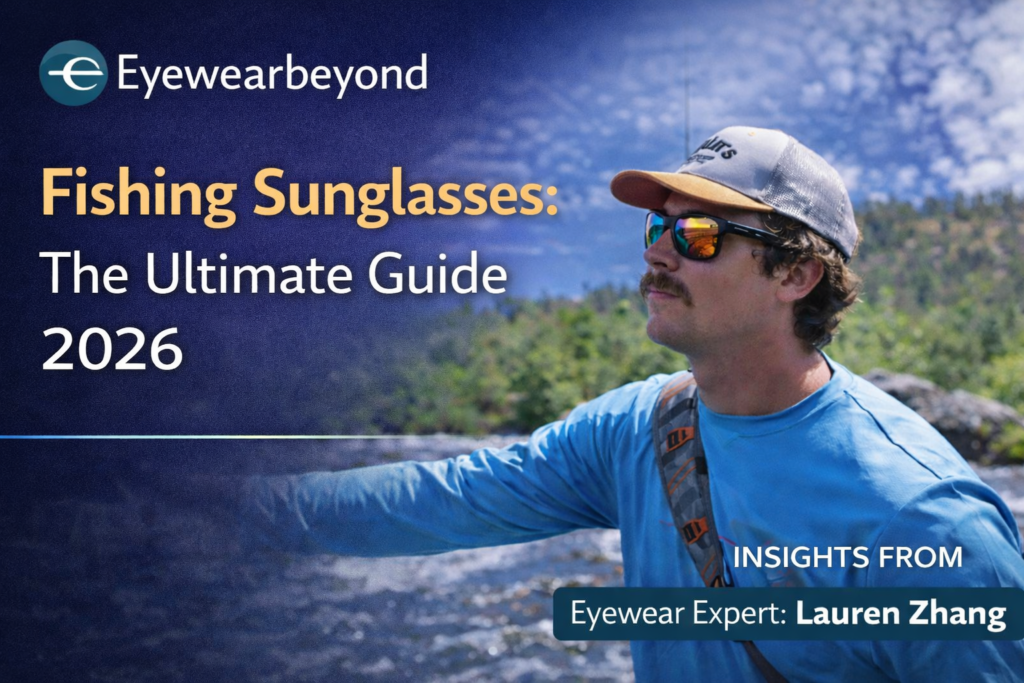
💡 EXPERT INSIGHT
Author / Expert: Lauren Zhang
Role: Eyewear Product & Manufacturing Specialist
Company: Eyewearbeyond – Custom & Wholesale Eyewear Manufacturer“In 2026, fishing sunglasses are being judged less by ‘style’ and more by real-world performance: polarization clarity, hydrophobic/anti-scratch coatings that survive salt and sweat, and wrap geometry that blocks side glare without pressure points. For brand owners, the fastest way to win is to standardize a few proven frame platforms, lock lens specs with testable data, and build reorders around consistency—not constant reinvention.”
— Lauren Zhang, Eyewear Product & Manufacturing Specialist
👉 Request: 2026 Fishing Sunglass Spec Sheet + QC Checklist
📧 Email: eyewearbeyondofficial@gmail.com
Fishing might look peaceful — but for those who live and breathe it, it’s more than a weekend hobby. It’s a skill, a strategy, and a lifestyle that demands precision, patience, and the right gear. And when it comes to gear, a good pair of sunglasses can mean the difference between spotting a catch and missing it altogether.
Here’s the problem: most sunglasses aren’t built for real fishing.
They slide off when you sweat. They fog up in humid conditions. Worst of all, they don’t actually block the glare bouncing off the water — which is exactly what makes spotting fish so difficult. For wholesalers and outdoor brands, offering the wrong type of fishing eyewear can lead to returns, poor reviews, and zero brand loyalty.
That’s where Eyewearbeyond comes in. As a professional eyewear manufacturer based in China, we’ve worked with fishing brands, outdoor gear distributors, and private label clients from around the world — helping them develop polarized fishing sunglasses that are not only functional, but durable, customizable, and market-ready.
This guide isn’t just about lenses and frames. It’s about helping you — the B2B buyer or brand owner — understand what truly matters in the 2026 fishing eyewear market, and how to make sourcing smarter, faster, and more profitable.
Let’s dive deep into what makes fishing sunglasses perform — and sell.
What Makes a Pair of Sunglasses Ideal for Fishing?
Not all sunglasses are created equal — and definitely not when it comes to fishing.
Anyone who’s spent more than ten minutes on open water knows the challenge: intense sunlight reflects directly off the water’s surface, creating blinding glare that makes it almost impossible to spot fish or read the water. Add to that the heat, wind, salt spray, and sweat — and you’ve got one of the harshest environments eyewear can face.
So, what makes a pair of sunglasses truly suitable for fishing? It comes down to four key performance areas: lens technology, color optimization, durability, and all-day comfort.
1. Polarized Lenses: Non-Negotiable for Fishing
Polarization is the most critical feature — period. A polarized lens blocks horizontally reflected light, which is exactly the type of glare that comes off water surfaces. Without it, a fisherman might as well be blind to everything below the surface.
At Eyewearbeyond, we use advanced TAC or nylon polarized lenses with layered filters to cut glare while preserving clarity. This allows wearers to:
- See below the surface to spot fish or structure
- Reduce eye fatigue over long fishing sessions
- Maintain contrast and color accuracy for safer navigation
No fishing sunglasses should go to market without genuine, tested polarization. Many low-end options claim it — but don’t deliver it consistently.
2. Lens Color: A Game-Changer Depending on Environment
The best lens color for fishing depends on where and when you’re fishing. Choosing the right tint isn’t just cosmetic — it can improve visual performance in specific conditions, and that’s a major selling point when speaking to serious anglers or gear stores.
Some proven combinations include:
- Gray lenses: All-around option, ideal for bright sunny days and saltwater fishing
- Copper/Brown lenses: Enhance contrast in variable light; great for freshwater and low-light
- Amber/Yellow lenses: Best for early morning, dusk, or overcast days — helps sharpen vision
- Blue mirror over gray base: Popular in offshore saltwater fishing for strong sunlight protection
- Green mirror over copper base: Excellent for shallow water fishing and greenish light conditions
A well-structured fishing eyewear line should offer at least 2–3 lens colors, each positioned for different use cases or regional preferences.
3. Durable, Water-Resistant Coatings
Fishing sunglasses face extreme wear: UV, salt, sweat, oils, and sand. That’s why coatings matter — a lot.
Key coatings include:
- Hydrophobic coating: Repels water droplets, especially useful in humid or marine environments
- Oleophobic coating: Prevents fingerprints and oil smudges from affecting clarity
- Anti-saltwater resistance: Especially for sea fishing, helps lenses withstand corrosion
- Anti-scratch coating: Essential for handling and cleaning longevity
At Eyewearbeyond, we work with multi-layer lens coating systems that combine function and visual appeal — such as REVO mirror coatings layered over polarized lenses with anti-fog protection.
4. Comfort and Fit — For Hours of Continuous Wear
Anglers wear sunglasses for 4 to 8 hours at a time, often under harsh conditions. A bad fit means slipping, pressure on the nose, or even headaches — which leads to returns or bad reviews. That’s why the frame design is just as important as the lens.
What to look for:
- Non-slip rubber nose pads and temple tips
- Wrap-around frame design for side protection and secure fit
- Lightweight materials like TR90 or nylon for fatigue-free wear
- Ventilation grooves to reduce fog and allow airflow
- Hat/visor compatibility — important for professional fishermen and tournament anglers
In our own models at Eyewearbeyond, we test frame prototypes on multiple face types and in simulated hot-weather fishing environments to ensure real-world comfort.
In summary, the right fishing sunglasses are not just “outdoor sunglasses with a tinted lens.”
They are a technical product built for a high-stakes environment, where clarity, durability, and comfort make all the difference — not just for performance, but for brand trust and long-term customer loyalty.
Types of Fishing Sunglasses You Should Know
Not all anglers fish the same way — and that’s exactly why a one-size-fits-all sunglasses strategy doesn’t work.
From quiet lake fishing to high-speed offshore boating, each environment presents its own demands on eyewear. As a wholesaler, brand owner, or sourcing agent, your job isn’t just to sell sunglasses — it’s to offer the right ones for each use case.
Below are the most important fishing sunglasses types to consider in your product line, and why they matter.
1. Freshwater vs. Saltwater Fishing Sunglasses
This is one of the most fundamental distinctions in fishing eyewear.
Freshwater fishing sunglasses are often used in lower-light, inland environments — lakes, rivers, shaded reservoirs. They typically feature:
- Brown, copper, or amber lenses for better contrast
- Lightweight frames for long wear
- Simpler coatings (no need for heavy anti-salt protection)
Saltwater fishing sunglasses, in contrast, face harsh sunlight and corrosive salt exposure. The right model will include:
- Darker base lenses like gray or blue mirror
- Anti-corrosion lens coatings
- Full-wrap frames for sun and spray protection
- More aggressive hydrophobic and oleophobic layers
If you’re selling into different markets, offer both options clearly labeled — or develop a hybrid model that covers both.
2. Floatable Fishing Sunglasses
Losing a pair of $50 sunglasses to the ocean is every angler’s nightmare.
Floatable frames, made from ultra-light TR90 or injected TPU with foam-filled arms, are a must-have for:
- Kayak and canoe fishermen
- Paddleboard anglers
- Offshore boating or deep-sea fishing trips
Many DTC brands use this feature as a core selling point — and smart B2B buyers should too. It adds value, and gives you an edge over budget competitors.
Bonus: Floatable frames pair well with bright, eye-catching colors for easy recovery if dropped.
3. Prescription-Ready Fishing Sunglasses (Rx-Adaptable)
A growing segment in outdoor eyewear, Rx-compatible sunglasses let users with vision issues still enjoy the benefits of fishing-specific performance lenses.
There are two main approaches:
- Insert-compatible frames: Allow a removable Rx lens piece behind the main lens
- Direct Rx lenses: Custom-made polarized prescription lenses from the start
If your customers include high-end gear stores, pro shops, or mature angler demographics (35+), this is an excellent upsell option.
Make sure your supplier — like Eyewearbeyond — can support Rx-ready frame molds and customization workflows.
4. Full Wrap-Around Performance Sunglasses
Designed for maximum coverage, these are ideal for high-speed boat rides, deep-sea excursions, or tournament fishing.
Features to highlight:
- Wide temples and lens curvature to block side glare
- Close-fitting frame to reduce wind and water entry
- High-grip temple tips and nose pads for secure fit
- Often used with hats, masks, or fishing buffs
In many global markets (especially U.S., Australia, South America), this silhouette is seen as the “pro look” — making it a strong visual anchor for your premium line.
5. Lifestyle Fishing Sunglasses
Not every fishing trip is a hardcore expedition. Many users want sunglasses that blend fishing performance with daily wear style.
These models feature:
- Polarized lenses with medium VLT
- More urban or classic shapes (wayfarer, navigator, sport rectangle)
- Matte black, tortoiseshell, or mirrored REVO finishes
- Compatibility with casual wear
Perfect for crossover brands, coastal fashion stores, and entry-level customers — these models let you target volume sales while still keeping a foot in the fishing market.
Offering different types of fishing sunglasses isn’t about having a huge catalog — it’s about having a strategic lineup that speaks to different needs, lifestyles, and regions.
Build your product mix smartly, and you’ll not only cover more ground — you’ll become the go-to partner for clients who want options that actually sell.
Key Lens Technologies in 2026
When it comes to fishing sunglasses, the lens is where the real magic — and real value — happens. It’s not just what customers see through the lens, but what they see in it: clarity, protection, style, and performance.
In 2026, the best fishing eyewear isn’t just polarized — it’s engineered to handle glare, corrosion, UV, and fatigue, often all at once. Here’s what you need to know to build or source lenses that meet real-world demands.
Polarization: The Foundation of Fishing Performance
We’ve said it before, but it’s worth repeating — polarization is non-negotiable.
A proper polarized lens:
- Blocks horizontally reflected light off the water surface
- Allows anglers to see into shallow waters to spot fish or debris
- Reduces long-term eye strain caused by glare
But not all polarization is equal. Low-end lenses may use surface-level films that wear out or distort. At Eyewearbeyond, we recommend multi-layer TAC or injected nylon lenses, which embed the polarization filter within the lens — improving durability and optical precision.
Material Matters: TAC, PC, or Nylon?
Different lens materials offer different strengths, and your choice affects both performance and pricing.
TAC (Tri-Acetate Cellulose)
- Lightweight and cost-effective
- Excellent optical clarity for its price
- Great for mid-range lifestyle fishing sunglasses
- Slightly more fragile if dropped
Polycarbonate (PC)
- Highly impact-resistant — ideal for rough outdoor use
- Slightly lower clarity vs TAC
- Great for entry-level or rental-friendly models
Nylon (PA)
- Premium material used in high-end fishing sunglasses
- Extremely light, flexible, and distortion-free
- Ideal for REVO, mirror, or prescription lenses
- Higher cost but superior optical performance
Nylon lenses are becoming the go-to material for performance-driven fishing eyewear lines — especially when combined with coatings like REVO or anti-saltwater protection.
Mirror Coating & REVO: Function Meets Style
Mirror coatings do more than look cool.
- They reflect additional sunlight, reducing eye fatigue
- Improve glare resistance in high-exposure environments like saltwater fishing
- Serve as a visual identifier for product positioning (e.g., blue mirror = saltwater, green mirror = inshore)
In 2026, REVO coatings — multi-layer mirror coatings with gradient depth — are in high demand. They offer:
- Enhanced visual contrast
- Premium aesthetics (great for branding)
- Greater scratch resistance and water repellency
We help clients at Eyewearbeyond combine REVO with polarized lenses in custom tints — a powerful combination of performance + differentiation.
Hydrophobic, Oleophobic, and Anti-Saltwater Coatings
The fishing environment is punishing. Without protection, lenses quickly degrade or get coated in salt, oil, and water spots.
That’s why functional coatings are becoming standard:
- Hydrophobic coating: Repels water droplets, reduces smudge build-up
- Oleophobic coating: Protects against skin oils and fingerprints
- Anti-saltwater layer: Crucial for marine environments — prevents lens surface corrosion
These coatings are especially important if your product is targeting:
- Saltwater fishermen
- Tropical or coastal regions
- High-end buyers who expect premium usability over time
For many brands, adding these coatings is a low-cost way to upgrade perceived value and extend product life.
UV400 Protection: Still Essential
Yes, it’s a basic expectation — but don’t assume it’s always included.
Every fishing lens you sell should offer UV400 protection, meaning it blocks 100% of UVA and UVB rays.
This isn’t just about eye safety. It’s about customer trust. In markets like Europe or North America, UV certification is legally or commercially required. Make sure your supplier provides clear testing documentation.
In short, lens technology is where fishing sunglasses prove their worth.
Whether you’re building a budget-friendly line or a high-ticket specialty series, make lens choice your strategic starting point — not an afterthought. Customers won’t remember the frame code or packaging style, but they’ll always remember how well they could see through your lenses.
Frame Materials and Fit for Outdoor Performance
If the lens is the heart of a fishing sunglass, the frame is its backbone.
Why? Because anglers aren’t just wearing sunglasses for 20 minutes in a car — they’re wearing them for 6 to 8 hours straight, often in sweaty, humid, sun-exposed conditions. A poor-fitting frame means constant adjustments, slipping, red pressure marks on the nose, and eventually… bad reviews or product returns.
In 2026, performance-ready frames aren’t a luxury — they’re a requirement for serious fishing sunglasses.
Let’s break down what matters.
1. TR90, Nylon, and TPU: The Materials That Hold Up
TR90 (Thermoplastic memory polymer)
- Lightweight and flexible
- Retains shape even after bending
- UV-resistant and durable in extreme temperatures
- Ideal for mid-range to high-end frames
Nylon (PA12)
- Even more durable than TR90
- Strong resistance to saltwater corrosion and heat
- Commonly used in performance and military-grade eyewear
- Great for wrap-around, sport-style fishing frames
TPU (Thermoplastic Polyurethane)
- Softer, often used in floating or hybrid frames
- Lightweight and impact-resistant
- Excellent for rugged use or rental lines
At Eyewearbeyond, we help buyers match frame materials with target markets — for example, TR90 for DTC outdoor brands, and TPU for coastal rental shops or rugged-use models.
2. Frame Shape: Wrap-Around for Protection and Performance
Anglers deal with light coming from all angles — above, below, and especially from the sides due to water reflections.
That’s why the best fishing sunglasses use wrap-around designs, which offer:
- Better sun protection from the sides
- Enhanced wind and splash resistance
- A snug, secure fit — even during movement or bending over
A good wrap frame should also be helmet- and hat-compatible, since many anglers wear caps, hoods, or buffs during fishing.
3. Anti-Slip Features: The Small Details That Matter
Nothing frustrates a fisherman more than sunglasses sliding down a sweaty nose while casting or reeling in.
You can prevent this by building in:
- Rubberized nose pads — ideally molded or adjustable
- Textured or rubber temple tips — for grip behind the ears
- Spring hinges — allow for flex without pinching
These features may seem small, but in a competitive category, they’re often the tie-breaker between two models at the same price.
4. Ventilation and Fog Management
Fishing isn’t as high-exertion as skiing or cycling — but heat, humidity, and still air can still lead to fogging, especially during summer or early morning conditions.
Look for:
- Vented frame designs: small gaps at the top or sides to allow airflow
- Floating nose bridges: reduce direct skin contact and allow breath to escape
- Foam-free or moisture-repellent frame pads for marine models
If your line includes full-wrap performance frames, ventilation becomes even more important to balance seal and airflow.
5. Visual Identity: Shape and Color Signal Use
In the B2B space, frame design isn’t just about function — it tells a story.
- Wide arms + aggressive wrap = serious performance fishing
- Wayfarer or navigator shape = lifestyle crossover, casual lake use
- Matte black or olive green = outdoor/utility feel
- Glossy blue or mirror gold = coastal / saltwater vibe
Use shape and color as visual language to segment your product tiers. It helps retailers merchandise better, and gives customers clearer signals when choosing.
A well-made fishing sunglass frame does more than hold the lens — it builds trust.
It tells your customer, “Yes, you can wear this for hours. Yes, it’ll stay put. And yes, it’ll survive real-world use.”
In short, form follows function — but great function also sells form.
Top Use Cases and Target Customer Groups
Fishing sunglasses may all look similar at first glance — but the people who wear them, and the way they use them, are incredibly diverse. From elite tournament anglers to weekend lake goers, each group has different needs, habits, and price expectations.
If you’re a brand or wholesaler building a fishing eyewear line in 2026, understanding these use cases is critical. It allows you to develop products that solve specific problems, speak to real lifestyles, and ultimately drive higher conversions and repeat business.
Let’s look at the main customer groups you’ll encounter — and how to serve them.
1. Serious Anglers & Tournament Fishermen
These are the pros. They’re out before dawn, often competing in high-stakes bass, redfish, or saltwater tournaments. They demand sunglasses that can keep up with their gear — and they’re willing to pay for it.
What they look for:
- High-performance polarized lenses (usually nylon or REVO)
- Wrap-around designs that block all side glare
- Multiple lens color options for different light conditions
- Prescription-ready frames for older or vision-impaired users
- Trusted technical specs and UV/salt resistance
Where to reach them:
- Fishing expos, pro gear retailers, or club sponsorships
- Partnerships with influencers or elite anglers
- Limited edition or co-branded models
This group sets the tone for your brand’s credibility. If they trust you — others will follow.
2. Recreational Weekend Fishermen
By far the largest segment, this group fishes for the joy of it. They go to lakes, rivers, or coastal spots — usually on weekends or holidays — and they care about having gear that looks good and works well.
What they look for:
- Genuine polarized lenses (but don’t need the most expensive type)
- Comfortable fit for all-day wear
- Floatable or lightweight frames
- REVO or mirror coatings for style
- Reasonable pricing (middle range is ideal)
Where to reach them:
- Online retailers, Amazon, sporting goods stores
- Outdoor lifestyle shops or big-box retailers
- Fishing blogs, YouTube content, or seasonal email campaigns
For this group, sunglasses are aspirational yet accessible — which makes them a perfect match for a strong DTC brand or distributor with good packaging and customer experience.
3. Saltwater Sport Fishers / Boaters
This segment lives near the coast — or travels there — and often spends full days offshore in bright, salty conditions. They’re loyal to function and very sensitive to lens clarity.
What they look for:
- Dark lenses with high sun protection (blue/grey mirror)
- Anti-corrosion coatings and saltwater durability
- Hydrophobic + oleophobic layers to keep vision clean
- Floating frames to prevent loss
- Secure wrap fit that stays in place under wind
Where to reach them:
- Coastal retailers, marinas, boating equipment stores
- Partnerships with saltwater gear brands or lodges
- Instagram content showing offshore lifestyle + gear
If you’re targeting this market, emphasize durability and tech — because their conditions are more punishing than any other.
4. Outdoor & Crossover Lifestyle Shoppers
Not everyone who buys fishing sunglasses goes fishing every week. Some just love the look, feel, and story behind them.
This crossover group includes hikers, campers, beachgoers, and general outdoor enthusiasts who are drawn to polarized sunglasses because they feel authentic, rugged, and “real.”
What they look for:
- Fashion-forward designs with outdoor credibility
- Medium-performance features (polarized, lightweight, REVO-coated)
- Everyday usability, not just fishing function
- A “lifestyle brand” feel in packaging and presentation
Where to reach them:
- DTC websites, travel gear retailers, social media ads
- Surf shops, outdoor chains, casual apparel stores
- Bundle promotions with other outdoor gear
This group buys for the vibe — and they fuel volume growth. Don’t underestimate how important design and branding are for them.
5. Fishing Clubs, Retailers & Private Label Buyers
This is your true B2B customer — the people who will buy in volume, sell under their own brand, and expect a professional supply chain behind your product.
What they look for:
- Reliable product quality & supply capacity
- OEM customization (logo, packaging, lens color, etc.)
- Clear communication and fast sampling
- Product lines segmented by use case or price tier
- Flexibility in small batch trial orders before scaling
Where to find them:
- Trade shows, fishing expos, sourcing platforms, Google
- LinkedIn outreach, niche wholesale forums
- Fishing communities and independent gear distributors
Working with these buyers requires more than a good product — it requires efficient onboarding, transparent pricing, and trust. This is where Eyewearbeyond works closely with partners to deliver flexible, scalable solutions.
Different customers need different sunglasses. But smart B2B brands don’t try to be everything to everyone — they define who they’re selling to, and build targeted SKUs that sell themselves.
If you can match product features to real user needs, your fishing sunglasses won’t just sell — they’ll build loyalty, credibility, and momentum.
Customization Options That Add Value
In the highly competitive fishing eyewear market, product quality gets you in the door — but smart customization keeps you there.
Whether you’re building a private label line, launching a new outdoor sub-brand, or preparing for a seasonal retail campaign, the ability to tailor your sunglasses — visually, functionally, and logistically — is what sets you apart.
Let’s explore the most impactful customization options available in 2026, and how you can use them to increase value, brand visibility, and customer loyalty.
1. Lens Color & Coating Combinations
Lens tint isn’t just functional — it’s strategic. It allows you to create models tailored to different fishing environments, light conditions, and customer preferences.
Popular B2B-ready combinations include:
- Blue mirror over grey base: For offshore saltwater glare control
- Green mirror over copper base: For freshwater contrast and low-light performance
- Amber or yellow lenses: Perfect for cloudy days or early mornings
- Photochromic polarized lenses: For all-day use without changing glasses
At Eyewearbeyond, we help clients test combinations with polarized film, REVO coating, and mirror treatments to align function with brand aesthetics.
2. Frame Color & Finish Customization
A frame doesn’t have to be black or boring.
Custom frame options include:
- Matte or glossy finishes for different positioning (performance vs lifestyle)
- Camo, carbon fiber, or water-texture prints for outdoor branding
- Translucent or dual-color frame arms for younger, trend-savvy markets
- UV color-changing frames (a niche but viral feature)
Offering 3–5 frame colors per model helps retailers and online sellers provide choice without overcomplicating inventory.
3. Logo Placement & Branding Options
Your logo is your equity. Placing it strategically ensures every photo, review, or user experience ties back to your name.
Common branding placements:
- Temple/arm logos (printed, laser-etched, or metal badges)
- Lens corner logo (subtle, but powerful for REVO/mirror lenses)
- Inner arm printing for model name, brand story, or QR code
- Custom rubber nose pads or grip inserts with branding for premium models
For B2B partners, Eyewearbeyond offers both high-speed laser marking and UV print logo processes that resist wear from salt, sweat, and sun.
4. Packaging Customization: More Than a Box
In 2026, packaging is part of the product — especially in the DTC and gifting market.
You can upgrade from standard white boxes to:
- Branded EVA hard cases with zipper pulls and carabiners
- Printed microfiber pouches with care instructions
- Hanging tag cards or scan-to-learn QR inserts
- Gift-style magnetic boxes for high-end or influencer collaborations
If you sell online or through premium retail, premium packaging isn’t optional — it’s a conversion tool.
5. Product Bundles & Accessory Kits
Offering value-added bundles can turn a $15 sunglasses order into a $25+ package — and increase cart size without changing the core product.
Ideas include:
- Polarization test card + branded pouch
- Spare nose pads or lenses for performance buyers
- Co-branded microfiber cleaning cloths
- Retail-ready hanging packs or shelf displays
This strategy works especially well for new product launches, holiday promotions, or retail pilot programs.
6. MOQ Flexibility & Trial Orders
Especially for smaller outdoor brands or first-time buyers, lower minimum order quantities (MOQ) for customizations can make or break the deal.
At Eyewearbeyond, we offer:
- Low-MOQ logo printing (as few as 300 pcs)
- Mixed color/frame/lens in one production batch
- Trial orders with full customization to test the market before scaling
This helps reduce risk for your clients — and build confidence for long-term cooperation.
Customization isn’t just about visuals — it’s about giving your clients control over how their product is positioned, perceived, and remembered. The more flexibility you offer, the more valuable you become in the B2B ecosystem.
In the world of fishing sunglasses, those little tweaks?
They can create big differentiation — and bigger margins.
How to Choose the Right Fishing Sunglasses for Your Market
You can have the best sunglasses in the world — but if they don’t match your market, they won’t sell.
Choosing the “right” fishing sunglasses isn’t just about quality or features. It’s about aligning the product with the expectations, habits, and price psychology of your target customers. Whether you’re selling in North America, Southeast Asia, or Europe, your lens tints, frame styles, and even your packaging should be designed with your buyer in mind.
Let’s break down how to make market-driven product decisions that lead to better sales — and fewer returns.
1. Start With the Environment: Saltwater vs. Freshwater
Different regions = different fishing habits.
- Coastal countries (USA, Australia, Mediterranean, SEA islands):
Focus on saltwater-ready frames, dark lens tints (gray, blue mirror), strong REVO coatings, anti-salt corrosion, and full wrap-around designs. - Inland countries (Germany, Central Europe, Midwest USA, Central Asia):
Prioritize contrast-enhancing lenses (copper, brown), floating options for river fishing, and lightweight comfort over extreme durability.
Ask yourself: What kind of water do your customers fish in? That answer defines your lens setup.
2. Match Lens Colors to Local Weather & Light Conditions
This is one of the most underutilized strategies — yet incredibly effective.
- Tropical & sunny regions (Southeast Asia, Gulf, Florida):
Grey base with blue/green mirror. Strong VLT (visible light transmission) control. - Cloudy or mixed weather regions (UK, Scandinavia, Canada):
Amber, brown, or yellow base lenses to increase contrast in low light. - Seasonal zones (Europe, North America):
Offer a dual setup — one darker lens for summer, one lighter lens for spring/fall fishing.
When you align your lens color to your region’s sunlight, your product simply “feels right” — and that builds trust fast.
3. Understand Buyer Demographics: Who’s Paying?
Fishing sunglasses are often bought by:
- Younger outdoor lifestyle consumers (20–35 yrs) looking for cool REVO looks, Instagram-worthy packaging, and crossover designs.
- Mature pro or hobbyist anglers (35–60 yrs) who want functionality, performance, and comfort — even if the frame isn’t flashy.
- Retail buyers / club leaders / travel companies who buy in bulk and need consistent stock, custom logos, and strong after-sales support.
Different groups = different priorities. Your offer should reflect that.
4. Pick Price Points That Match Your Channel
Not every market wants $30 glasses. Not every store wants $10 glasses.
- Amazon / E-commerce DTC:
Sweet spot is $15–25 retail. Frame quality, polarized lenses, great packaging matter. Photo-friendly sells. - Outdoor retailers / fishing pro shops:
More open to $30+ retail pricing if tech specs are clear (REVO, saltproof, prescription-compatible). - Tackle shops / casual gear stores in developing markets:
Focus on $8–12 range — good polarized lenses, durable frame, basic pouch. Volume over margin.
Tip: Don’t price based on what it costs you. Price based on what value the buyer perceives.
5. Bundle or Segment Models for Better Clarity
Too many undifferentiated models = confused buyers.
Instead, offer:
- “Saltwater Series” vs “Freshwater Series”
- “Pro Lens” vs “All-Day Comfort”
- “REVO Elite” vs “Polar Basic”
This helps retailers or resellers position your products easily. When you control the narrative, you control the value.
6. Packaging Matters in Some Markets — Ignore It in Others
- North America / EU DTC buyers: Expect premium packaging — EVA case, cleaning cloth, branded box. They’ll photograph it and share online.
- Mass market / Southeast Asia / bulk retail: Simple polybags or carded hanging displays work fine — just make sure the logo and UV400 claim are visible.
Always ask: Will your packaging end up on a shelf or in an Instagram unboxing? Build accordingly.
A well-chosen fishing sunglasses lineup doesn’t need 20 SKUs — it needs 3–5 models that are clearly defined, well-matched to your market, and positioned with intention.
And when that happens?
You won’t just have products to sell — you’ll have a system that moves product.
FAQs on Fishing Sunglasses for Wholesale Buyers
No matter how experienced a buyer is, there are always a few key questions that come up when sourcing or customizing fishing sunglasses — especially if your goal is to sell at scale. Below, we’ve answered the most common concerns from our global B2B clients.
1. Are REVO lenses better than mirror lenses for fishing?
Both REVO and mirror lenses reduce glare and add aesthetic appeal — but they’re not the same.
- Mirror coatings are typically a single reflective layer that bounces back light and adds color to the lens.
- REVO coatings are multi-layered and ionically bonded, offering better light filtration, durability, and scratch resistance.
For high-glare environments like saltwater fishing or bright offshore conditions, REVO lenses tend to perform better, especially when paired with polarized filters. They also look more premium — which is important if you’re targeting mid- to high-end customers.
That said, mirror lenses are great for entry-level lines and still provide noticeable glare reduction at a lower cost.
2. Can customers wear fishing sunglasses over prescription glasses?
Yes — but only if the frame is designed as OTG (Over-the-Glasses).
OTG fishing sunglasses have:
- Wider lens coverage
- Deeper frame clearance
- Flexible arms that accommodate regular spectacles underneath
They’re especially useful for older anglers or niche markets like rental shops, guided fishing tours, or outdoor-focused travel brands.
Alternatively, if you have a more premium product line, consider offering Rx-adaptable frames or working with suppliers (like Eyewearbeyond) who support custom prescription lens production.
3. How can I prevent my sunglasses from fogging up during fishing?
Fogging is a common issue, especially during:
- Early morning trips
- Humid climates
- Long periods of stationary fishing
To combat this:
- Use frames with built-in ventilation channels
- Choose lenses with anti-fog coatings
- Avoid foam padding on the inside of frames, which traps moisture
For B2B customers, we recommend including fog-prevention info on packaging or instruction inserts — it shows attention to real-world user experience and reduces post-purchase complaints.
4. What’s the difference between dual-lens and single-lens designs?
- Single-lens designs (e.g. one wraparound shield) offer a more modern, sporty look and wider uninterrupted field of vision — great for saltwater use and high-speed boating.
- Dual-lens designs (left + right lenses separated by a nose bridge) offer more traditional styling, easier prescription lens integration, and are often favored by older anglers or lifestyle buyers.
There’s no “better” — but if your market leans toward performance and modernity, go for single-lens; if your buyers prefer classic aesthetics, stick to dual-lens options.
5. What’s the average lifespan of a good pair of fishing sunglasses?
A quality pair — with polarized lenses, hydrophobic coating, and a decent frame — can last 18 to 36 months with normal use.
But factors like:
- Saltwater exposure
- Improper storage
- Frequent dropping or scratching
…can shorten the life significantly.
To increase longevity:
- Offer microfiber pouches or hard cases
- Educate users on cleaning methods (no saltwater rinse!)
- Choose lens materials like nylon or coated TAC with anti-corrosion layers
For brands and distributors, longer lifespan = better reviews, higher repeat sales, and a stronger reputation.
By addressing these FAQs up front, you’re not just helping customers choose — you’re showing them that you understand their concerns, their use cases, and their real-world fishing needs.
And that, more than anything, builds long-term trust.
Conclusion: Great Fishing Sunglasses Don’t Just Sell — They Convert and Return
In today’s outdoor market, where performance and lifestyle merge, fishing sunglasses have evolved far beyond being a seasonal accessory. They’ve become a strategic product category — one that demands technical function, smart design, and strong branding.
Whether you’re sourcing for a retail line, launching a private label, or building a new vertical in your outdoor gear portfolio, the winning formula stays the same:
- Choose the right lens technology for your market
- Match frame styles to real user needs
- Offer customization that’s both meaningful and profitable
- And build trust through comfort, clarity, and durability
At Eyewearbeyond, we help B2B partners worldwide do exactly that — with flexible OEM options, low-MOQ sampling, and proven models tailored for every fishing environment.
Your next bestselling outdoor product might not be a reel or a rod — it might just be the right pair of sunglasses.
Ready to build a collection your customers will actually use, love, and re-order?
Let’s make it happen.