Are You Ready to Import Sunglasses from China to Ghana?
Importing sunglasses to Ghana can be a profitable business—but only if you avoid the common mistakes that kill margins before products even hit the market. Many Ghanaian wholesalers and startup brand owners rush into eyewear imports without understanding customs duties, unreliable shipping, or shady suppliers.
The result? Delayed containers. Poor-quality products. And wasted investment. The eyewear industry in Ghana is growing—but so is the competition. If you’re not importing smartly, you’re losing before you begin.
At Eyewearglobo, we’ve helped numerous African distributors and eyewear entrepreneurs build their brands by importing directly from our eyewear factory in China. Whether you’re in Accra, Kumasi, Tamale, or Takoradi, this guide will walk you through the exact steps to import sunglasses from China to Ghana—successfully.
To import sunglasses from China to Ghana, you need to:
- Understand the product classification and HS codes under Ghanaian customs
- Choose the right INCOTERMS to define shipping responsibilities with Chinese suppliers
- Prepare key documents such as the Bill of Lading, Packing List, and Certificate of Origin
- Anticipate customs duties, VAT, and potential levies on imported eyewear
- Partner with a verified eyewear factory that offers consistent quality, packaging compliance, and after-sales support
By handling each of these steps properly, Ghanaian businesses can avoid costly mistakes, reduce lead times, and maximize profitability in the eyewear sector.
Keep Reading If You Want to Import Without the Stress
Ghana’s growing middle class and rising sun exposure awareness are driving demand for stylish, affordable sunglasses. But importing eyewear is not just about placing an order—it’s about building a reliable supply chain.
In the next sections, we’ll break down the entire import process, answer your key questions, and share practical advice from real clients importing to Africa.
Table of Content
Chapter One: How to Find the Best Sunglass Suppliers From China?
- Step 1: Find the Best Source for Importing Eyewear from China
- Step 2: Communicating with Manufacturers
- Step 3: Visit Eyewear Manufacturers (If possible)
- Step 4: Considerations Before Importing Eyewear
- Step 5: Negotiating Prices with Eyewear Manufacturers
- Step 6: Placing Your Order with the Eyewear Manufacturer
- Step 7: Making the Deposit
- Step 8: Inspecting the Products
- Step 9: Final Payment
Chapter Two: How to Shipping Sunglass Products From China To Ghana?
Commen Knowledge: Shipping from China to Ghana | Sea, Air & Rail Freight Rates
- September 2025 Shipping Update: From China to Ghana
- Freight Shipping Cost from China to Ghana for September 2025
- Shipping from China to Ghana Transit Time
- Door-to-Door Shipping from China to Ghana
- Sea Freight from China to Ghana (Tema) – September 2025
- Air Freight from China to Ghana (CAI) – September 2025
- Express Shipping from China to Ghana
- Key Ports in China and Ghana for Shipping
Chapter Three: How to Ship Sunglasses from China to Ghana: A Step-by-Step Guide
- Choosing the Right Shipping Method
- Finding Reliable Suppliers and Freight Forwarders
- Preparing Necessary Documents
- Arranging Product Packaging and Labeling
- Understanding and Complying with Ghana Customs and Import Regulations
- Tracking and Managing Shipment Status
- Post-Arrival Inspection and Final Delivery
- Reviewing and Optimizing the Shipping Process
Conclusion
Chapter One: How to Find the Best Sunglass Suppliers From China?
China has rapidly become a manufacturing powerhouse, producing a significant portion of the world’s consumer goods. For many companies, importing from China has proven to be a profitable global sourcing strategy. This is especially true for eyewear buyers and distributors looking to capitalize on high-quality products at competitive prices. If you’re considering importing eyewear from China, you’ve made a smart choice.
Out of the 195 countries globally, 81 countries import various products from China—this is a significant market. So, whether you are an eyewear retailer, distributor, or brand owner, importing eyewear from China can be a lucrative opportunity.
Eyewear products from China, such as sunglasses, prescription glasses, and sports goggles, are known for their cost-effectiveness, quality, and wide variety of styles. They protect eyes from various elements like:
- Excessive sunlight
- UV radiation
- Dust and debris
- Impact during sports
- Environmental hazards
- And more.
As you can see, the effort you put into importing eyewear from China is well worth it. However, this process is not without its challenges, particularly for newcomers. Importing can be time-consuming, complex, and costly if not handled correctly.
Longer shipping times, regulatory fees, rising or fluctuating distribution costs, and unforeseen delays can all erode expected profits.
Nevertheless, by following the right guide, you can successfully import eyewear from China and benefit from it. That’s where we come in. We support you every step of the way. Below is our step-by-step guide on how to import eyewear from China.
Let’s get started.
Step 1: Find the Best Source for Importing Eyewear from China
1. Using Google to Find Manufacturers

The first place most people turn to for finding answers is Google. Similarly, Google will provide a list of the most relevant results for your search.
Google has recently updated its page-ranking algorithms, which helps users distinguish between reliable websites and malicious ones.
You must narrow down the list of manufacturers to those that best suit your needs from the results you find. Afterward, you’ll contact them to determine which manufacturer you want to work with.
A major drawback of using Google to find manufacturers is that you might not find a single manufacturer that produces all the different types of eyewear you need. This could force you to source products from multiple manufacturers, which can be both expensive and time-consuming.
2. Using Alibaba to Find Manufacturers
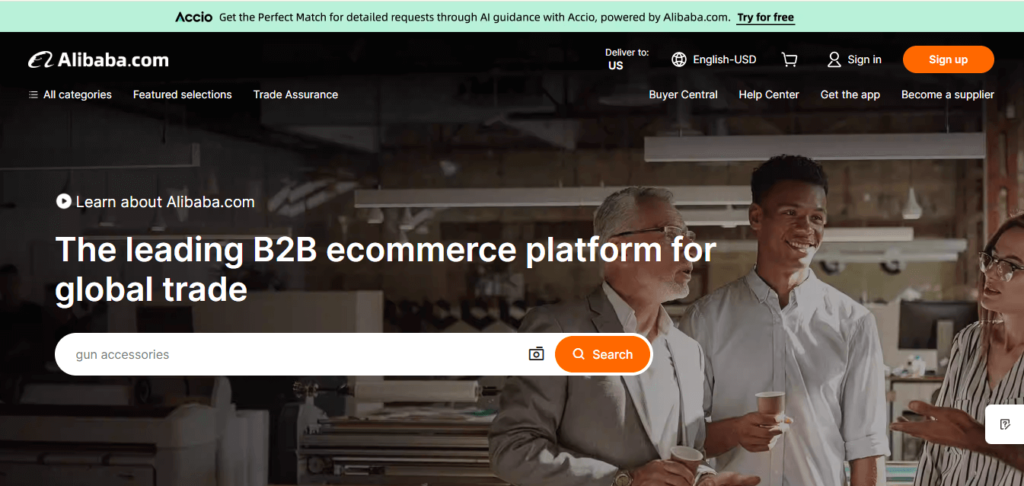
Alibaba is one of the largest e-commerce platforms in China and globally. Thanks to its popularity and massive user base, you can quickly find various eyewear manufacturers offering a wide range of products.
However, as an open marketplace, Alibaba can also be a breeding ground for scammers. Additionally, Alibaba’s ranking system can be manipulated by companies that pay for higher rankings but may not offer quality products.
Therefore, be extra cautious when using Alibaba to find manufacturers.
3. Attending Trade Shows to Find Manufacturers
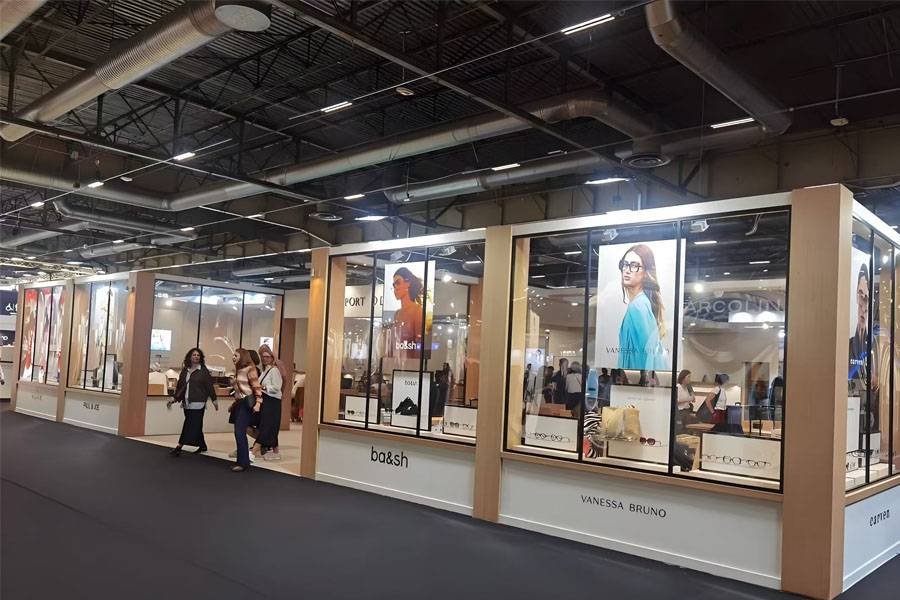
International trade shows and exhibitions are excellent opportunities for buyers and manufacturers to establish connections and secure reliable partnerships. Attending these events allows you to see and purchase samples of the products you’re interested in.
This helps you avoid the disappointment of importing products you’ve never seen before. Exhibitions also offer the potential to build a strong business network, as you can engage in face-to-face interactions with sellers and buyers.
Unfortunately, trade shows are not held frequently, but if you are willing to travel to other countries to attend these events, it can be worth it. You’ll gain valuable knowledge to take informed steps in the future.
If attending in person is not possible, make sure to leverage these opportunities when they appear in your local area.
Step 2: Communicating with Manufacturers
Avoid These Mistakes When Contacting Manufacturers
Manufacturers receive numerous messages and emails daily from potential clients. To avoid being overlooked, keep your emails short and to the point. Lengthy emails may not get the attention you desire. Instead, follow up with detailed information after receiving a response.
Requesting too little may lead manufacturers not to take you seriously. If unsure, consider calling the company to clarify your needs.
Step 3: Visit Eyewear Manufacturers
If you want to secure high-quality eyewear, there’s no substitute for an on-site visit. Visiting the manufacturer allows you to meet the team, understand the production process, and inspect the facilities.
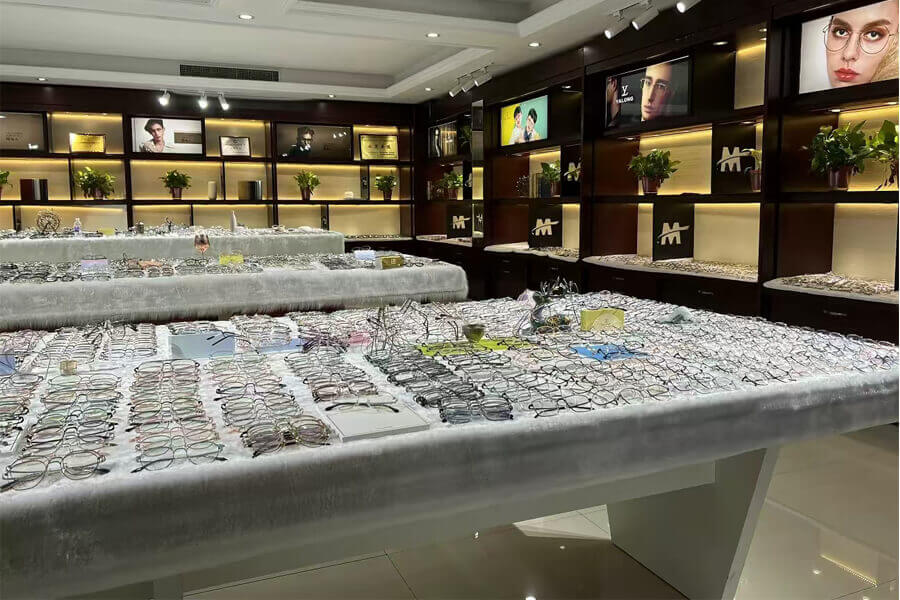
1. Visit the Product Showroom
When you visit a manufacturer, you’ll have the opportunity to tour their showroom, where they showcase their various eyewear products in an attractive manner. This visit will allow you to assess the quality, design, and variety of products available.
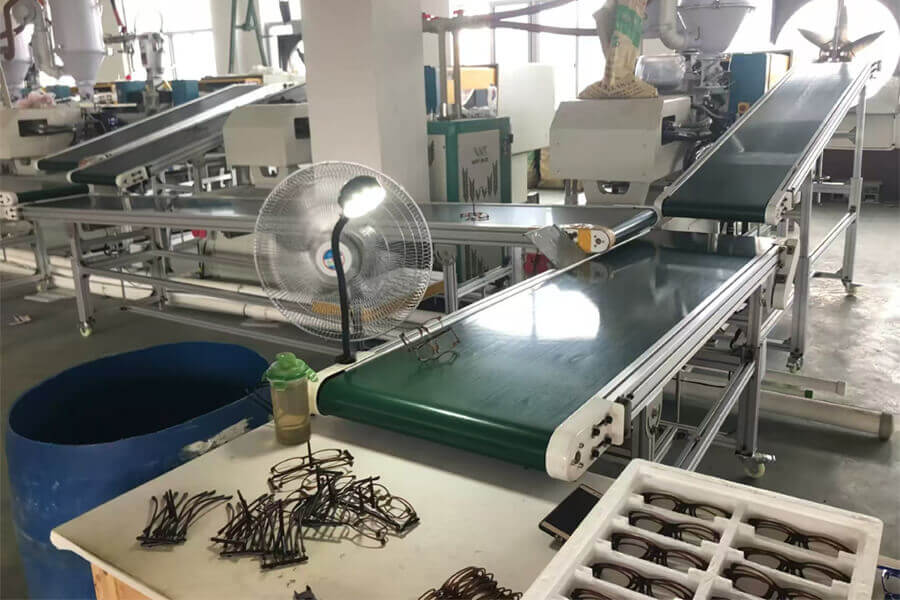
2. Visit the Production Line
By touring the production line, you can observe the entire manufacturing process, from raw material handling to the final assembly. This insight is invaluable for evaluating the manufacturer’s capabilities and quality control measures.
3. Benefits of On-Site Visits
Visiting the manufacturing site can significantly benefit your business relationship. It shows the manufacturer that you are serious about purchasing their products, which can lead to better pricing and service.
Building a strong relationship with the manufacturer can result in better communication, negotiation, and long-term cooperation. You’ll also gain knowledge about the materials and techniques used, expanding your expertise in the eyewear industry.
Step 4: Considerations Before Importing Eyewear
Before purchasing and importing eyewear, there are several crucial factors you need to consider to ensure the products meet your requirements and comply with your market’s standards:
1. Materials: High-quality eyewear products typically use materials like acetate, TR90, and titanium. Acetate is popular for its durability and flexibility, while TR90 is known for its lightweight and impact resistance. Titanium is valued for its strength, corrosion resistance, and hypoallergenic properties. Ensure that the eyewear materials meet the quality and safety standards of your target market.

2. Size: Eyewear size can vary depending on the style and target demographic. A good supplier should offer customizable sizing options to cater to different face shapes and sizes. This includes variations in frame width, bridge width, and temple length. Custom sizing ensures that the eyewear fits comfortably for the end-user.
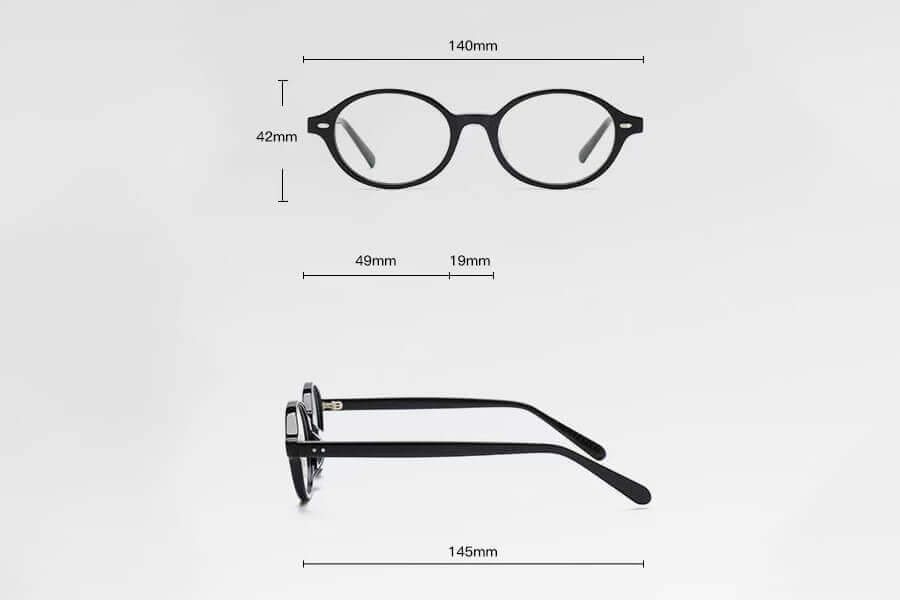
3. Structure/Construction: The construction of eyewear is critical to its durability and comfort. High-quality eyewear is often constructed using multi-layer lamination for acetate frames or injection molding for plastic frames. The hinges and screws should also be of high quality, ensuring longevity and ease of use.
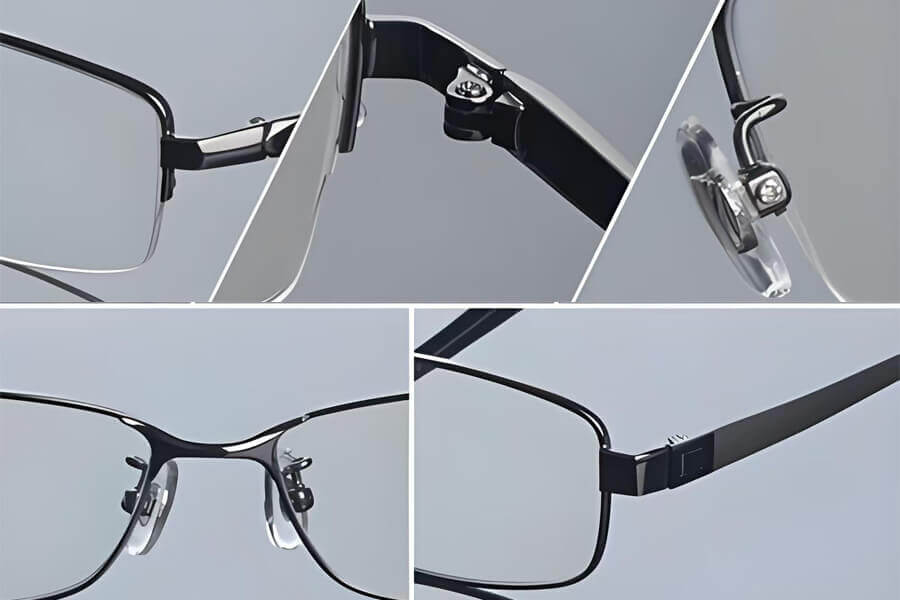
4. Color: Eyewear is available in various colors and finishes, such as matte, glossy, or metallic. Popular choices include classic colors like black, tortoiseshell, and clear frames. Custom color options can also be offered to align with current fashion trends or specific branding requirements.
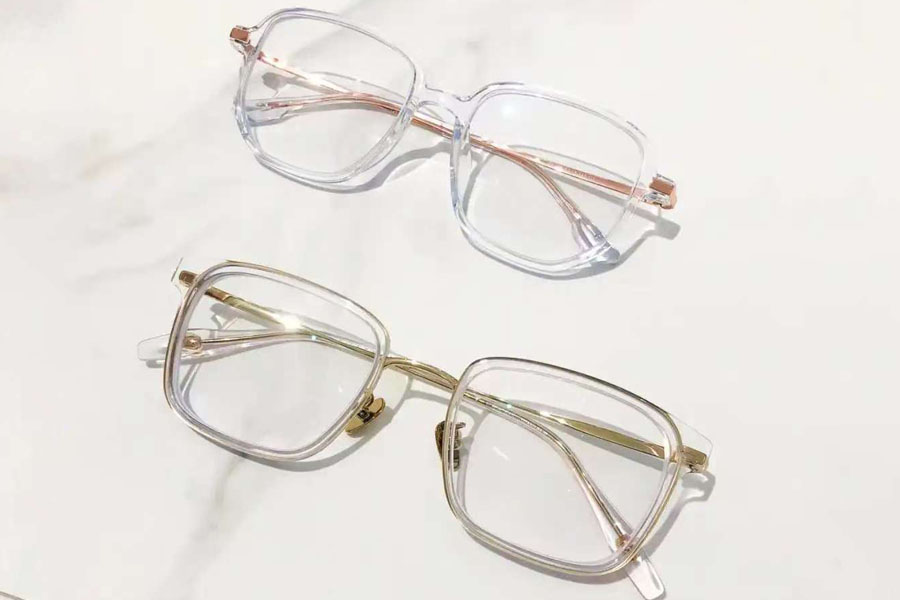
5. Weight: The weight of eyewear can significantly affect comfort, especially for prolonged wear. Lightweight materials like TR90 and titanium are often preferred for their comfort, making them ideal for prescription glasses and sports eyewear.
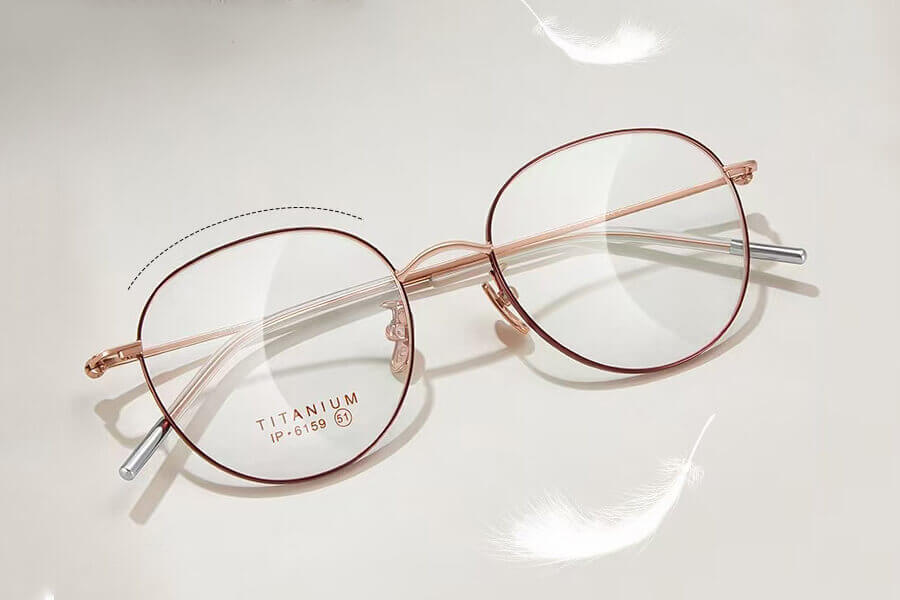
6. Accessories:
- Lens Cleaning Cloths: Essential for maintaining lens clarity without scratching.
- Protective Cases: Helps to protect eyewear from damage during storage or transport.
- Nose Pads: Silicone or rubber nose pads can be customized for comfort and durability.
- Hinges and Screws: High-quality components are necessary for durability and ease of maintenance.
- Coatings: Anti-reflective, anti-scratch, and UV protective coatings are common and can enhance the functionality and lifespan of the eyewear.

When importing eyewear, these factors will help ensure that the products meet both your quality expectations and the needs of your customers. Make sure to communicate these requirements clearly with your manufacturer to avoid any discrepancies during production.
Contact Our Experts
Want to make the best choice for your eyewear business?
Reach out to us for expert advice and detailed product information!
Step 5: Negotiating Prices with Eyewear Manufacturers
Negotiating prices is a crucial step in the process of importing eyewear. The goal is to create a win-win situation for both you and the manufacturer.
Here are some strategies to ensure successful negotiations:
- Be Prepared with Detailed Negotiation Data: Before entering negotiations, gather all the relevant data, including market prices, production costs, and your desired profit margins. When manufacturers see that you are well-prepared and serious about purchasing, they will be more inclined to offer competitive prices to secure your business.
2.Request Pricing Based on Quantity Tiers: As with most products, purchasing eyewear in bulk often reduces the price per unit. Ask the manufacturer for a breakdown of prices based on different order quantities. This allows you to evaluate how much you can save with larger orders and decide on the best purchase quantity for your budget and inventory needs.
3.Quality vs. Price: Keep in mind that higher quality often comes at a higher price. While it’s tempting to push for the lowest possible cost, ensure that the quality of the eyewear meets your standards. The goal is to find the best balance between cost and quality.
4.Understand the Manufacturer’s Costs: Gaining insight into the manufacturer’s costs, including labor, materials, and overhead, can help you assess whether their pricing is reasonable. This knowledge also provides leverage during negotiations, as you can discuss any price discrepancies with a better understanding of their cost structure.
5.Build a Good Relationship: Establishing yourself as a reliable customer will make negotiations smoother. If you’re seen as a long-term partner rather than a one-time buyer, manufacturers may be more willing to offer better terms and prices.
6.Avoid Endless Requests for Samples: Constantly requesting samples without committing to an order can strain your relationship with the manufacturer. Be transparent in your communications and avoid creating the impression that you’re just shopping around without serious intent.
7.Don’t Overdo Haggling: While negotiating for the best price is important, excessively haggling over every cent can be counterproductive. Both you and the manufacturer are in business to maximize profits, so aim for a fair agreement that benefits both parties.
8.Consider Hiring a Representative: If visiting the manufacturer in person isn’t feasible, consider hiring a representative in China to assist with negotiations. This person can provide local insights, handle communications, and ensure that your interests are well-represented.
If hiring a representative is not an option, phone calls and email exchanges can also be effective, as long as they are clear and professional.
Step 6: Placing Your Order with the Eyewear Manufacturer
Once negotiations are successful, it’s time to place your order.
Sample Orders vs. Bulk Orders
Sample Orders: A sample order is a small initial order of one or more products that allows you to evaluate the quality and suitability before committing to a larger purchase. This step is especially useful if you haven’t yet visited the manufacturer in person. Sample orders carry lower risk and can save you from significant losses if the product doesn’t meet your expectations.
When discussing sample orders with the manufacturer, your email should include:
A clear statement that you are requesting a sample order.
The specific products you wish to test.
Any customizations you want for the samples. Be detailed and precise.
The quantity of each item you wish to order.
Your shipping address for sample delivery.
Bulk Orders: If you have visited the manufacturer and are confident in their products, placing a bulk order may be the best choice. Bulk orders are cost-effective and demonstrate your commitment to a long-term partnership, potentially leading to better terms and future negotiations.
With these steps, you can effectively negotiate prices and place orders, ensuring that you get the best value for your eyewear imports.
Step 7: Making the Deposit
After placing your order with the eyewear manufacturer, the next step is payment. In most cases, you will need to pay a deposit, typically around 30% of the total order amount, before the manufacturer begins production.
The manufacturer will provide you with their bank details for the transfer. If you’ve conducted an on-site visit, this is an excellent opportunity to negotiate and establish a clear payment schedule that suits both parties.
Once the initial deposit is paid, the manufacturing process for your eyewear products will commence.
Step 8: Inspecting the Products
Inspecting the products is a crucial step to ensure that the eyewear meets your standards and specifications. You should dedicate significant attention to this phase to avoid any potential issues with quality.
Inspect the eyewear for any defects such as lens scratches, misaligned frames, or loose hinges. If you can’t be physically present for the inspection, request that the manufacturer send detailed photos and videos of the products. This visual confirmation can help you verify that everything is in order before proceeding further.
A reputable manufacturer will have a compensation strategy in place for handling any defects or issues that arise after delivery.
Step 9: Final Payment
Once the inspection is complete and you are satisfied with the quality, it’s time to make the final payment. This usually covers the remaining 70% of the total order amount.
In some cases, after successful negotiations, you might agree to pay 50% before delivery and the remaining 20% after the products have been delivered. Once the final payment is made, the delivery process will begin, and your eyewear products will be on their way to you.
Trade between China and Ghana drives significant economic growth, with over $7 billion in annual trade. Ghana benefits from China’s machinery and electronics, boosting industrial development, while exporting cocoa and gold to meet China’s demand. Platforms like Alibaba simplify this trade, making it easier and cheaper for Ghanaian businesses to access and import goods, enhancing their global competitiveness.
Chapter Two: How to Shipping Sunglass Products From China To Ghana?
Commen Knowledge: Shipping from China to Ghana | Sea, Air & Rail Freight Rates
September 2025 Shipping Update: From China to Ghana
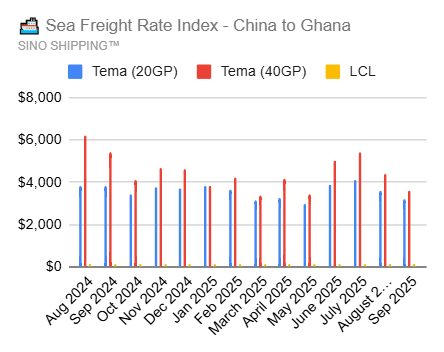
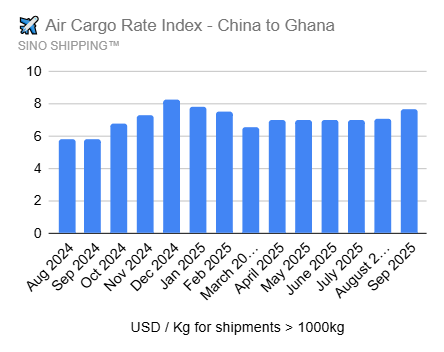
Costs (September 2025): Shipping rates from China to Ghana continue to ease in September 2025, with sea freight to Tema now at $3,200 for a 20-foot container and $3,600 for a 40-foot container—down from August’s $3,600 and $4,400 respectively. LCL remains steady at $160 per cubic meter. Air freight (via CAI) climbs slightly to $7.70 per kg for 1000kg+ shipments, reflecting higher seasonal demand despite stable capacity.
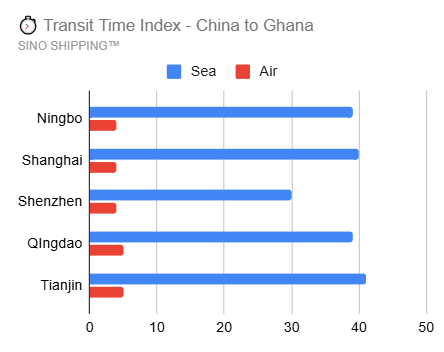
Delivery Times (September 2025): Ocean transit to Tema averages 35–43 days, with schedules relatively stable but subject to minor delays if Red Sea disruptions intensify. Air shipments routed through Cairo (CAI) maintain transit times of 5–8 days, though customs checks remain tight as import volumes pick up ahead of the holiday season.
Customs (September 2025): Ghana Customs continues rigorous inspections, with extra attention to electronics, textiles, and food categories. Average clearance time is 1–2 days with proper paperwork, though spot checks can add short delays. Precise documentation (invoice, packing list, certificate of origin) remains the fastest way to ensure smooth entry.
Ghana Market Outlook (September 2025): While sea rates fall further from August, air costs rise, reflecting a divergence between the two modes. For most importers, September is optimal for bulk sea shipments, while air should be reserved for urgent cargo or high-value goods where speed justifies the premium.
Freight Shipping Cost from China to Ghana for September 2025
Updated Shipping Rates and Transit Times
| Shipping Mode | Destination | September 2025 Cost | Transit Time |
|---|---|---|---|
| Sea – 20GP | Tema | $3,200 | 35–43 days |
| Sea – 40GP | Tema | $3,600 | 35–43 days |
| Sea – LCL | Tema | $160 per cbm | 35–43 days |
| Air Freight (1000kg+) | CAI (to Ghana) | $7.70/kg | 5–8 days |
Comparison with August: Sea freight dropped again (20GP down $400; 40GP down $800), making September one of the most competitive months for bulk shipments this year. Air, however, rose from $7.10/kg in August to $7.70/kg, showing increased demand for urgent capacity.
Key Strategies for September Shipments
- Sea Freight: Take advantage of lower FCL rates—September is one of the cheapest windows of 2025 for Ghana-bound bulk imports.
- Air Freight: Use sparingly for urgent or high-margin cargo, as costs rose this month. Booking early mitigates last-minute price spikes.
- Customs Compliance: Prepare documents meticulously—electronic filing and advance submission can accelerate Tema clearance.
- Risk Management: Monitor Red Sea and global fuel trends, as any disruption could quickly alter schedules and surcharges.
Shipping from China to Ghana Transit Time
Comparison of Transit Times Across Shipping Modes
How long does it take to ship goods from China to Ghana? The answer depends on the mode of transportation you choose. Based on the SINO SHIPPING™ Transit Time Index (TTI), sea freight typically takes between 30 to 41 days, depending on the port of origin. For example, shipments from Shenzhen take about 30 days, while those from Tianjin may take up to 41 days. In contrast, air freight is significantly faster, with transit times ranging from 4 to 5 days for most Chinese cities.
These figures highlight the trade-offs between speed and cost: air freight is ideal for urgent, high-value goods, whereas sea freight is more cost-effective for larger, non-urgent shipments.
| Port of Origin | Sea Freight (Days) | Air Freight (Days) |
|---|---|---|
| Ningbo | 39 | 4 |
| Shanghai | 40 | 4 |
| Shenzhen | 30 | 4 |
| Qingdao | 39 | 5 |
| Tianjin | 41 | 5 |
Factors Affecting Transit Times and Mitigation Strategies
Why do transit times vary so much? Several factors can affect the duration of your shipments, including weather conditions, port congestion, and customs delays. For instance, bad weather can disrupt sea routes, leading to delays, while congested ports may slow down the unloading process.
To mitigate these issues:
- Choose the Right Shipping Mode: Opt for air freight for time-sensitive shipments to avoid delays.
- Work with Reliable Freight Forwarders: Experienced forwarders can help navigate potential bottlenecks and ensure smoother transit.
- Understand Customs Requirements: Proper documentation and compliance can minimize customs delays, ensuring your goods reach their destination on time.
By considering these factors, businesses can better plan their logistics, ensuring timely and efficient deliveries from China to Ghana.
Door-to-Door Shipping from China to Ghana
Advantages of Door-to-Door Services
Door-to-door shipping offers a seamless solution for transporting goods from China to Ghana by managing the entire logistics process—from pickup to final delivery. This service reduces handling, minimizing the risk of damage, and can lower overall costs by consolidating services under a single provider.
| Advantage | Description |
|---|---|
| Simplified Logistics | One provider handles the entire process, reducing complexity. |
| Reduced Handling | Fewer touchpoints lower the risk of damage or loss. |
| Cost Efficiency | Streamlined services can reduce overall shipping expenses. |
Choosing the Right Door-to-Door Service
Platforms like SINO SHIPPING™ simplify the selection of door-to-door service providers. Key factors to consider include:
- Reliability: Choose providers with proven on-time delivery records.
- Cost: Compare rates to ensure value without compromising service quality.
- Service Coverage: Ensure full coverage from China to Ghana.
- Customs Expertise: Select providers skilled in customs clearance to avoid delays.
Using SINO SHIPPING™, businesses can efficiently find and choose reputable providers, ensuring a smooth and cost-effective shipping process.
Sea Freight from China to Ghana (Tema) – September 2025
September Rates and Current Shipping Insights
Sea freight rates from China to Tema, Ghana, continue to decline in September 2025, offering importers their most competitive shipping window of the year so far. This follows August’s relief, with costs dropping further for both 20-foot and 40-foot containers:
| Container Size | Cost (Tema, September 2025) | Estimated Transit Time |
|---|---|---|
| 20GP | $3,200 | 35–43 days |
| 40GP | $3,600 | 35–43 days |
| LCL | $160 per cbm | 35–43 days |
Compared with August, costs are down by $400 on 20GP and $800 on 40GP. This makes September particularly attractive for bulk shipments, especially as vessel schedules are more reliable and congestion at Tema is easing.
September Shipping Advice for Ghana Importers
- Leverage Lower Sea Rates: FCL shipments are now at their lowest since early 2024, making this the best month to secure space for Q4 restocking.
- Stay Documentation-Ready: Ghana Customs remains strict—accurate paperwork ensures smooth clearance even as port flow improves.
- Monitor Regional Risks: Keep watch on Red Sea route updates and fuel surcharges, which may cause temporary volatility despite the downward trend in base freight costs.
Air Freight from China to Ghana (CAI) – September 2025
Latest Air Freight Rates and Key Strategies
Air freight to Ghana via Cairo rises in September 2025, reflecting higher seasonal demand despite steadier capacity. Rates for 1000kg+ shipments now stand at $7.70 per kg, up from $7.10 in August. Transit times remain consistent:
| Airport | Cost per Kg (September 2025) | Transit Time |
|---|---|---|
| CAI | $7.70 | 5–8 days |
The September increase highlights a shift: while sea is more cost-effective than ever, air is becoming more expensive as importers prepare for holiday season demand. This makes air most suitable for urgent, high-value, or perishable cargo where speed justifies the premium.
Optimizing September Air Freight to Ghana
- Book Early: With rates rising, early booking helps lock in space and manage costs, especially for e-commerce and retail shipments targeting Q4 sales.
- Work with Experienced Forwarders: Local expertise at Accra is crucial—partners familiar with CAI transit and Ghana Customs can minimize clearance delays.
- Combine Modes Strategically: Use ocean freight for bulk inventory and air for top-up or urgent cargo to balance cost and speed effectively in September.
Express Shipping from China to Ghana
Benefits and Use Cases for Express Shipping
Express shipping is the fastest option for transporting goods from China to Ghana, with typical transit times ranging from 2 to 5 days. It is ideal for time-sensitive shipments, last-minute orders, and high-value products where speed is crucial. The service is known for its reliability and offers advanced tracking capabilities, allowing businesses to monitor shipments in real-time, ensuring timely delivery.
Understanding Costs and Transit Times, Including DDP Options
Express shipping is more expensive than standard shipping, but the speed and reliability justify the cost. As of August 2024, express shipping rates range from $6 to $10 USD per kg depending on the urgency.
| Service Type | Cost (USD per kg) | Transit Time (Days) |
|---|---|---|
| Standard Express | $6 | 4-5 |
| Priority Express | $10 | 2-3 |
The Delivered Duty Paid (DDP) option simplifies the shipping process by covering all customs duties and taxes upfront, ensuring faster and more predictable delivery times, as customs clearance is streamlined and handled efficiently.
Key Ports in China and Ghana for Shipping
Major Chinese Ports for Exports to Ghana
Key Chinese ports like Shanghai, Shenzhen, and Guangzhou are crucial for efficient shipping to Ghana. These ports offer advanced facilities, strategic locations, and robust logistics networks, which help reduce shipping costs and transit times.
| Port | Specialty | Typical Transit Time to Ghana |
|---|---|---|
| Shanghai | World’s busiest, diverse cargo | 40 days |
| Shenzhen | High-tech products, electronics | 30 days |
| Guangzhou | West Africa focus, flexible routes | 39 days |
Major Ghanaian Ports for Imports from China
In Ghana, Tema and Takoradi are the main ports for imports from China. These ports are key entry points, each offering distinct advantages based on cargo type and distribution needs.
| Port | Specialty | Proximity |
|---|---|---|
| Tema | Largest port, quick distribution | Near Accra (capital) |
| Takoradi | Bulk goods, specialized cargo | Western Ghana |
Choosing the right port can optimize both costs and delivery times, ensuring efficient logistics for your shipments.
Chapter Three: How to Ship Sunglasses from China to Ghana – A Step-by-Step Guide
How Do You Ship Sunglasses from China to Ghana Without Delays or Headaches?
You’ve picked your sunglass styles, signed the invoice, and your supplier in China is ready to ship. But now you’re wondering: how exactly do I get my sunglasses safely into Ghana?
Many Ghanaian importers have faced the same issues: customs delays at Tema, unexpected charges at Kotoka Airport, or missing documents that stall clearance for weeks. Worst of all—you can lose sales if your stock doesn’t arrive before the hot season or back-to-school rush.
The good news? Shipping sunglasses from China to Ghana is entirely manageable, even for small businesses or first-time importers. With the right plan and trustworthy partners, you can keep your margins healthy and your customers happy.
What’s the Process for Shipping Sunglasses from China to Ghana?
To import sunglasses from China to Ghana successfully, follow these 8 key steps:
- Choose the most cost-effective shipping method: sea, air, or express.
- Work with a reliable supplier in China with export experience to West Africa.
- Hire a freight forwarder who understands Ghana’s customs rules.
- Prepare all required documents: invoice, packing list, certificates.
- Understand Ghanaian import duties and taxes (VAT, NHIL, customs).
- Comply with packaging and labeling requirements to avoid customs delays.
- Track your shipment from China to Ghana in real time.
- Inspect the goods upon arrival and optimize future imports.
Let’s go step-by-step.
1. Choosing the Right Shipping Method to Ghana
Your shipping method affects everything—from cost per unit to time-to-market. Here’s how to decide:
🚢 Sea Freight to Ghana (LCL or FCL)
- Pros: Cheapest for bulk orders; can handle large volume
- Cons: Slower (30–45 days); container handling needed at Tema or Takoradi port
- Best for: Wholesalers and distributors ordering 1,000+ sunglasses
LCL (Less than Container Load): You share space in a container
FCL (Full Container Load): You rent the full 20ft or 40ft container
Sea freight arrives mostly through Port of Tema – Ghana’s busiest and most equipped seaport.
✈️ Air Freight to Ghana
- Pros: Much faster (5–10 days), available from major cities like Guangzhou, Shenzhen
- Cons: Expensive for heavy or large shipments
- Best for: Medium-sized shipments, seasonal demand, or time-sensitive drops
Arrives at Kotoka International Airport (ACC) in Accra.
📦 Express Courier (DHL, UPS, FedEx)
- Pros: Easiest for beginners; door-to-door; customs often handled by courier
- Cons: Highest cost per unit; not practical for bulk
- Best for: Sample orders, promotional drops, or VIP restocks
Pro Tip: If your sunglass order is under 50kg, courier may actually be cheaper than air freight when you factor in customs clearance and local delivery.
2. Choosing a Trustworthy Supplier and Freight Forwarder
✅ Chinese Sunglass Supplier Must-Haves:
- UV400 and CE certification: Ghanaian authorities may ask for proof of lens safety.
- Customization options: Especially for brands who want to private-label.
- Experience shipping to Africa: Prefer suppliers who’ve worked with Nigeria, Kenya, or Ghana before.
- Fast sample dispatch: Sample orders let you inspect quality, frame material, hinges, and logo accuracy.
Eyewearglobo, for instance, offers:
- Ready-stock sunglasses in fashion or sports styles
- ODM/OEM services for African distributors
- Custom logo printing & packaging for Ghana wholesale customers
- Factory export experience to over 25 countries
✅ Freight Forwarder Checklist:
- Knowledge of GRA/CEPS import policies
- Familiarity with HS codes for eyewear (9004.10.00) for sunglasses
- Offers DDP service (Delivered Duty Paid) so you can focus on selling, not customs
Ask if they provide:
- Real-time tracking
- Customs clearance support
- Transit insurance
Top Ports to Know:
- Tema Port (main)
- Takoradi Port (secondary)
- Kotoka Airport (air cargo)
3. Required Documents for Ghanaian Customs
Missing documents = delayed clearance + extra fees.
Here’s what you need:
- Commercial Invoice: Exporter & importer names, product breakdown, value, Incoterms
- Packing List: Box size, quantity, net/gross weight
- Certificate of Origin: Proves country of manufacture (China)
- Bill of Lading (sea) or Air Waybill (air)
- Product Compliance Certificate: UV400 test or CE compliance, especially for branded sunglasses
- Ghana Import Declaration Form (IDF): Must be completed through the Ghana Single Window System
- TIN (Tax Identification Number): Required for clearing goods
💡 Tip: Ensure the invoice description matches the HS code to avoid delays or misclassification.
4. Ghana’s Import Duties, VAT, and Other Taxes
Your landed cost must include:
| Type of Tax/Fee | Typical Rate |
|---|---|
| Import Duty | 5–20% |
| VAT (Value Added Tax) | 15% |
| NHIL (National Health Insurance Levy) | 2.5% |
| GETFund Levy | 2.5% |
| ECOWAS Levy | 0.5% |
| Customs Processing Fee | ~1% |
Example:
For a $1,000 sunglasses order by air:
- Duty @ 10% = $100
- VAT @ 15% = $150
- Others ~7% = $70
Total landed cost: ~$1,320 + local delivery
💡 Work with a forwarder who can give you a total landed cost estimate before you ship.
5. Packaging and Labeling Compliance for Ghana
Incorrect packaging = broken goods or customs rejection.
✅ Packaging Best Practices:
- Use bubble wrap and inner pouches
- Include branded hard case or soft pouch
- Outer cartons should be moisture-resistant
- Stickers with SKU, model, and lens type
✅ Labeling:
- “Made in China” label
- UV400 or CE mark (especially for fashion sunglasses)
- Brand logo (if private label)
- Local labeling optional—but helps build brand trust
6. Tracking and Managing Your Shipment
Don’t “ship and forget.” Track your goods to avoid surprises.
📍 Platforms:
- Sea: Maersk, CMA CGM, SeaRates
- Air: Avianca Cargo, China Southern, Turkish Airlines
- Courier: DHL, FedEx, UPS tracking portals
🔍 What to Watch:
| What to Monitor | Why It Matters |
|---|---|
| Customs status | Prevent port storage fees |
| Shipment delays | Plan for promotions and deliveries |
| Insurance claims | File within the claim window |
| Final delivery schedule | Coordinate local delivery in Accra, Kumasi, Takoradi |
7. Post-Arrival Inspection & Delivery in Ghana
Once goods arrive:
🔎 Inspect:
- Frames: Cracks, bending, misaligned arms
- Lenses: Scratches, UV labels
- Quantity: Count boxes and units
- Packaging: Damage, missing pouches, brand inserts
- Labeling: Correct info, “Made in China” tags
📸 Take photos of any issue and notify supplier/logistics provider within 48 hours.
8. Optimize Future Shipments
🔁 Build SOPs:
- Create a checklist for every order: documents, packaging, HS codes
- Share templates with your supplier
- Automate tracking & delivery notices
📊 Track Costs:
- Log every landed cost per unit
- Compare freight types
- Identify peak sales vs. shipping time
🧑🤝🧑 Evaluate Partners:
- Did the factory ship on time?
- Were the sunglasses as per sample?
- Did your forwarder communicate well?
Good importers optimize every cycle. That’s how you go from test orders to scaling a profitable sunglass business in Ghana.
✅ Final Words
Shipping sunglasses from China to Ghana doesn’t have to be complicated or risky. With the right supplier, freight partner, and process, you can build a repeatable import system that grows your business—and gets your products on Ghanaian faces faster and cheaper than your competitors.
🔜 Need a Ghana-specific shipping checklist or import SOP template?
Let me know—I can create one tailored to your team at Eyewearglobo.
FAQ: What Should You Know About the Eyewear Supply Chain in Ghana?
If you’re planning to import sunglasses or optical frames into Ghana, understanding the local supply chain is just as important as choosing the right factory in China. From port logistics to end-customer trends, every step plays a role in your profitability.
At EyewearBeyond, we’ve helped dozens of African eyewear businesses grow with factory-direct sunglasses, low MOQs, private label customization, and full logistics support. Here’s what you need to know about how the eyewear business works in Ghana.
1. How is the eyewear supply chain structured in Ghana?
Ghana’s eyewear supply chain operates through a multi-tiered business model:
- Importers and distributors in cities like Accra and Kumasi import sunglasses and frames in bulk, mainly from China.
- Retail chains and optical centers combine prescription services with frame retail, often targeting the mid-to-upper market.
- Independent optical shops serve price-conscious consumers and rely heavily on competitive pricing.
- Instagram and WhatsApp-based sellers are an emerging channel, especially for trendy sunglasses.
Most eyewear products in Ghana are imported. There’s very little local manufacturing of frames.
2. What are the main entry points and logistics hubs for eyewear imports?
- Tema Port is Ghana’s main seaport for container shipments arriving from China.
- Takoradi Port also handles some cargo, mainly for western Ghana.
- Kotoka International Airport in Accra is the primary entry point for air and express courier shipments.
- After customs clearance, products are distributed inland to Accra, Kumasi, Tamale, Takoradi, and other commercial zones.
Many Ghanaian importers work closely with freight forwarders who handle customs, DDP shipping, and last-mile delivery.
3. What types of eyewear are most commonly imported?
The top imported categories include:
- Optical frames made of acetate, TR90, or stainless steel
- UV400 and polarized sunglasses for everyday and fashion use
- Reading glasses, increasingly popular among older consumers
- Blue light protection glasses for digital users and students
Affordable materials and durable designs are especially important due to Ghana’s hot climate and outdoor lifestyle.
4. Where do Ghanaian eyewear importers source their products?
- The majority of eyewear is sourced from China, especially factories located in Shenzhen, Wenzhou, and Danyang.
- Higher-end or branded frames may come from Italy or South Korea.
- Most importers use:
- B2B platforms like Alibaba
- Trade fairs
- Direct partnerships with suppliers like EyewearBeyond
Ghanaian buyers often look for factories that offer private label services, packaging customization, and short lead times.
5. Is there local manufacturing of eyeglass frames in Ghana?
Currently, Ghana has:
- No significant local frame production—most are imported.
- Optical labs for lens cutting, prescription fitting, and repairs.
- Retailers and clinics that assemble lenses into imported frames for prescription orders.
So far, importation remains the backbone of the Ghanaian eyewear supply chain.
6. What are the biggest supply chain challenges?
Ghanaian eyewear businesses often deal with:
- Customs delays caused by inaccurate HS codes or missing documentation
- High freight costs, especially during peak global shipping periods
- Long lead times that cause stockouts during key selling seasons
- Lack of variety or unique styles in the market
- Poor communication with overseas suppliers
At EyewearBeyond, we help mitigate these issues by offering:
- Fast-ship collections from ready inventory
- Full document prep for Ghana customs
- Custom designs for Ghana-specific market preferences
- Low minimum order quantities (MOQs)
7. Are Ghanaian consumers more brand-conscious or price-sensitive?
Ghana’s eyewear market has a dual nature:
- Price-sensitive mass market: Independent shops and general retailers mostly serve budget-conscious customers.
- Style-aware youth and professionals: In urban areas like Accra, there’s growing interest in design, fit, and “branded” appearance.
- Private label sunglasses are a rising trend, allowing resellers to build their own identity.
If your product combines trendy design with fair pricing, it will likely perform well in both segments.
8. When is the best time to import sunglasses into Ghana?
You should time your orders based on seasonal demand:
- November to January: Dry season and holidays boost outdoor activity and sunglass sales.
- April to June: Mid-year sales and pre-school break restocking.
- August to September: Inventory buildup ahead of Q4 and promotional periods.
- October to December: Strong demand for Christmas sales and gifting season.
Many importers use air freight in April or October to restock quickly before high season.
9. What regulations affect eyewear imports into Ghana?
Here’s what you need to comply with:
- UV400 certification is required for sunglasses.
- Product labeling must include:
- “Made in China”
- Model or product name
- Material information
- Importer’s details (if sold in retail)
- HS code (9004.10) must be used correctly for frames and sunglasses.
- All importers must register with the Ghana Revenue Authority (GRA) and have a valid TIN (Tax Identification Number).
Avoid delays by ensuring your supplier sends accurate and complete documentation.
10. How can you stand out as an eyewear importer in Ghana?
To succeed in Ghana’s growing eyewear market:
- Focus on exclusive frame styles and colorways that are hard to find locally.
- Offer private label branding—a growing opportunity in urban areas.
- Use fast shipping and low-MOQ offers to serve smaller resellers.
- Make ordering easy with WhatsApp catalogs or Instagram stores.
- Educate customers about UV protection, quality, and design features.
The Ghanaian eyewear market still offers plenty of room for new entrants—especially those who can move quickly, offer unique products, and use digital tools effectively.
Final Thoughts: Start Smart, Grow Fast
Importing sunglasses into Ghana can feel overwhelming at first—but with the right supplier, forwarder, and systems in place, it becomes a repeatable and profitable business model.
Here’s what to keep in mind:
- Partner with factories like EyewearBeyond that specialize in serving African markets
- Plan ahead for shipping delays and customs needs
- Always calculate your landed cost (including freight, duties, and VAT)
- Build your own SOP (Standard Operating Procedure) for future orders
At EyewearBeyond, we’re ready to help you start or scale your eyewear business in Ghana—with full support on sourcing, branding, shipping, and after-sales quality.
Contact us today at: eyewearbeyondofficial@gmail.com
Visit our website: www.eyewearbeyond.com
Let’s build your next best-selling sunglass collection—factory direct, fully compliant, and made for Ghana.