Benefits, Limitations, Buying Guide, and Expert Insights (2025 Edition)
Introduction: Why Smart Lenses Are Taking Over the Eyewear Market
Imagine this: you step outside into bright sunlight, and your lenses darken instantly to protect your eyes. Minutes later, you walk into an office building, and the lenses fade back to crystal clear. No switching glasses. No discomfort. Just a seamless visual experience.
This is not science fiction. It’s the world of photochromic sunglasses — and they’re becoming one of the fastest-growing segments in the global eyewear market.
Consumers today want convenience, protection, and multifunctionality — all in one product. In response, eyewear brands and wholesalers are shifting toward advanced lens technologies that adapt to the wearer’s environment. Among these, photochromic lenses are leading the charge.
But are they truly worth the investment — for both the end-user and the wholesale business? In this article, we’ll explore the science, benefits, limitations, and business case behind photochromic sunglasses, and offer a comprehensive buying guide tailored for 2025.
What Are Photochromic Sunglasses and How Do They Work?
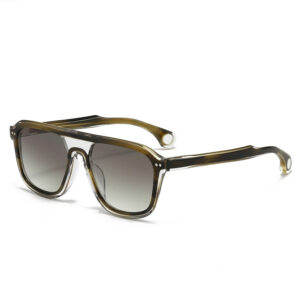
Photochromic sunglasses are eyewear with lenses that automatically adjust their tint depending on the surrounding light conditions. Indoors, the lenses are typically clear or lightly tinted. In the presence of UV rays — such as when you’re outdoors — they darken to provide protection from bright light.
The Science Behind Photochromic Technology
Photochromic lenses are coated or embedded with light-sensitive molecules, such as silver halide or organic photochromic dyes. When exposed to UV light, these molecules undergo a reversible chemical transformation that changes the lens’s optical density, making it darker.
Key features:
- Activation: triggered by UV-A and UV-B light
- Deactivation: when UV exposure decreases
- Material options: available in plastic (CR-39), polycarbonate, glass, and high-index plastic
Modern photochromic lenses have faster transition times, better color consistency, and improved longevity compared to earlier versions.
Why Photochromic Sunglasses Are a Global Trend in 2025
The rise of photochromic sunglasses is not accidental. It’s driven by consumer behavior, market trends, and technological advancement. Here’s why they’re trending globally:
1. Multifunctionality
People no longer want to carry multiple pairs of eyewear. Photochromic sunglasses solve a real problem — offering sun protection and visual clarity in one package.
2. Health Awareness
Consumers are more conscious about UV exposure and its long-term impact on eye health. With studies linking UV radiation to cataracts and macular degeneration, the demand for UV-blocking adaptive lenses is growing.
3. Aging Populations
Older adults — especially those using progressive or bifocal lenses — are increasingly choosing photochromic solutions for added convenience.
4. Outdoor Lifestyle Growth
From hiking and cycling to urban commuting, people spend more time in variable lighting conditions. Photochromic sunglasses offer seamless transitions for active lifestyles.
5. Eyewear Becomes Smart
Smart features in eyewear — from adaptive lenses to blue light filters — are now a competitive advantage for any brand. Photochromic lenses are a smart entry point.
Photochromic vs Polarized vs Regular Sunglasses: What’s the Difference?
One of the most common questions from customers and retailers alike is: “Are photochromic sunglasses the same as polarized ones?” The answer is no — and understanding the difference is crucial for guiding product selection.
| Feature | Photochromic Lenses | Polarized Lenses | Regular Sunglasses |
|---|---|---|---|
| Tint changes? | Yes (UV activated) | No | No |
| Glare reduction? | Limited | Excellent | Limited |
| UV protection | Yes (up to 99%) | Varies | Varies |
| Best for | Indoor-outdoor use, all-day wear | Water, snow, driving | Basic sun protection |
| Prescription options | Yes | Limited | Yes |
Best choice?
Photochromic + Polarized lenses (hybrids) offer the best of both worlds — adaptive tint and anti-glare performance.
Pros and Cons of Photochromic Lenses: The Honest Breakdown
No product is perfect. While photochromic lenses offer clear advantages, they also have limitations. Here’s a complete look.
✅ Pros
- Adaptive Vision
Automatically adjusts to light conditions, offering constant eye comfort. - UV Protection
Blocks UVA and UVB rays, protecting the retina and lens from long-term damage. - Convenience
Eliminates the need to carry or switch between two pairs of glasses. - Stylish Appeal
Available in a wide range of frame designs and lens colors. - Digital Comfort
Many photochromic lenses now also offer blue light protection. - Prescription Compatibility
Works with single vision, progressive, and high-prescription lenses.
❌ Cons
- Delay in Fading Indoors
Lenses can take 2–5 minutes to return to clear, which some users find inconvenient. - Less Effective in Cars
Car windshields block UV rays, which may prevent activation. (Drivewear lenses are a solution.) - Temperature Sensitivity
Cold temperatures slow down the transition speed. - Higher Price Point
More expensive than standard sunglasses or prescription lenses. - Durability Variability
Low-quality photochromic coatings may degrade or discolor over time.
Solution: Source high-grade lenses from trusted manufacturers and educate your customers on what to expect.
2025 Buyer’s Guide: How to Choose the Right Photochromic Sunglasses
Whether you’re a brand owner, wholesaler, or optician, knowing how to evaluate and offer high-quality photochromic eyewear is essential. Here’s what to look for:
1. Lens Material
| Material | Best for | Characteristics |
|---|---|---|
| CR-39 | Entry-level eyewear | Affordable, decent optics |
| Polycarbonate | Sports & safety | Lightweight, impact-resistant |
| High-index plastic | High prescriptions | Thinner, sleeker lenses |
| Glass | Classic styles | Best optics, but heavy |
Tip: Polycarbonate is the most balanced option for durability and performance.
2. Coating Technology
Look for these features:
- UV400 Protection
- Anti-reflective coating (AR)
- Blue light filtering
- Scratch-resistant surface
- Oleophobic and hydrophobic coatings
3. Lens Color Options
Popular photochromic lens colors include:
- Gray: natural color perception
- Brown: better depth perception, contrast
- Green: soothing for sensitive eyes
4. Transition Speed
Ideal darkening: <60 seconds
Ideal clearing: <3 minutes
Drivewear lenses are optimized for vehicles and react even without direct UV.
5. Customization & Branding
For wholesale buyers:
- Offer lens engraving or logo printing
- Provide branded packaging
- Choose customizable lens tint levels
- Use ready-stock or OEM/ODM models
Wholesale Insight: Should You Add Photochromic Sunglasses to Your Product Line?
From a business perspective, photochromic eyewear offers more than just innovation — it delivers profit potential. Here’s why:
1. Rising Market Demand
According to Grand View Research, the global photochromic lenses market is expected to reach $10 billion by 2030, growing at over 7% CAGR. Aging populations and digital lifestyles fuel this demand.
2. Higher Margin Opportunities
While manufacturing cost is higher than standard lenses, retail price multipliers are 2–4x, making them an attractive upsell.
3. Differentiation
Adding smart functionality helps distinguish your eyewear from cheap competitors or drop-shipped commodity products.
4. Versatility
Suitable for:
- Sunglasses collections
- Reading glasses
- Outdoor sport eyewear
- Driving lenses
- Progressive lenses for seniors
5. Ideal for Private Label or Boutique Brands
For small and medium brands, photochromic sunglasses are a gateway into high-perceived value product lines.
At Eyewearglobo, we help brands and wholesalers worldwide source ready-stock and fully customizable photochromic sunglasses at competitive pricing — with fast shipping and brand support.
FAQs (Designed for Google Featured Snippets)
Q: Do photochromic sunglasses work inside cars?
A: Standard photochromic lenses don’t work well in cars due to UV-blocking windshields. However, Drivewear lenses and indoor-reactive photochromic lenses are designed to darken inside vehicles.
Q: Are photochromic lenses good for children?
A: Yes, they offer UV protection and convenience, reducing the need for kids to manage multiple pairs of glasses.
Q: How long do photochromic lenses last?
A: With proper care, most photochromic lenses last 2–3 years before the coating starts to degrade. High-quality lenses may last longer.
Q: Can I wear photochromic lenses at night?
A: Yes, once they return to their clear state, they function like regular glasses and are safe for nighttime use.
Q: Are photochromic lenses better than polarized lenses?
A: They serve different purposes. Photochromic lenses adapt to light; polarized lenses reduce glare. The best solution is a hybrid lens combining both.
Final Thoughts: Smart Lenses for Smarter Eyewear Businesses
Photochromic sunglasses are more than a fashion item — they’re a functional, science-backed, and profitable innovation in modern eyewear. For wholesalers, distributors, and eyewear brand owners, they offer a valuable opportunity to stay ahead of trends, satisfy a growing market demand, and increase profit margins.
Whether you’re looking to stock ready-to-sell sunglasses or build a premium private label, offering high-quality photochromic eyewear is a strategic move in 2025 and beyond.