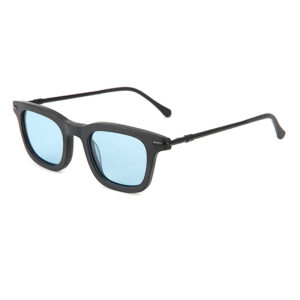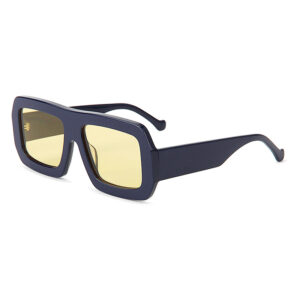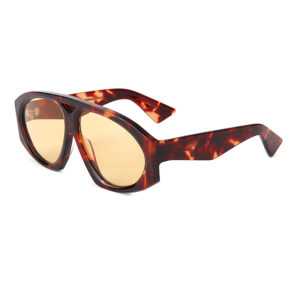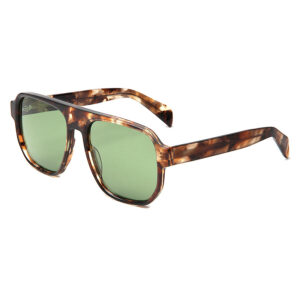
If you’re building or selling eyewear in 2025, you’re not just picking products. You’re curating face experiences.
And that starts with the basics: Which frame suits which face?
For rimless glasses, this question is even more important. Why?
Because there’s no frame to hide behind.
No bold acetate lines to shape the face.
No thick borders to create contrast.
With rimless eyewear, the lens shape, lens size, and bridge position are everything. They must work with the face—not against it.
If you get it right, the result is elegant, subtle, and timeless.
If you get it wrong, the glasses disappear in a bad way—or worse, make the face look imbalanced.
In this guide, we’ll walk through:
- Common face shapes
- What works with rimless
- What to avoid
- How to design rimless frames that flatter and sell
Let’s dive in.
Why rimless works for (almost) everyone
Let’s start with the good news. Rimless glasses are flexible.
Unlike bold plastic frames, rimless styles don’t draw too much attention to themselves. That makes them a great fit for:
- Professional settings
- Customers who want a “light” look
- Older wearers with sensitive skin
- People who dislike “feeling” their glasses
- Anyone who prefers a neutral, clean design
Rimless glasses “blend in” with the face. The result is often cleaner and more natural than any other frame type. This makes them ideal for a broad range of face types—but only if you understand the structure.
Understanding the six common face shapes
Before we match shapes with lenses, let’s quickly define the six face types your customers likely fall into:
1. Oval
Balanced forehead and chin. Gently curved cheek lines. Symmetrical.
Considered the most versatile face shape.
2. Round
Full cheeks, curved jawline, equal width and height.
Soft features, often mistaken for youthful or childlike.
3. Square
Strong jaw, broad forehead, angular features.
The width of forehead, cheeks, and jaw are often similar.
4. Heart
Wide forehead, high cheekbones, narrow chin.
Often seen as “top-heavy” visually.
5. Triangle (or pear)
Narrow forehead, wide jawline.
The opposite of heart-shaped.
6. Diamond
High cheekbones, narrow forehead and chin.
Angular look with a sharp bone structure.
Best rimless design choices by face shape
Oval Face
What works:
Almost anything. This is the easiest face to fit.
You can go with round, rectangular, or geometric lens shapes. Just keep the proportions in balance. Avoid oversized or overly narrow lenses.
Why rimless shines:
Rimless keeps the natural symmetry of the face intact. It enhances rather than alters.
Pro tip:
Offer this customer a choice of temple styles or lens cuts—they’re likely to say yes.
Round Face
What works:
Lenses that add angles. Think rectangular or narrow hexagon.
Avoid soft, curved lens shapes—they exaggerate the roundness.
Why rimless shines:
Without heavy frames, rimless designs avoid the “toy glasses” look that some round-faced wearers dislike.
Pro tip:
Wider lenses with sharp top corners can elongate the face.
Also, a slightly raised bridge makes the face appear longer.
Square Face
What works:
Curved lens shapes soften the angles.
Oval or almond-style rimless lenses work best.
Avoid boxy rectangles—they emphasize the sharp jaw and forehead.
Why rimless shines:
Rimless avoids visual clutter.
It softens strong features without hiding them.
Pro tip:
Pair with temples that have gentle curve or color accents to balance the overall shape.
Heart-Shaped Face
What works:
Lenses that are bottom-heavy.
Try round-bottom or soft teardrop shapes.
Avoid cat-eye or strong brow-line shapes—they make the top half too dominant.
Why rimless shines:
It lightens up the wide forehead area and brings attention downward.
Pro tip:
Use colored or metal accents on the temples to visually widen the lower half of the face.
Triangle Face
What works:
Lenses that draw attention upward.
Flat-top, wider lenses, or lens shapes that angle upward at the temples.
Avoid small or narrow lenses—they make the jaw seem even larger.
Why rimless shines:
It removes weight from the jawline and lets you use bridge design to lift attention to the eyes.
Pro tip:
Consider lens shapes with a slight “butterfly” lift effect—very flattering for this shape.
Diamond Face
What works:
Rounded or oval lens shapes.
Avoid super angular or overly narrow lenses—they clash with already sharp features.
Why rimless shines:
It softens the cheekbones without adding weight.
Pro tip:
Make sure the lens width doesn’t exceed the cheekbone width too much. Keep it balanced and centered.
Lens shape is your superpower
The beauty of rimless design is that you can literally reshape the lens to fit the face.
You’re not stuck with standard “frames” anymore.
You can define the outline, height, curvature, even the angle of the top line.
This makes rimless the perfect playground for brands who want to:
- Offer face-based personalization
- Create universal-fit bestsellers
- Launch mini capsule collections by shape type
- Customize lens lines for regional fit preferences
If you’re doing private label, this is your chance to lead with face-first design, not frame-first guesswork.
One shape, many fits
Here’s something we’ve learned from years of supplying rimless frames: one shape can fit many faces—if you tweak it well.
Small adjustments make a big difference:
- Increase the lens width by 2mm = better for wider cheekbones
- Add a 1.5mm bottom curve = better for square jaws
- Lift the bridge by 1mm = improves harmony on heart-shaped faces
At Eyewearbeyond, we help brands test these tweaks through prototype rounds or mixed-shape sampling packs. That way, they know what sells before they go full-scale.
What about gender?
Here’s the beauty of rimless eyewear: it’s naturally gender-neutral.
There’s no bold frame shape, no loud branding. You control the design through lens cut, temple style, and material.
This means you can:
- Sell the same base model to men and women
- Reduce your SKU count
- Let customers choose based on fit, not marketing
In 2025, unisex design isn’t just efficient. It’s expected. Rimless lets you stay ahead of that shift.
Regional preferences matter too
If you’re selling globally, remember that face shape trends vary by region.
In Asia, narrower bridges and higher nose pads are more common. In Europe, longer temples and wider lenses sell better. In the U.S., you’ll find more variation by age group than by region.
Understanding these preferences helps you create collections that don’t just look good—but sell faster.
We help clients regionalize lens shapes, pad angles, and temple lengths to make sure every face gets the perfect match.
Final thoughts: Rimless is face-first design
In a world that’s moving toward personalized experiences, rimless frames give you the tools to design eyewear around the person, not the product.
When you choose rimless, you’re choosing:
- A frame style that adapts
- A design canvas that listens to the face
- A smarter way to reduce returns and increase customer satisfaction
If your eyewear brand values clarity, comfort, and real-world wearability—rimless should be part of your strategy.
And if you want help designing rimless frames that truly fit your audience—we’re here for that too.