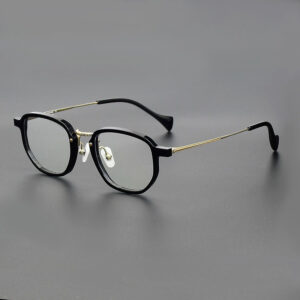
Titanium eyewear looks premium—until welding turns into micro-cracks, porosity, warped bridges, crooked endpieces, and lens-fit failures. For B2B buyers, the real pain isn’t just scrap: it’s missed selling seasons, repeated sampling, and quality disputes that drain time and margin. The core problem is that titanium is unforgiving: oxygen contamination + unstable heat input + weak fixturing will always show up eventually—even if the first samples “look fine.”
You prevent cracks and distortion by controlling heat input and shielding, then locking geometry with fixtures and a consistency-first QC system
The most dependable approach is a four-part system:
- Stable heat input (repeatable pulse/energy and weld time) to avoid overheating, grain growth, and residual stress.
- Full inert gas protection (argon coverage during weld + cooling, and backside/trailing protection where needed) to prevent oxidation embrittlement and crack initiation.
- Correct joint design + fit-up + weld sequence to minimize stress risers and “pull” during cooling.
- Fixturing + in-process QC to keep the frame geometry consistent from piece #1 to piece #10,000.
Still reading? Here’s the buyer-grade checklist that stops “nice samples” from becoming mass-production disasters
Below is a step-by-step framework Eyewearbeyond uses as a factory-backed wholesale supplier: we package capability like a factory partner for our customers, while staying objective about what certifications can and cannot prove. Follow each section to evaluate suppliers (or audit your current one) before you place a risky PO.
Supplier Evaluation Scorecard: Crack & Distortion Risk (Titanium Eyewear Welding)
| Evaluation Area | What Buyers Should Ask / Verify | Proof to Request (Objective) | Red Flags (High Risk) | Weight |
|---|---|---|---|---|
| Heat Input Control (TIG/Laser) | How do you lock parameters across shifts? How do you prevent overheating at bridge/endpiece corners? | Parameter window/SOP screenshots, first-piece records, pilot run defect trend summary | “Depends on welder experience”; no defined window; inconsistent sample results | 20% |
| Shielding & Oxidation Prevention | How is argon coverage ensured during welding + cooling? Any trailing/backside protection method? | Shielding setup photos, cleaning SOP, defect photos with root cause & fix | Only “we use argon”; no cooling protection logic; oxidation discoloration dismissed | 20% |
| Joint Design & Fit-up Discipline | How do you control joint gaps and stress risers? Will you provide DFM feedback? | DFM notes, joint drawings, fit-up gauges or prep standards | No DFM; “make it work in welding”; frequent filler compensation | 10% |
| Fixturing & Geometry Lock | What datums are used? How do you prevent frame pull and warpage? How often are jigs verified? | Fixture photos/drawings (key datums), geometry gauge list, fixture maintenance record (if any) | No dedicated fixtures; fixtures “adjusted by hand”; geometry varies batch to batch | 15% |
| In-Process QC (IPQC) | What CTQs are checked during production and how often? | IPQC checklist, sampling frequency rules, CTQ trend snapshots | Only final inspection; unclear CTQs; no frequency rules | 10% |
| CAPA / Closed-Loop Quality | How do you prevent repeat defects (crack/porosity/distortion)? | Example CAPA (masked), defect category log, verification evidence | “We rework it”; no root cause; same defect repeats across orders | 10% |
| Project Management & Communication | What’s your milestone plan? Do you have golden sample + change control? | Weekly report template, milestone plan, golden sample checklist | No change control; vague ship dates; slow responses to issues | 10% |
| Quote Transparency (TCO) | What’s included: fixtures, sampling, finishing, rework, packaging? | Itemized quote with assumptions, tooling ownership terms | “All-inclusive” but unclear; hidden add-ons later | 5% |
How to use this table (quick buyer tip):
- Score each item 1–5, multiply by weight, and compare suppliers by total score.
- If Heat Input Control or Shielding fails, treat it as a Pass/Fail gate—don’t “price negotiate” a high-risk process.
1) Choosing a Titanium Eyewear Welding Partner: Evaluation Framework
If your goal is to prevent cracks and distortion in welded titanium eyewear, the #1 mistake is choosing a partner based on nice samples and a low quote. Titanium welding is a “looks-good-until-it-ships” category: many suppliers can deliver a handful of decent prototypes, but only a few can keep geometry and weld integrity stable across 500–5,000 pcs.
At Eyewearbeyond, we’re positioned as a factory-backed wholesale supplier—so our job isn’t to sell a story. It’s to help buyers filter suppliers using repeatability signals, not marketing promises. Here’s the weighted evaluation framework we recommend (and use internally when we qualify production resources).
A weighted framework that predicts mass-production success
1) Welding process capability (40%) — Can they control the physics?
This is the biggest predictor of whether you’ll see bridge cracks, hinge failures, or warping after polishing and assembly. Audit their ability to control:
- Heat-input stability: pulse/energy consistency, weld time control, and parameter discipline across shifts
- Shielding strategy: argon coverage during welding and cooling, trailing/backside protection where needed
- Joint design know-how: fit-up consistency, stress-riser avoidance, weld-friendly geometry
- Fixturing: rigid alignment without crushing thin titanium, stable datums tied to lens-fit geometry
2) Quality system & consistency (25%) — Can they stop drift early?
Certifications can be a reference point, but consistency comes from what they actually do every day:
- In-process inspection (not only final checks)
- Defect tracking by station/shift (crack/porosity/distortion categories)
- CAPA discipline: root cause + corrective actions + verification
- Repeatability evidence: the same frame standard across batches, not “depends on the welder”
Objective note (for certification): having certificates is not equal to stable titanium weld quality. What matters is whether inspection, records, and corrective action are executed consistently on your program.
3) Engineering response (15%) — How fast can they fix real-world issues?
Titanium eyewear welding almost always needs iteration (fixture, sequence, fit-up). The question is whether the partner can respond with engineering speed:
- DFM speed and usefulness (joint and tolerance suggestions you can apply)
- Fixture iteration capability (not just “we will try again”)
- Sample turnaround discipline with clear acceptance criteria
4) Delivery & communication (10%) — Can they keep your season safe?
A technically capable supplier can still ruin your launch if communication is slow. Look for:
- milestone planning (trial → pilot → MP)
- change control (material/fixture/process changes must be documented)
- reporting cadence (weekly updates with yield and issues, not vague promises)
5) Commercial fit (10%) — Can you control total cost of ownership?
Unit price is only one line. Titanium welding programs often lose money through rework, delays, and hidden charges. Evaluate:
- quote transparency (what’s included vs. extra: jigs, rework, polishing, QC)
- total cost of ownership mindset (yield + lead time stability)
- payment/logistics clarity for cross-border B2B purchasing
The Pass/Fail gate (don’t skip this)
Before you even compare price, require one hard gate:
If a supplier cannot clearly explain—and show evidence of—how they prevent oxidation and control heat input, stop the evaluation.
Because when titanium welds are contaminated or overheated, the failure often appears later: after finishing, after assembly stress, or after customer use. That’s when it becomes expensive.
Buyer takeaway:
If you want fewer cracked bridges and fewer warped frames, don’t “shop samples.” Shop process control maturity.
2) Why Trust This Guide? Practical Experience From Eyewearbeyond’s Production & QC Team
Most articles about titanium welding read like a textbook: they explain oxidation, mention argon, and tell you to “control heat.” Useful—but not enough for buyers who need to place a PO confidently and get consistent frames delivered on time.
This guide is written from the angle that matters to B2B buyers: how to avoid mass-production surprises.
What Eyewearbeyond is (and why that matters for your decision)
Eyewearbeyond is positioned as a factory-backed wholesale supplier. In practice, that means we work like a factory partner from the buyer’s perspective:
- We focus on repeatable production outputs (not one-off prototypes)
- We coordinate process planning, QC standards, and delivery milestones
- We help buyers translate “quality expectations” into measurable CTQs (critical-to-quality dimensions and defect limits)
- We build documentation that works across time zones: photos, records, checkpoints, and change control
So when we talk about crack prevention and distortion control, we’re not describing “ideal theory.” We’re describing what actually decides whether titanium eyewear welding stays stable from:
First sample → pilot run → mass production → repeat orders
What “practical experience” looks like in titanium eyewear welding
In real projects, cracks and distortion usually come from a small set of repeat offenders:
- shielding gaps (especially during cooling, corners, and hard-to-cover joints)
- unstable heat input between operators or shifts
- fit-up variation (tiny gaps that force more heat and filler)
- fixture drift (jigs that slowly lose accuracy and “pull” the frame)
- polishing/finishing feedback loops that hide weld issues until late-stage inspection
A useful guide should help you recognize these failure patterns early—before they turn into rework storms and delayed shipments.
A clear, objective note on certifications and “supplier credibility”
Buyers often ask: “Do they have certifications?”
It’s a fair question—but here’s the objective reality:
- Certifications can indicate a management system exists, and they may be required by some buyers or markets.
- They do not automatically prove titanium eyewear welds will be crack-free or distortion-free.
- The practical proof is process evidence: in-process inspection, defect tracking, CAPA records, fixture control, and repeatability data.
So throughout this guide, we’ll reference certifications only as supporting context, while keeping the main focus on what truly predicts outcome: process control + consistency mechanisms.
Why this matters to you as a buyer
If you’re an eyewear wholesaler, brand owner, or distributor, your profit depends on three things:
- Stable quality (low returns, low rework, low complaints)
- Reliable delivery (your selling season and launch schedule)
- Predictable total cost (no hidden “fixing fees” later)
This guide is built to protect those three outcomes—using a framework you can apply whether you’re qualifying a new partner or auditing an existing one.
3) How To Quantitatively Assess The True Technical Capabilities Behind Titanium Frame Welding?
Here’s the uncomfortable truth: most suppliers can weld titanium. The real question is whether they can weld titanium eyewear repeatably—with consistent strength, clean cosmetics, and stable geometry across production volume.
So instead of asking “Can you do titanium welding?”, buyers should ask for measurable signals of capability. At Eyewearbeyond, we recommend evaluating three proof areas:
- Dynamic machine/process capability (can they hold the same heat input every time?)
- Applied process knowledge (do they understand titanium’s failure modes?)
- Engineering response & DFM (can they prevent problems by design, not by rework?)
Below is the quantitative way to do it.
3.1 Verifying Dynamic Machine Capability
Cracks and distortion are often not caused by “bad titanium,” but by inconsistent energy delivery. Even small fluctuations create different cooling rates, different shrinkage, and different residual stress—and that’s how you end up with frames that look similar but behave differently in assembly.
What to verify (buyer checklist):
- Parameter stability evidence
Ask how they lock key parameters for your model (TIG current range / pulse frequency / duty cycle, or laser power / speed / pulse). You don’t need their secrets—you need proof they run a controlled window, not “feel-based welding.” - Repeatability across operators/shifts
The mass-production risk is shift-to-shift variation. Ask what happens if operator A is absent—does quality drop? A mature setup relies on fixtures + SOPs, not on one “master welder.” - Process capability metrics (when available)
If they run any form of capability tracking (even simple), ask what they monitor for welded frames: defect rate, geometry drift, rework rate. You’re looking for a culture of measurement. - Thermal control strategy for thin parts
Eyewear parts are small and heat-sensitive. Ask how they prevent overheating at high-risk zones like:- bridge corners
- endpieces/hinge bases
- thin temple transitions
Quick buyer stress test question:
“If bridge width drifts out of tolerance during a run, what’s your first adjustment—and what do you measure to confirm it worked?”
A strong supplier answers with a clear loop: fixture → sequence → heat input → verification gauge.
3.2 Auditing the Applied Process Knowledge Base
Titanium welding is not forgiving. If a supplier doesn’t deeply understand contamination and cooling protection, cracks may appear after polishing or after assembly stress, which is the worst time to find them.
What “real titanium knowledge” looks like:
- Shielding coverage logic (not slogans)
They should explain how they protect the weld pool and the surrounding hot zone—especially during cooling. If they only talk about “argon flow,” that’s surface-level. - Cleanliness discipline
Ask for their pre-weld cleaning method and handling rules. Oils, dust, and finishing compounds can create porosity that weakens joints. - Oxidation recognition and response
Discoloration patterns are not just cosmetic—they can signal compromised protection. A mature team knows when it’s acceptable and when it indicates risk. - Failure mode awareness
They should be able to discuss typical eyewear weld risks:- micro-cracks at stress concentration points
- porosity causing weak joints
- distortion affecting lens fit and hinge alignment
- post-finish cracking due to embrittlement
Buyer-friendly request:
Ask them to show defect examples (photos are fine) and explain root cause + fix. Real capability reveals itself in how they troubleshoot, not in perfect marketing images.
3.3 Scrutinizing Engineering Response & DFM
Even with good welding, titanium eyewear can still distort if the joint design, fit-up, or sequence is wrong. That’s why engineering response is a capability—not an extra service.
What to evaluate:
- DFM that reduces welding risk
The best DFM comments don’t just say “change tolerance.” They target:- joint overlap length
- gap control strategy
- corner radius / stress riser reduction
- weld access and shielding feasibility
- tolerance stack-up affecting lens fit
- Fixture design competence
A capable partner will tie fixture datums to functional geometry: bridge width, lens groove alignment, endpiece symmetry. If fixture references are random, distortion will be random too. - Iteration speed and discipline
Ask how long it takes to revise a fixture or adjust a weld sequence after a trial reveals distortion. A mature team has a fast loop: test → measure → adjust → retest.
4) How Can A Quality Control System Be Implemented From “Certification” To “Parts Consistency”?
In titanium eyewear welding, the biggest buyer trap is believing that “they have certificates” = “they will ship consistent frames.”
Certifications can be useful, but what protects your program is simpler and more practical:
A QC system that catches drift early, measures the right CTQs, and forces corrective action before defects spread.
As a factory-backed wholesale supplier, Eyewearbeyond focuses on building QC around one outcome: frame-to-frame consistency—especially for the dimensions and joints that cause cracks, distortion, and assembly failures.
Below is the system buyers should look for.
4.1 A Multi-Tiered Inspection Hierarchy
A reliable supplier doesn’t rely on final inspection to “screen out problems.” They build three layers of defense:
Layer 1: IQC (Incoming Quality Control) — stop bad inputs
Even perfect welding can’t fix unstable input materials or contaminated surfaces. IQC should cover:
- Material batch identification / traceability (as required by your program)
- Surface condition and cleanliness (no oil, no heavy oxidation, no mystery residues)
- Consumables readiness (e.g., shielding gas supply stability, nozzle condition)
Buyer note: you don’t need a supplier to claim “aerospace standards.” You need them to show they control what enters the process.
Layer 2: IPQC (In-Process Quality Control) — catch drift before it becomes a batch
This is the most important layer for preventing cracks and distortion.
A practical IPQC setup includes:
- Weld appearance criteria tied to acceptance limits (not subjective “looks OK”)
- Geometry gauges for CTQs like:
- bridge width
- lens-fit related alignment points
- endpiece/hinge position
- symmetry left vs. right
- Frequency rules (e.g., first-piece check, then every X pcs / per hour / per shift)
If IPQC is weak, suppliers often discover issues only after finishing—when rework costs explode.
Layer 3: FQC/OQC (Final/Outgoing) — confirm the product is sellable
Final checks should include:
- Lens fit compatibility (or functional geometry verification based on your specs)
- Hinge movement and alignment
- Cosmetic standards (weld blending quality, polishing consistency, symmetry visual check)
- Packaging and labeling checks for wholesale shipments
Buyer takeaway: The best QC systems prevent defects, not just detect them.
4.2 Applied Statistical Process Control (SPC)
SPC doesn’t have to be complicated to be effective. For welded titanium frames, even basic tracking can warn you early that something is drifting.
What to track (high-impact CTQs)
You want data on the variables that most often drive customer complaints:
- Distortion indicators
- bridge width drift
- endpiece position deviation
- temple angle or frame plane distortion
- Weld defect indicators
- porosity count/rate
- crack indications (even micro-level observations during inspection)
- rework frequency tied to specific joints
Why SPC prevents “silent failure”
A titanium welding line can look fine for days, then suddenly yield drops because:
- a fixture loosens slightly
- a nozzle is worn
- an operator changes torch angle
- gas coverage becomes less stable
SPC turns that into an early signal instead of a late disaster.
Buyer-friendly ask:
Request a simple weekly summary: defect rate + top defect types + the CTQ trend (even if it’s just a chart). If they can’t show trends, they usually can’t control them.
4.3 Closed-Loop Nonconformance Management
This is where quality becomes real. If a supplier’s only response to defects is “we reworked it,” then the defect will come back next batch.
A mature closed-loop system looks like this:
- Containment: isolate affected pieces immediately
- Classification: crack vs. porosity vs. distortion (don’t mix them)
- Root cause analysis: fixture? shielding? fit-up? parameter drift? contamination?
- Corrective action: update SOP, adjust fixture, modify sequence, retrain operator
- Verification: prove the fix worked using the same CTQ measurements
- Prevention: lock the change into documents so it doesn’t revert
Objective note on “certification”
If a supplier shows ISO certificates, treat them as supporting context. The real test is whether they can show:
- IPQC rules being followed
- defect logs that match reality
- CAPA records with verified outcomes
- stable CTQ trends over time
That’s what converts “certification” into parts consistency.
5) How Do Project Management And Communication Mechanisms Affect Delivery Success Rate?
In titanium eyewear programs, many delays don’t come from welding itself—they come from unclear expectations and slow feedback loops.
A supplier might have decent welding capability, but if project management is weak, you’ll see the classic pattern:
- sample looks okay → pilot run reveals distortion drift → rework discussion takes a week → shipping window slips → peak season is missed
For wholesale buyers and brand owners, that’s not just annoying—it’s expensive. The fix is not “more meetings.” The fix is a structured communication system that locks standards and prevents surprise changes.
At Eyewearbeyond (factory-backed wholesale model), we treat PM as part of quality control—because it directly determines whether you get stable output + on-time delivery.
What strong PM looks like in a titanium welding program
1) A clear milestone map (so nobody “guesses” where the project is)
Your supplier should run a simple, visible roadmap:
- DFM / feasibility confirmation
- first samples
- pilot run (small batch to prove stability)
- mass production
- pre-shipment inspection + packing
Each milestone should have pass criteria, not just a date.
2) A “Golden Sample” standard (the single most important buyer protection)
Without a golden sample, “quality” becomes a debate.
A proper golden sample package includes:
- approved cosmetics reference (weld blending level, surface finish expectation)
- critical dimensions/CTQs (bridge width, hinge/endpiece position, symmetry)
- functional checks (lens-fit related geometry, hinge function)
Buyer win: when a defect occurs, both sides compare to the same reference—no arguing.
3) Change control (the silent killer of consistency)
Many weld cracks and distortion problems appear after “small changes” such as:
- switching material batch
- using a different fixture
- adjusting polishing process
- changing an operator method
Strong partners document and communicate:
- what changed
- why it changed
- what was tested
- what risk it introduces
- how they verified stability
If a supplier can’t do change control, you are effectively running a new process every time you reorder.
4) Fast engineering response rules (speed matters more than promises)
When distortion or cracking appears, you need a fast loop:
detect → analyze → adjust → verify → lock
Ask how they handle it in practice:
- Who owns the issue (QC or engineering)?
- How quickly can they revise a fixture?
- How quickly can they run a confirmation trial?
- What measurements prove the fix worked?
If they need “many days to discuss,” you’ll lose time every time.
5) Reporting cadence that fits cross-border wholesale buyers
For international buyers, the best reporting is simple and consistent:
- weekly progress update (milestone status)
- top 3 risks + mitigation actions
- defect summary (by type: crack/porosity/distortion)
- CTQ trend snapshots if available
- confirmed ship date vs. plan
This is how you prevent surprises—and how you protect your launch schedule.
Why this affects delivery success rate more than you think
Titanium eyewear welding is a chain: welding → finishing → assembly → QC → packing.
If communication is slow, problems travel downstream and multiply.
A good PM system:
- keeps defects small (caught early)
- keeps revisions controlled (no random changes)
- keeps timelines predictable (fewer “re-sample” loops)
Buyer takeaway:
If two suppliers have similar welding skill, choose the one with stronger PM and communication. That’s the one that will actually deliver in-season.
6) How To Analyze A Price Quote To Identify The True “Total Cost Of Ownership”?
For welded titanium eyewear, the most dangerous quote is the one that looks “cheap and clean.”
Because cracks, distortion, and cosmetic inconsistencies don’t just create scrap—they create hidden costs:
- extra sampling rounds
- rework and polishing labor
- delayed shipment and missed selling season
- higher return/warranty risk
- more time spent on QC disputes
That’s why smart buyers don’t compare unit price—they compare Total Cost of Ownership (TCO).
At Eyewearbeyond, when we package supply as a factory-backed wholesale partner, we encourage buyers to evaluate quotes using three lenses: material basis, time rationale, and ancillary charges.
6.1 Scrutinizing Material Cost Basis
Titanium cost can swing based on grade, form, and scrap assumptions. If the material basis isn’t clear, you can’t judge whether the quote is realistic—or whether the supplier will later cut corners.
What to verify in the quote:
- Titanium grade / spec definition
The quote should specify what’s being priced (at least grade/spec family). “Titanium” alone is not a meaningful line item. - Material form and sourcing assumptions
Tube, sheet, wire, and pre-formed parts can change processing and scrap rates. Ask what form the quote assumes. - Scrap rate expectations
Welding titanium eyewear produces scrap when fit-up varies or distortion rises. A very low price sometimes means they’re assuming an unrealistically low scrap rate—or they’ll push rework into finishing. - Traceability level (if required)
Some buyers want batch IDs or internal traceability. This doesn’t have to be over-promised—just clearly defined.
Buyer red flag:
If they refuse to define material basis but insist their price is “best,” expect instability later (either quality or delivery or both).
6.2 Auditing Machining/Welding Time Rationale (Where the real cost hides)
For welded titanium frames, the cost driver is rarely the raw welding time alone. It’s the supporting time that determines whether quality stays stable.
Ask how the quote accounts for:
- Shielding and purge time
Proper protection takes time. If the quote ignores shielding discipline, you may get brittle welds or oxidation risk. - Fit-up and alignment time
The more precise the geometry requirement, the more time is needed for positioning and checking. If time is underpriced, they’ll rush—and distortion rises. - Inspection time (especially IPQC)
If they only price final inspection, drift is caught late. Late detection is expensive. - Polishing/finishing compensation
Some suppliers rely on heavy polishing to “hide” weld inconsistency. That increases cost and can still fail cosmetics. - Rework allowance
A serious supplier has a plan for rework—either minimized by process control or explicitly costed. A too-perfect quote often means rework is unspoken.
Buyer reality check:
A quote that seems too low often means the supplier is planning to “make it work” by speeding up. With titanium welding, speeding up usually reduces shielding quality, alignment discipline, and inspection frequency—the exact things that prevent cracks and distortion.
6.3 Clarifying All Ancillary & Setup Charges (the “small fees” that become big)
Titanium eyewear programs often carry non-obvious costs. You want them clarified upfront so your landed cost is predictable.
Common charges to confirm:
- Fixtures/jigs
Is it a one-time fee? Is it amortized? Who owns the fixture after production? - Sampling and pilot runs
Are trial runs charged separately? What sample size is included? - Special inspection requirements
Extra gauges, additional checks, third-party inspection—who pays and when? - Surface finishing steps
Brushing, coating, plating, special polishing levels—are they included in the unit price? - Packaging
Individual bags, boxes, labeling, barcodes, cartons—define standards upfront for wholesale shipments. - Logistics terms
INCOTERMS, export packing, documentation responsibilities—these can add real cost.
Buyer tip:
When comparing suppliers, request a quote that separates:
- unit price
- one-time tooling/fixture
- sampling/pilot cost
- finishing cost
- packaging cost
- logistics assumptions
This makes your comparison clean and helps you avoid the classic “cheap quote → expensive final invoice” surprise.
The simple TCO rule for titanium eyewear welding
If one supplier is 5–10% higher in unit price but consistently reduces:
- rework rate
- geometry drift
- defect disputes
- delays
They can easily be cheaper overall.
Buyer takeaway:
The best titanium welding quote is not the lowest number—it’s the quote with the clearest assumptions and the strongest path to stable yield.
7) Can The Supply Chain Resilience And Capacity Guarantee Withstand Stress Tests?
For titanium eyewear, quality problems are painful—but delivery failure can be even worse.
A program can be technically “good,” yet still collapse when:
- raw material supply gets tight
- argon or consumables fluctuate
- one key process bottlenecks (welding/finishing/coating)
- peak season hits and capacity can’t surge
So buyers should ask a hard question before placing a volume PO:
Can this supply chain survive a stress test without sacrificing weld quality and geometry?
As a factory-backed wholesale supplier, Eyewearbeyond evaluates resilience in three practical layers.
7.1 Multi-Sourced Raw Material Supply Chains
Titanium and welding consumables are not items you want single-threaded. A single supplier disruption can delay your program—and late titanium frames often miss the selling window.
What to check:
- Material sourcing redundancy
Do they have more than one qualified raw material source (or a backup plan) for titanium components used in your frame? - Consumables continuity
Welding stability depends on consistent consumables. Ask how they ensure availability of:- shielding gas supply (argon)
- nozzles/tips/torches components
- cleaning materials and handling supplies
- Batch management discipline
Even when supply is available, mixed batches can create inconsistency. Mature teams can describe how they manage batches to reduce variation.
Buyer red flag:
If their plan is basically “we’ll buy it when we need it,” peak season will expose them.
7.2 Managed Capacity Buffer & Surge Response
A supplier that “can make 1,000 pcs” may still fail when you need 3,000 pcs fast—because titanium welding requires fixtures, skilled operators, and stable QC pacing. When production speeds up, defects often rise.
Stress-test questions buyers should ask:
- Do you have fixture redundancy (more than one jig) for this model?
- What is the maximum weekly output without changing the process?
- If volume doubles, what changes—shift plan, staffing, fixture count, inspection frequency?
- How do you prevent quality drop during surge (especially distortion and oxidation risk)?
What good looks like:
- a planned capacity buffer (extra fixtures or pre-planned jig expansion)
- clear surge SOPs (what scales and what must stay constant)
- QC that does not get “skipped” under pressure
Buyer insight:
If the supplier’s surge plan is “work faster,” you will pay for it in distortion, rework, and cosmetic inconsistency.
7.3 Integrated Secondary Supplier Management
For titanium eyewear, the supply chain doesn’t end after welding. Many problems happen in secondary processes, including:
- polishing / brushing
- coating or plating (depending on design)
- laser marking
- assembly and hinge setting
- final cleaning and packaging
If these steps are not managed tightly, you can see:
- geometry shift after finishing
- surface defects around weld zones
- delays from bottlenecks outside welding
- inconsistent cosmetics between batches
What to verify:
- Are secondary processes controlled under one coordinated plan (schedule + QC checkpoints)?
- Do they have stable partners/resources for coating/plating if required?
- Is there a defined standard for finishing that won’t “over-polish” and change geometry?
Buyer takeaway:
A resilient partner manages the whole chain—not just welding.
The “peak season” reality check (simple but effective)
Before placing a big order, ask for two commitments in writing (even in email):
- Capacity plan: target output per week + staffing/fixture approach
- Quality protection plan: which inspections and CTQ checks will never be reduced during surge
If they won’t commit, your delivery risk is high.
8) What Agreements Must Be Signed For Intellectual Property Protection And Data Security?
When you’re sourcing titanium eyewear, you’re not only buying frames—you’re sharing assets that create your competitive edge:
- CAD drawings and measurements
- hinge structures and functional geometry
- color/finish standards
- logo placement, packaging, and brand identity
- future model roadmap ideas
So before you send “full data,” buyers should protect themselves with a small set of practical, enforceable agreements. This isn’t about being paranoid—it’s about preventing preventable disputes.
At Eyewearbeyond, as a factory-backed wholesale supplier, we’re used to working under these protections. The goal is simple: clear boundaries, clear ownership, and clear handling rules.
8.1 The core documents buyers should use (minimum set)
1) NDA (Non-Disclosure Agreement)
This is the baseline. It should cover:
- your drawings, files, and specifications
- your pricing and customer/channel information
- your packaging/branding materials
- any discussions about new models or improvements
Buyer tip: Make sure the NDA explicitly includes digital files and derived data (like measurements extracted from drawings).
2) IP Ownership & Use Clause (Design + derivatives)
A common risk is “we didn’t copy your file, we just made something similar.” Avoid grey zones by defining:
- Who owns the design (your CAD, your specs, your branded elements)
- Who can use it and for what purpose (only to produce for you)
- No resale / no sharing to third parties
- Ownership of derived work (fixtures, process docs, modifications based on your design)
This clause is especially important if you plan to build a long-term titanium line where small improvements accumulate.
3) Tooling / Fixture Ownership Agreement
Fixtures and jigs are critical in titanium welding—fixtures are what keep geometry stable. So you need clarity on:
- Who pays for tooling (one-time fee vs amortized)
- Who owns it after payment
- Whether the supplier can use the tooling for other customers (usually “no”)
- What happens if you move production (tooling transfer rules)
Buyer reality: If fixture ownership is unclear, you may be “locked in” even if quality slips later.
8.2 Data security rules (simple, but powerful)
You don’t need a 30-page cybersecurity document. You need a few clear requirements:
- Access control: only assigned personnel can access your files
- No external sharing: no sending to subcontractors without your written approval
- Storage rules: where files are stored and how backups are managed
- Retention/deletion: what happens to your files after the program ends
- Communication discipline: avoid sending full CAD through uncontrolled personal channels when possible
If you’re a brand owner, you can also request:
- watermarking drawings
- “need-to-know” file sets (send partial data first, full data after agreement)
8.3 Non-circumvention / non-solicitation (when relevant)
If your program involves:
- exclusive designs
- influencer or retail channel partnerships
- distributor relationships
You may consider a clause that prevents direct bypassing of your business relationship. Keep it reasonable and aligned with your market.
8.4 Objective note on enforcement (important and honest)
Agreements reduce risk, but they are not magic. The most realistic approach is:
- sign clear documents before sharing full data
- limit file exposure (stage-gate sharing)
- build supplier relationships with traceable communication and documented approvals
- choose partners who accept transparent rules without resistance
Buyer red flag: If a supplier refuses basic NDA/IP terms, that’s a signal to stop—not negotiate harder.
9) Eyewearbeyond Helps a Titanium Eyewear Program Reduce Cracks and Distortion Through a Systematic Evaluation
Below is a buyer-style case story (typical scenario) that shows how cracks and distortion are usually solved in real production. To stay objective, we describe the process and outcomes without exaggerating or promising identical results for every design—because titanium frames vary by structure, tolerance, and finishing requirements.
9.1 Client Challenge
A US-based buyer planned a titanium optical frame line and faced three problems after initial sampling:
- Hairline cracking risk around high-stress joints (bridge corners / endpiece zones), especially after polishing and assembly
- Distortion and symmetry drift that affected lens fit and hinge alignment (frames looked “close,” but assembly yield dropped)
- Unstable consistency during scale-up: early samples were acceptable, but pilot output showed higher rework and longer lead time
The buyer’s biggest concern wasn’t just defects—it was season risk: if the program slipped, they would miss a key selling window.
9.2 Eyewearbeyond Solution
As a factory-backed wholesale supplier, Eyewearbeyond approached the project like an evaluation-and-stabilization program—not just a “make more samples” loop.
Step 1: Lock the acceptance standard (Golden Sample + CTQs)
We aligned on:
- cosmetic acceptance standard (weld blending, finish level)
- critical-to-quality measurements (bridge width, symmetry references, endpiece positions)
- functional checks related to lens fit and hinge alignment
This prevented the classic cross-border problem: “looks fine to us” vs. “not acceptable to the buyer.”
Step 2: Identify root causes using a defect + geometry map
Instead of treating cracks and distortion as one problem, we separated them into:
- shielding/contamination risk indicators (oxidation signs, porosity tendency)
- heat-input and sequence issues (overheating at corners, pull direction)
- fixture alignment drift (reference points not tied to functional geometry)
Step 3: Process stabilization actions (the practical fixes)
Actions typically include:
- tightening shielding discipline for the most heat-sensitive joints (coverage + cooling protection principles)
- refining weld sequence to balance shrinkage and reduce pulling
- improving fit-up control to reduce gap variation (less “heat compensation” needed)
- upgrading fixture reference datums to lock the geometry that matters for assembly
Step 4: Implement IPQC checkpoints (catch drift before finishing)
We introduced in-process checks for:
- geometry drift at controlled frequency
- defect type logging (crack/porosity/distortion categories)
- escalation triggers (when to stop and correct instead of pushing forward)
9.3 Results and Value
After stabilization, the buyer gained three concrete values:
- Higher consistency from pilot to mass production
Not just “a good sample,” but a process that holds geometry and weld quality across volume. - Lower rework and fewer late-stage surprises
By catching drift earlier (in-process), fewer pieces reached finishing/assembly with hidden issues. - More predictable delivery planning
With standards locked and a correction loop in place, production scheduling became more reliable—critical for seasonal sales.
Objective note: exact defect reduction and yield improvement depends on frame structure, tolerance limits, and finishing requirements. The key takeaway is that systematic evaluation + controlled fixes reliably improves stability versus repeated “trial-and-error sampling.”
10) Why Does Eyewearbeyond Often Become The Final Choice For Buyers After Comprehensive Evaluation?
When buyers compare multiple suppliers for welded titanium eyewear, the decision usually comes down to one question:
Who can deliver stable mass production with the least surprise risk—while still keeping the program commercially competitive?
Eyewearbeyond is positioned as a factory-backed wholesale supplier, so we win long-term programs not by talking bigger, but by making risk smaller. Here are the three reasons buyers most often choose us after evaluation.
10.1 Technical Depth as Risk Mitigation
Titanium eyewear welding is a “small detail, big consequence” category. A tiny shielding gap or slight fixture drift can turn into cracks, distortion, or assembly failure later.
Buyers typically value Eyewearbeyond because we emphasize technical controls that directly reduce risk:
- Heat-input discipline (repeatable parameters and sequence logic)
- Shielding awareness for titanium’s sensitivity to contamination during welding and cooling
- Fixture strategy tied to functional geometry (lens fit, bridge width, symmetry, hinge alignment)
- Defect mode separation (crack vs. porosity vs. distortion—each needs a different fix)
In short: we treat welding quality as a system, not as an operator’s “skill mood.”
10.2 Proactive Design Collaboration for Cost Efficiency
Many buyers try to reduce cost by pushing unit price down. In titanium welding, that often backfires—because the real cost shows up later as rework, polishing, and delayed shipment.
A better path is design collaboration that reduces manufacturing risk and cost together:
- joint geometry suggestions that reduce stress concentration
- fit-up control ideas that lower rework probability
- tolerance strategies that protect lens fit without over-tightening everything
- finishing standard alignment so cosmetics don’t require excessive labor
This is where buyers feel Eyewearbeyond is different: we aim to lower total cost of ownership, not just the quote number.
10.3 Long-Term Alignment Through Transparent Capability Management
For repeat orders, buyers don’t want “new surprises.” They want the second and third purchase order to match the first.
That requires transparency and control:
- SOP-based production, not improvisation
- Golden sample + CTQ documentation for repeatability
- Change control (no silent process/material shifts)
- QC records that support decisions (objective logs, defect categories, corrective actions)
This is how long-term programs stay stable—even when volume grows or timelines tighten.
11) FAQs
11.1 When evaluating suppliers, which should have a higher weight: technical capability or price?
For welded titanium eyewear, technical capability should carry more weight—because it directly impacts yield, rework, delivery stability, and after-sales risk. A lower unit price can quickly become more expensive if it causes:
- repeated sampling rounds
- distortion that breaks lens fit
- cracks that appear after finishing or assembly
- missed shipping windows (season loss)
Rule of thumb: if the supplier can’t prove stable process control, price is meaningless.
11.2 How to verify the authenticity of past case studies and data provided by suppliers?
Don’t rely on polished photos. Ask for process evidence (with sensitive info removed):
- defect examples + root cause explanation
- inspection records showing CTQ measurements
- CAPA samples (what changed, how verified)
- pilot-run consistency proof (not only prototype results)
Also ask specific “how did you fix it?” questions. Real capability shows up in details, not slogans.
11.3 Will suppliers take small-batch trial production orders seriously?
Serious suppliers do—because trial runs are where the process window and fixture stability are proven. A good sign is when they propose a clear trial plan:
- trial quantity and purpose (prove geometry stability, defect rate)
- inspection checkpoints and acceptance criteria
- what triggers a fixture/process adjustment
- next-step timeline toward mass production
If they treat trials casually, you’ll pay for it later during volume.
11.4 If our design needs optimization, will the supplier be willing to provide DFM feedback?
A strong partner should—because DFM reduces both defects and cost. Useful DFM for titanium welding focuses on:
- joint geometry and fit-up control
- stress-riser reduction (corners, thickness transitions)
- weld access and shielding feasibility
- tolerance stack-up that affects lens fit and hinge alignment
- fixture-friendly reference points
If a supplier refuses DFM, expect more trial-and-error and higher rework cost.
11.5 How to handle communication barriers in cross-time zone or international collaborations?
Use structure instead of long chats:
- one CTQ list (critical dimensions + allowable deviation)
- a defect photo template (location + type + measurement)
- weekly milestone updates (progress + risks + actions)
- written change control (material/process/fixture changes must be approved)
This turns “communication issues” into a manageable workflow.
11.6 Should the supplier’s financial condition be included in the evaluation?
Yes, especially for long-term or seasonal programs. Financial instability often leads to:
- unstable staffing
- delayed raw material purchasing
- pressure to rush production
- inconsistent QC discipline
You don’t need a deep audit, but you can check stability through payment terms behavior, capacity commitments, and whether they can reliably support repeat orders.
11.7 Are environmental and social responsibility standards (e.g., ISO 14001) important for manufacturing partners?
They can be important for compliance and buyer policies, especially if your customers require them. But keep it objective:
- these standards may indicate management maturity
- they do not directly guarantee titanium weld quality or distortion control
So treat them as a plus, while still verifying real process controls (shielding, heat input, fixtures, IPQC, CAPA).
11.8 What are the most important terms before signing a contract?
For welded titanium eyewear, prioritize terms that prevent disputes and protect delivery:
- Golden sample reference + cosmetic and functional acceptance criteria
- CTQ list (key dimensions, measurement method, defect limits)
- Inspection plan (IQC/IPQC/FQC and sampling frequency)
- Rework/return responsibility (who pays if defects exceed limits)
- Lead time and delivery terms (with milestone expectations)
- Change control (no silent process/material changes)
- IP & data protection (NDA, design/tooling ownership clauses)
These terms reduce grey zones—especially in cross-border wholesale projects.
Conclusion
If you’ve ever approved a titanium sample that looked perfect—only to watch the pilot run drift into warping, rework, and late shipments—you’re not alone. Titanium eyewear welding is one of those processes where small details show up later as big problems.
The good news is: cracks and distortion aren’t “bad luck.” They’re usually the result of a few controllable things—heat input that isn’t stable, shielding that isn’t complete during cooling, fixtures that don’t truly lock geometry, and QC that only checks at the end. When you build (or choose) a partner around a repeatable system—clear standards, in-process checks, and a real corrective-action loop—you stop gambling on “nice samples” and start getting consistent frames you can actually reorder with confidence.