Ski and snowboard goggles are one of the most important parts of your winter outfit. There is nothing worse than getting caught half way up a mountain in white out conditions and not being able to see, or the weather getting so hot that your goggles mist up and blind you. Choosing the right goggles will help you to enjoy every minute that you’re out on the slopes, whatever the conditions.
The first step to choosing the right goggles is to work out your budget. There are goggles available for all budgets and it is important to select a goggle which offers the best features for your available budget.
Once you have established your budget you should look for the features we have outlined below to work out which ones you want.
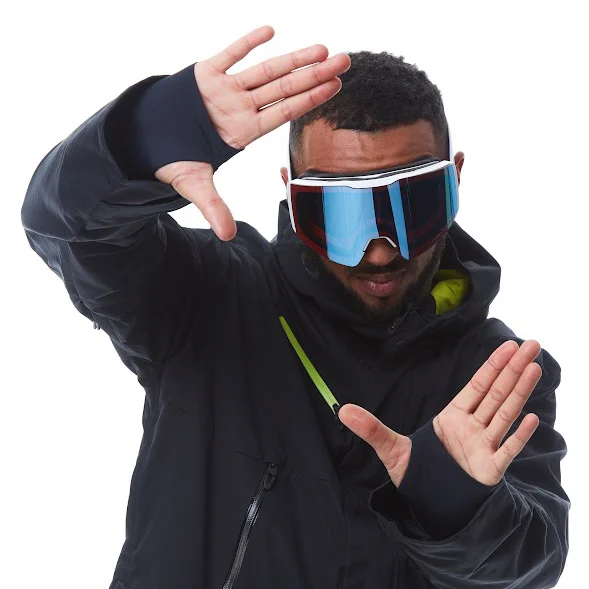
Generally, goggle lenses come in three main shapes – cylindrical, spherical and toric; each have unique properties that offer different benefits and features depending on what you are after.
Which Goggle Lens Shape is Best?
What is a cylindrical lens?
Cylindrical lenses are the cheapest goggle lenses available. They are cut from a flat sheet of material meaning it curves from left to right only, giving a flat face to the goggles. This is the classic ski goggle design and provides a lower profile look.
Because cylindrical lenses are cut from a flat sheet and then curved to fit the goggles frame you can get distortion on the peripherals of your vision. This gives a watery, hazy effect to your vision which can increase eye fatigue.
Cylindrical lenses have 3 main advantages over spherical lenses. They are much cheaper to produce, are very flexible and are easier to remove from the goggles frame. This means that replacement lenses are cheap to buy allowing you to own multiple lenses for varying conditions or cheaply replace scratched or damaged lenses. Their flexibility also makes them ideal for placing in a pocket without having to worry about easily damaging them. This makes them ideal for people who prefer to ski or snowboard with sunglasses and only have goggles for lower light conditions.
Cylindrical goggles are ideal for people on a budget or who wear sunglasses most of the time and want a pair of goggles for lower light conditions only.

What is a spherical lens?
Spherical lenses are more expensive than cylindrical lenses due to their more complex shape. If you image a flat cylindrical lens and being 2 dimensional then a spherical lens is 3 dimensional. This means that instead of just curving left to right, it also curves top to bottom.
Because spherical lenses are cut from a ball shape rather than a flat sheet you end up with a larger volume frame and wider peripheral vision. This also reduces distortion on the lens meaning optical clarity is improved no matter where you are looking out of the frame.
Spherical lenses have 3 main advantages over cylindrical lenses. They offer a wider field of vision, distort your vision less and are less prone to fogging or misting up. This makes them great for people who want to ride all day long from first chair to last without stopping. Spherical lenses are more expensive but are better quality than cylindrical lenses. If your budget allows, you should look for a spherical lens goggle.
When it comes to ski and snowboard goggles, a bigger price tag usually means better quality.

What is a toric lens?
Toric lenses are specially shaped to mimic the curvature of the human eye more accurately, reducing distortion and providing a clearer view.
These lenses are curved both horizontally and vertically, which is different from traditional spherical lenses. The design is intended to better match the natural curvature of the eye, particularly the way the eye sees in a wider, panoramic field of view.
Toric lenses in ski and snowboard goggles aim to minimize the visual distortions that can occur with traditional spherical lenses, especially around the edges, and enhance peripheral vision. This can be especially beneficial on runs where being able to see the entire field of view is crucial for safety and performance.
What is an OTG goggle?
Over The Glasses (OTG) goggles are sized to allow you to wear prescription eyeglasses under your goggles.
What Frame Size is Right for Me?
Different ski and snowboard goggles come in different sizes for different shaped and sized faces. It is important to try on goggles to get the right fit but to help you work out the most suitable frame size we have grouped our goggles into the sizes below. We have done our best to group goggles into their most appropriate category however this is only a guide and whilst one ‘Medium’ goggle may be a perfect fit, another ‘Medium’ goggle may have a different shape and therefore not fit. The images below are an example of some goggles which fit into the respective categories and are used as a demonstration only.
Extra Small
Best suited to small kids.
Small
Ideal for young children or women with smaller than average face sizes.

Small/Medium
Ideal for most women’s faces, teenagers or smaller men’s faces.

Medium
Ideal for most adult faces and women who prefer a larger frame size.

Medium/Large
Slightly bigger than average for a larger looking goggle that will fit most adult men’s faces.

Large
For larger adult face sizes and that oversized goggle look.

What lens tint is right for me?
Ski and snowboard goggles come with lots of different lens colours to give different performance, style and looks. Every lens colour will have a specific base tint which determines what conditions the goggles are designed for. Adding a mirror finish to a lens tint makes it more suitable for brighter conditions as it reduces the suns glare. Check out the descriptions below for more information on lens tints.
.jpg)
When it comes to skiing and snowboarding goggles, there are different lens options available to suit various light conditions. Here are some common lens types and their recommended uses:
- Clear Lenses: Clear lenses are suitable for low-light or night skiing conditions. They allow maximum light transmission, providing better visibility in dimly lit environments.
- Amber or Yellow Lenses: Amber or yellow lenses enhance contrast and depth perception, making them ideal for overcast or flat light conditions. They can help improve visibility on cloudy days or when there are shadows on the slopes.
- Rose or Pink Lenses: Rose or pink lenses also enhance contrast and depth perception. They work well in partly cloudy to overcast conditions and are effective in snowy or foggy weather.
- Blue or Purple Lenses: Blue or purple lenses are designed for bright, sunny days. They reduce glare and provide excellent visibility in high-contrast conditions. These lenses are not suitable for low-light situations.
- Dark and Mirrored Lenses: Dark and Mirrored are best suited for bright, sunny days with intense sunlight. They offer maximum protection against glare and are commonly used in high-altitude or glacier skiing.
It’s worth noting that personal preference and individual visual acuity can also play a role in choosing the right goggles. Some people may prefer certain tints or colours based on their perception and comfort. Additionally, consider the fit, ventilation, and overall quality of the goggles to ensure a comfortable and functional experience on the slopes.
What is VLT?
VLT stands for Visual Light Transmission and it’s a measure of the amount of light that passes through a lens. In the context of snowboard and ski lenses, VLT is particularly important because it indicates how much light is allowed to penetrate the lens. This measurement is expressed as a percentage: the higher the percentage, the more light can pass through the lens, and the lower the percentage, the less light is transmitted.
Snowboarders and skiers often encounter varying light conditions, from bright, sunny days to overcast or even low-light conditions. Different VLT percentages are suitable for different lighting situations:
Low VLT (e.g., 3-18%): These lenses are ideal for bright, sunny days. They block out a significant amount of light, reducing glare and eye strain in very bright conditions.
Medium VLT (e.g., 18-43%): These lenses are versatile and can work in a variety of conditions, from partly cloudy to moderately sunny days. They offer a balance between sufficient light filtration and some adaptability to changing light.
High VLT (e.g., 43%+): These lenses are best for low-light conditions or overcast days. They allow more light to pass through, enhancing visibility in dimmer environments.
.jpg)
What are photochromic lenses?
Photochromic lenses are growing in popularity thanks to their unique colour changing properties. Photochromic lenses have a special coating which reacts to UV light. This means when it’s dark outside the coating is fairly inactive and you get a very light tint on the goggles.
When it gets brighter or the sun becomes stronger the lens coating reacts with the UV and darkens. This means that you can have a lens which is perfect for almost every condition you could imagine. The image below shows how a photochromic lens will be a different colour in different conditions.
.jpg)
What special features can goggles have?
How does ventilation work?
Good ventilation in a goggle is very important. A poorly vented goggle with fog up preventing you from being able to see properly. Increasing air flow through the goggles frame helps to keep goggles fog free. Larger volume frames offer better ventilation meaning spherical lensed goggles usually fog up less than cylindrical lensed goggles. Keep an eye out for vented lenses and vented frames as these make a lot of difference.
More expensive goggles will utilise better air flow systems and better materials to reduce the risk of fogging up. Triple layer face foam, vented lenses and vented frames are all important features to look out for. Some goggles even utilise electronic ventilation systems which have a small fan to draw the warm, moist air out of the goggles frame. These work well, especially for people who wear prescription glasses under their goggles. Below you can see an integrated electronic ventilation system.
Prevention is much better than cure. Even the best goggles in the world can fog up if not treated properly. Wearing your goggles on your head will cause them to fog up quickly. This is because the top of your head is much warmer than your face and warm air rises. This air rises into the goggles frame and condenses on the lens which is colder due to its contact with the outside air. If you’re not wearing your goggles, always place them into a protective case or pocket.
If your goggles get wet or you get snow inside the frame, take the time to clean them. Any moisture caught inside the frame or anything that cools the lens faster will cause air to condense, making the goggles fog up. Most goggles come with a soft case which doubles as a cleaning cloth. Riding fast will also help clear your goggles as this increases the air flow through the frame.

What are polarised lenses?
Polarized lenses have been popular with certain professions for years thanks to their glare reducing properties. Polarized lenses work by altering the way light enters our eyes, cutting down on glare from shiny surfaces such as water, snow, ice, glass or metallic objects. This is what has made polarized lenses popular with drivers. Some high end ski and snowboard goggles now come with polarized lenses which help to reduce glare and eye fatigue.
One of the main advantages of polarized lenses is that they allow a goggle to work well in low and bright light conditions simultaneously. This helps reduce the number of lenses you need and makes transitioning between low and bright light areas much more comfortable. If you have sensitive eyes then polarized lenses are a good option for you. The image below demonstrates the difference that polarized lenses can make.

How do goggle head straps work and can you wear goggles with a helmet?
All ski and snowboard goggles come with a head strap which keeps the goggles on your face whilst you ride. Goggle straps are elasticated and feature sliding adjusters which allow you to change the fit of them. This means that most goggles can be worn with or without a helmet without becoming too tight or too loose on your face. More expensive goggles often have a silicone layer on the inside of the strap which helps keep it firmly in place whilst you ride. This prevents them from sliding around and becoming uncomfortable whilst you ski or snowboard.

Is anti-fog coating good?
A good anti-fog coating is essential, especially if riding in warmer weather. As a general rule, the more expensive the goggles, the better the anti-fog coating will be. As with ventilation it is important to remember that no anti-fog coating is 100% effective on its own. You must also ensure you keep snow and moisture out of your goggle frame and keep the lenses clean.
A greasy goggle lens will fog up faster than a clean one so always clean off any stray fingerprints. Don’t leave your goggles on your head, always keep them in a dry pouch or case when not wearing them and if you’re getting hot and sweaty when you’re riding, remove a layer or open your jacket to help prevent your goggles fogging up. The most effective anti-fog coatings are those which use chemical washes to increase the surface area of the lens. This makes it harder for water to condense on the lens helping you stay fog free.
How are goggle lenses constructed?
Goggle lenses can be constructed in two ways; single glazed or double glazed. Just like with a house window, double glazed lenses keep a layer of warm air trapped between the two lenses. This increases the temperature of the lens itself which prevents moisture from condensing on it. Single layer lenses are characteristically hot on your face side and cool where they are in contact with the outside air. This condenses moisture on the lens, making them foggy!
More expensive goggles will usually be double glazed. Also look for goggles which have a better seal between the two lenses. This stops moisture from getting into the lens and condensing on the inside.
Can goggles have GPS tracking?
GPS systems are only found on the most expensive goggles. GPS systems have a small heads up display on the inside of the goggle which can show things such as location, speed, altitude and distance. Some of these systems are even Bluetooth enabled which allows you to link your phone to them to receive text messages and phone calls in the heads up display.
Conclusion: Choose Goggles That Match Your Ride, Not Just Your Style
Ski and snowboard goggles aren’t just winter accessories — they’re high-performance tools designed to enhance vision, protect your eyes, and give you the confidence to move freely through snow, wind, sun, and speed.
Whether you’re tackling steep alpine runs, landing jumps in the terrain park, or gliding through cross-country trails, the right pair of goggles makes a real difference.
From lens technology and anti-fog features to fit, coverage, and helmet compatibility, there’s more to goggles than meets the eye. Take the time to match your gear with your terrain, your sport, and your level of intensity — and your ride will be better for it.
Looking for customizable, wholesale-ready snow goggles for your brand or store? Eyewearbeyond offers a wide range of performance-driven styles tailored for serious riders and smart buyers.