
Top 11 Rimless Eyewear Brands in 2025: Who’s Defining Luxury, Comfort, and Minimalism?
Rimless eyewear isn’t just a product category anymore. It’s a design language. A lifestyle symbol. A refined choice that says ...
Our Premium Lense Cutting Solutions Deliver High-Precision Cutting for Eyewear Brands That Demand Perfect Rimless Glasses Collection.
Rimless glasses are often overlooked.
They don’t shout for attention. They don’t dominate social media feeds. And they’re rarely the focus of big-brand campaigns.
But behind the scenes, the rimless eyewear market has been quietly growing—driven by professionals, seniors, and design-conscious consumers who want clarity, comfort, and minimalist aesthetics.
Beyond a few well-known names like Lindberg, Silhouette, or Cartier, very few eyewear brands have truly invested in this category. Which means one thing:
 There is white space. And it’s getting bigger.
But if you’re considering building a rimless line or expanding into this space, here’s the real question:
What challenges might you face—and how do you solve them before they cost you?
Is rimless eyewear too fragile for daily use?
Why do rimless lenses crack near the screw holes?
Are all lens materials safe for drilling and mounting?
Why do rimless frames loosen or lose shape over time?
Do most optical shops know how to adjust or repair rimless frames?
Is it harder to promote rimless glasses online due to their invisible design?
What type of nose pads work best for rimless comfort?
How do you make a rimless frame feel “premium” to the customer?
Why do some suppliers use CR39 lenses in rimless—even when it’s risky?
How do you ensure consistent quality in rimless production at scale?
Are there enough rimless-ready lens labs in my country for re-lensing or RX service?
Why do many rimless frames look the same? Is it hard to differentiate my design?
Do rimless glasses have branding limitations due to minimal space?
How do I build customer trust if they’ve had bad rimless experiences before?
Is diamond-cut lens edge really necessary—or just a luxury?
Why do some suppliers avoid offering rimless collections at all?
What should I ask a rimless eyewear manufacturer before placing an order?
Is the MOQ for rimless frames usually higher than for full-rim styles?
How do I educate my sales team or retail partners on rimless product care?
What certifications matter most for rimless eyewear exports?
Precision that protects. Design that defines. At Eyewearbeyond, we understand that in rimless eyewear, the lens is not just for vision—it’s the structure. That’s why our lens cutting and drilling solutions are built for absolute accuracy, durability, and design flexibility. You can see the below for different lense cutting modles. If you have real modles want us to copy, pls send us real samples.


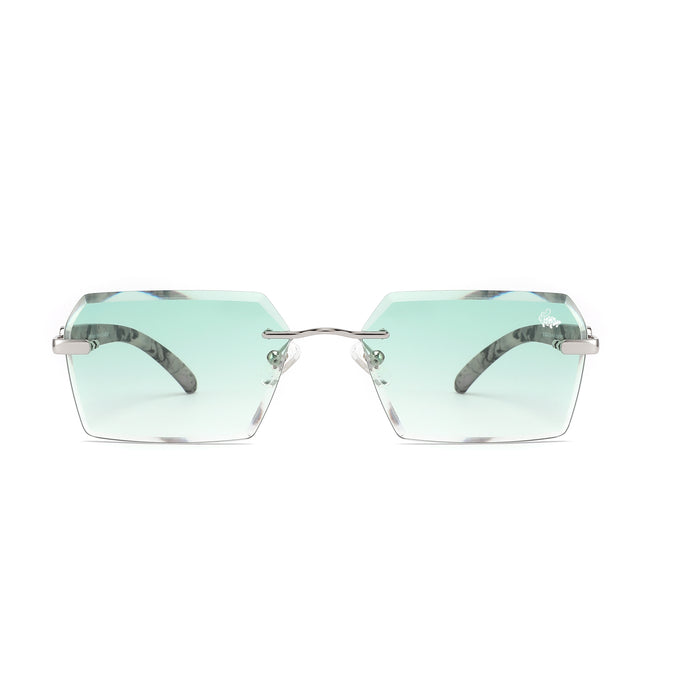

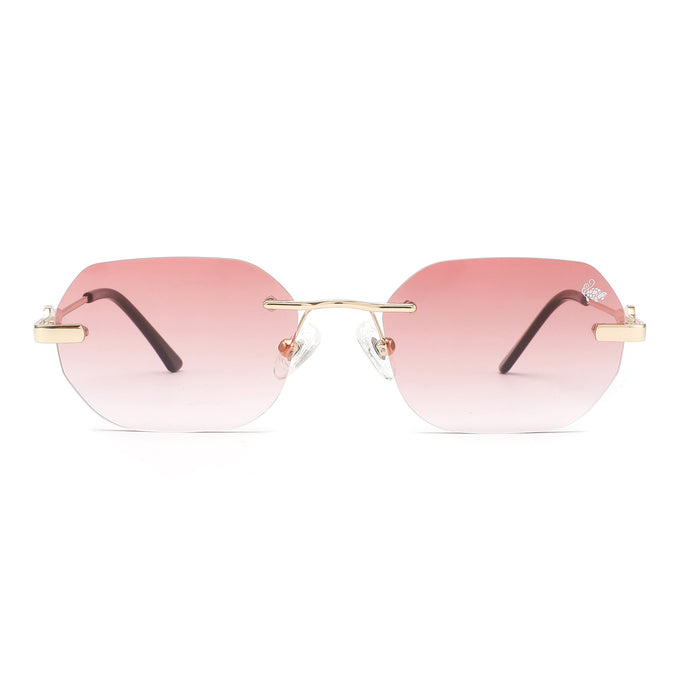

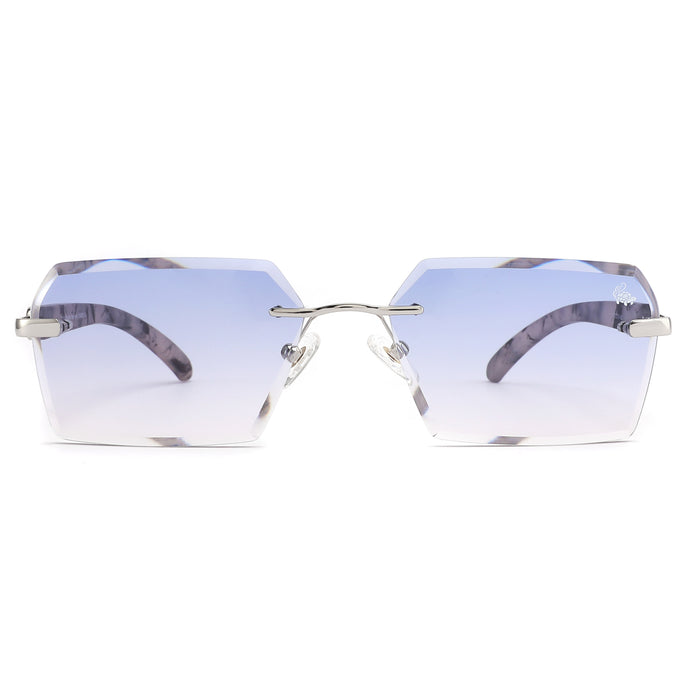
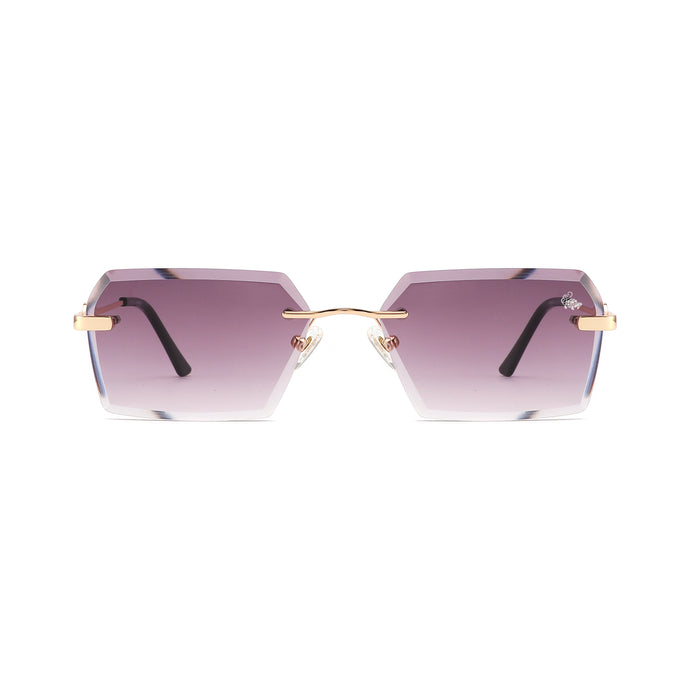
For brands, rimless eyewear offers a unique opportunity to communicate refinement, sophistication, and innovation. It’s often favored in:
Executive collections
Ultra-lightweight product lines
Modern minimalist designs
High-index lens showcases
Rimless glasses are not just a frame style — they are a statement of precision, clarity, and minimalism.
In technical terms, rimless eyewear consists of lenses that are directly connected to the temples and the bridge without any surrounding frame. Instead of being held in place by an acetate or metal rim, the lenses themselves become structural components. Every screw, every hole, every millimeter matters.
But beyond structure, rimless glasses embody a design philosophy:
Less is more – The absence of a frame brings full focus to the lens shape, facial features, and wearer’s expression.
Weightless comfort – With fewer components and lighter materials, rimless glasses offer unmatched wearability.
Engineering meets elegance – It takes more skill to do less. Precision hole drilling, torque-controlled assembly, and flawless edge finishing are essential.
At Eyewearbeyond, we’ve been manufacturing optical eyewear for over a decade — and if there’s one category that truly separates skilled factories from average ones, it’s rimless glasses.
Unlike standard full-rim frames, rimless glasses don’t allow for mistakes.
When a wholesaler or brand owner approaches us with a rimless eyewear project, the first thing we look at isn’t the style — it’s the engineering tolerance.
Because here’s the reality:
If the drilling position is even 0.1 mm off, your temple won’t fit. If the edge is too sharp, your lens cracks during assembly. If the screw tightness isn’t calibrated, your customer will return it within a week.
We’ve seen it all. That’s why we treat every rimless project with a different mindset.
We don’t just cut lenses. We build rimless systems.
Lens Cutting with Purpose
Every lens is processed on CNC machines with shape templates that match your frame hardware. We don’t guess-fit. We match lens geometry to your temples and bridge holes with sub-millimeter precision.
Drilling That Doesn’t Compromise Integrity
We use low-speed, pressure-controlled drilling to prevent internal microfractures, especially on polycarbonate and high-index lenses. A clean hole isn’t just about looking right — it’s about staying intact after 10,000 flexes.
Edge Polishing That Adds Strength, Not Just Shine
Over-polishing can weaken lens corners. We know where to polish, and where to stop. Our technicians understand how polishing affects mechanical strength, not just aesthetics.
Assembly That Respects Lens Limits
We pre-test screw torque and use stress-distributing washers where needed. Many OEM clients don’t even know why their lenses break post-assembly — we do. That’s why they stay with us.
We’re not just a supplier. We’re a manufacturing partner who understands:
Why rimless glasses cost more to repair than to produce
Why bad alignment kills brand reputation
Why time lost in sampling is worse than the cost of a mistake
When you work with us, you’re not just getting product. You’re getting an expert opinion — before things go wrong.
We’ve produced rimless lines for:
Independent DTC brands
Chain optical retailers
Boutique designers targeting executive and minimalist styles
From custom shape development to ready-made temple systems, we give you both structure and flexibility.
Lens material support: CR39 / PC / 1.56 / 1.61 / 1.67
CNC shape cutting & digital template matching
Hole precision: ±0.05 mm
Bridge compatibility: Screw mount / Compression mount
MOQ: 100 pairs (stock) / 300–500 pairs (custom)
Sampling: 3–5 working days
CE / FDA / ISO documentation ready
We don’t just produce rimless frames—we help you deliver clarity, comfort, and elegance to your customers.
Talk to the Team That Manufactures, Not Just Sells. We’ll respond with more than a price — we’ll give you a plan.
Send your CAD file (STEP, DXF, IGES, or even sketches)
Choose your materials (metal or acetate)
Let us know quantity & delivery preferences
Get a custom quote within 1 business day
Sourcing eyewear from China sounds simple on paper.
Search online. Get a quote. Place the order. Done?
Not quite.
Especially when it comes to rimless glasses—a product where precision matters more than plastic, and structure matters more than styling. One tiny flaw in drilling, tension, or screw alignment can turn a beautiful design into a return nightmare.
So if you’re a brand owner, wholesaler, or optical distributor looking to source rimless frames from China, how do you get it right the first time?
This guide will walk you through:
What to look for in a rimless eyewear factory
How to separate “cheap” from “quality”
What to ask suppliers before ordering
Red flags to avoid
Why partnering with a specialized factory like Eyewearbeyond makes all the difference
Let’s be clear: sourcing full-rim acetate or plastic eyewear is one thing. Rimless is another game.
Why? Because rimless eyewear is not just design—it’s precision engineering.
A good rimless frame requires:
Accurate CNC drilling
Perfect screw torque
Stress-balanced mounting
Scratch-resistant, drillable lenses
Lightweight but rigid temples
Skilled assembly with proper QC
And these are invisible to the untrained eye. You can’t just compare two pictures on Alibaba and pick the cheaper one.
In rimless sourcing, the wrong partner will cost you far more than the “savings” from a low unit price.
Many eyewear suppliers in China offer full-rim, sunglasses, reading glasses, blue light frames, and more. But only a small percentage specialize in rimless production.
A factory truly qualified for rimless will:
Have CNC lens drilling machines
Offer anti-loosening screw systems
Know how to handle tension calibration
Employ rimless-trained assembly staff
Provide polycarbonate or Trivex lens options
Offer flexible temple designs in titanium or TR90
Ask directly:
“Do you have a dedicated rimless assembly team?”
If the answer is vague—they’re probably faking it.
At Eyewearbeyond, we operate dedicated rimless production lines, with trained workers handling only drill-mount glasses. No mixing with plastic frame assembly.
Rimless frames depend heavily on material quality. You want to be clear on:
Bridge material: titanium, stainless steel, or alloy?
Temple material: TR90, Ultem, acetate, hybrid?
Screw quality: standard steel or coated micro-threaded?
Lens options: polycarbonate, CR39, or high-index?
Avoid any supplier who answers vaguely or refuses to specify grade or source.
Cheap materials = bent bridges, cracked lenses, slipping temples.
At Eyewearbeyond, all materials are documented in your PI (Proforma Invoice) and confirmed again in sample stage. We also offer FDA, CE, ISO certifications as needed for export.
Before you go to bulk order, always request samples.
But don’t just look at them. Test them:
Do the screws stay tight after multiple openings?
Is the bridge aligned and symmetrical?
Do the lenses show micro-cracks at the drill points?
Do the temples bounce back when flexed?
Do the nose pads sit comfortably and evenly?
Pro tip: Ask for 2 identical samples. If they feel different, that’s already a red flag for inconsistent assembly.
Eyewearbeyond provides test units assembled by final-line technicians—not marketing samples. What you see is what you get.
A common sourcing mistake is choosing a supplier who gives a great price—but then surprises you with unrealistic MOQs or slow production.
Ask these questions early:
What is your minimum order quantity for rimless?
Can I mix colors or temple styles in one order?
What is the lead time for samples and for mass production?
Can you handle reorders in smaller batches?
At Eyewearbeyond, we offer:
300 pcs per style MOQ
Color/temple mix allowed
Sample time: 10–14 days
Mass production: 30–35 days
Reorders: 20–25 days
We also keep ready stock options for high-demand rimless styles—ideal for urgent clients or retail testers.
Don’t leave this to the last minute. Quality suppliers will help you handle:
Logo engraving (bridge or temple)
Microfiber pouch and hard case
Insert card with care instructions
Custom barcode or label (if retail-ready)
Make sure your supplier understands your target market. European pharmacy buyers? U.S. eCommerce? Middle East distributors? Packaging styles and regulatory expectations vary.
Eyewearbeyond provides private label kits and white-label packaging templates at no extra design fee.
Always ask:
How do you handle QC?
Will I receive QC photos or videos before shipment?
What happens if I receive defective goods?
Do you offer rework or refund for substandard items?
Avoid any supplier who says “Don’t worry, our quality is good.” That’s not an answer. You want numbers, checklists, proof.
At Eyewearbeyond, we inspect:
Every 50th frame for assembly torque
Every 100th lens for crack stress
100% visual check on engraving, symmetry, pad alignment
We also shoot shipment videos for client approval. Defective frames are reworked or replaced on next shipment, no excuses.
Here’s what should instantly raise concerns:
A price that’s too good to be true
No sample offered before deposit
Factory refuses video call or on-site check
No export history or certifications
Inconsistent answers between sales and production teams
Rimless eyewear is not a low-cost item to gamble on. Saving $0.50 per frame today can lead to 10% return rate tomorrow—and damage your brand trust.
Because rimless is not a side project for us. It’s a specialty.
We’ve built rimless frames for:
Independent optical shops in Germany
Professional brands in the U.S.
Telehealth eyewear providers in Singapore
Lifestyle eCommerce stores in the UAE
Governmental contract buyers in Latin America
With:
Custom lens shaping
OEM branding
Low MOQ
Fast reorders
CE/FDA certifications
On-time delivery track record
We speak both the design language and the engineering language of rimless eyewear—and we deliver what we promise.
Anyone can sell you glasses.
Not everyone can build rimless frames that last.
Sourcing rimless eyewear from China requires due diligence, patience, and a supplier who treats this category with the precision it deserves.
The right partner will not only ship your product—but protect your reputation.
If your brand wants to stand for clarity, comfort, and minimalist precision—you need rimless done right.
We’re here to help.
When it comes to rimless eyeglasses, the lens isn’t just a medium for vision—it’s the actual structure of the frame.
Unlike full-rim styles where the lenses are protected and held by a solid material, rimless lenses are load-bearing parts. They connect directly to the temples and the bridge. They endure screw pressure, tension from daily wear, and the risk of cracking at drilled points.
So the choice of lens material, thickness, coating, and finish isn’t just an optical decision—it’s a durability decision, a design decision, and a customer satisfaction decision.
If you’re launching a rimless eyewear line or building out a private label collection, here’s what you need to know to make the right call.
In full-rim glasses, the frame supports and protects the lens.
In rimless glasses, the lens is the frame.
That means it must:
Be strong enough to hold screws and withstand drilling
Be flexible enough to tolerate tension and small bends
Be clear enough to pass aesthetic and optical tests
Be thin enough to look refined, but not so thin that it cracks
Accept coatings and engraving without surface damage
Get it right, and you’ve got a strong, beautiful, lightweight product.
Get it wrong, and you’re facing cracked lenses, loose screws, and customer complaints.
Let’s walk through each major factor in lens selection for rimless glasses.
There are four common materials used for optical lenses. Not all are suited for rimless eyewear.
Best overall choice for rimless.
Extremely impact-resistant
Lightweight
Drill-safe
Affordable
Accepts coatings well
Naturally UV-protective
Why it works: Polycarbonate’s flexibility allows it to absorb pressure from screw mounting without cracking. It’s the go-to for most of Eyewearbeyond’s rimless lines.
Premium alternative to PC
Similar strength, but slightly clearer
Lower chromatic aberration
Lighter than polycarbonate
More expensive
Less widely available
Why it works: Great for high-end brands. Especially good for customers sensitive to lens clarity. Performs just as well as PC for durability and drill tolerance.
Not recommended for rimless
Cheap
Clear optics
Easy to tint
Why it fails: CR-39 cracks under screw pressure. It’s too brittle for rimless frames. We only use it for full-rim or semi-rim collections.
Conditional choice
Ultra-thin and stylish
Lighter than standard plastic
Suitable for high prescriptions
Caution: High-index materials are often brittle. Only use if lens thickness is sufficient (≥1.8mm at drill points), and manufacturer confirms it’s drill-safe.
At Eyewearbeyond, we offer drill-tested high-index options upon client request, with extra torque calibration.
In rimless glasses, the lens isn’t just there to see through—it’s drilled, mounted, and weight-bearing.
Too thin = cracked lens.
Too thick = bulky, unattractive silhouette.
So what’s the balance?
Standard thickness: 1.8mm to 2.2mm at mounting points
Thinner edges for aesthetics, but not below 1.5mm
Ask your supplier to reinforce drill zones if using thinner lens bodies
In general:
Low prescriptions (0–2.00) → PC or Trivex, standard cut
Mid prescriptions (2.00–4.00) → PC with thinning at edge
High prescriptions (4.00–7.00) → High-index, reinforced mounting design
At Eyewearbeyond, we customize lens bevel and edge thickness by frame type and region—because style preference varies across markets.
The most vulnerable point in any rimless lens? The drill holes.
These small punctures are where screws or mounts attach to the lens. Any weakness here leads to:
Hairline cracks
Pressure breaks during assembly
Lens splitting after drops
To avoid this:
Use CNC-controlled lens drilling (we do this in-house)
Avoid hand-drilling or non-guided manual systems
Use rubber bushings or nylon washers between screw and lens
Avoid over-torquing screws (especially by inexperienced technicians)
If you’re working with a supplier, ask:
“Do you test torque at drill points?”
“Do you provide lens edge stress reports?”
At Eyewearbeyond, each rimless sample goes through a stress test simulating 12 months of wear-and-tear before it’s released to mass production.
Rimless lenses are fully exposed. That means:
They scratch faster
They collect more fingerprints
They reflect more light
They suffer from wear faster than protected lenses
What you need:
Scratch-resistant hard coat (essential)
Anti-reflective coating (for office and screen use)
UV400 protection (especially for sun-sensitive regions)
Oleophobic layer (optional but helpful for oil and smudge resistance)
Rimless customers tend to be sensitive users. They care about how their lenses look, feel, and clean. Don’t skip coating quality just to save $0.20.
The edge of a rimless lens is visible. That means finishing matters.
Ask your supplier for:
Polished edges for a clean, premium look
Beveled finish to reduce sharpness and improve mounting
Anti-chip edge treatment for polycarbonate lenses
Optional: engraving zones (logos, symbols)
Well-finished edges elevate the look of the entire frame. Cheap or unfinished lens edges scream “low-end” even if the rest of the frame is flawless.
Here’s the strategic side: not every customer needs the same lens.
For example:
Professional clients → polycarbonate, AR coating, scratch-resistant, clear lens
Seniors → impact-resistant, medium-thickness, extra anti-glare
Designers or creatives → Trivex or high-index with polished edge
Budget market → polycarbonate, single vision, hard coating only
Online retail → lens light enough for low shipping cost, but strong enough to pass return test
Eyewearbeyond helps B2B clients define lens specs by market tier and region—so you’re not just sourcing lenses, you’re making strategic product decisions.
If you’re just starting out with rimless eyewear, here are the traps we’ve seen buyers fall into:
Choosing CR-39 to save money
Picking the thinnest lens possible for aesthetics
Ignoring edge polish and beveling
Skipping scratch coatings on clear lenses
Not checking drill compatibility of high-index stock
Working with suppliers that don’t do lens QC under pressure
Rimless success is in the details. One wrong choice = costly returns or worse, loss of customer trust.
That’s why choosing the right lens is not optional—it’s foundational.
The right lens gives you:
Long-lasting customer satisfaction
Less breakage, fewer returns
A cleaner, more professional design
Higher perceived quality and resale value
Lower assembly failure rate
Whether you’re sourcing for a fashion brand, optical chain, or minimalist collection, remember: you’re not just selling a lens—you’re selling the structure of the glasses.
At Eyewearbeyond, we guide you through lens selection as part of our rimless development service. We don’t leave this step to chance—and neither should you.
This blog series explores everything you need to know about rimless eyewear: from how rimless frames are engineered, to how precision mounting, lens materials, and edge finishing create a truly minimalist product that stands out.
Whether you’re new to rimless frames or looking to scale your custom rimless line, these posts will give you expert insights, product development tips, and behind-the-scenes knowledge to help you succeed in a category where every detail matters—and nothing is hidden.
Rimless eyewear isn’t just a product category anymore. It’s a design language. A lifestyle symbol. A refined choice that says ...
When it comes to rimless eyewear, every detail matters. There’s no frame to hide behind. No bold acetate to carry ...
If your eyewear brand is growing, or you’re planning to launch your first product line, one of the smartest moves ...
Choosing the right eyewear frame isn’t just about looks.It affects comfort, durability, style identity—and, for brands, your bottom line.If you’re ...
Every retailer wants one thing: healthy margins.But in a market flooded with full-rim acetate and flashy sunglasses, rimless eyeglasses are ...
Rimless eyeglasses have carved a solid space in the modern eyewear market. Their minimal design, lightweight feel, and refined appearance ...
We are here to help you 7 days a week and respond within 24 hours. Plus, you can find most answers to your questions right on this page.
A: Ask if they have dedicated rimless assembly teams, CNC drilling equipment, and experience with tension-controlled assembly. A true rimless supplier won’t treat it as just a frame without a rim—it’s an entirely different production process. At Eyewearbeyond, our rimless products are made on separate lines with technicians trained only for drill-mount systems.
A: CNC (Computer Numerical Control) systems allow precise, low-vibration drilling with consistent torque. This prevents micro-cracks during hole formation. We use high-speed CNC lens drilling units calibrated for both polycarbonate and Trivex materials, ensuring clean, tension-balanced lens holes every time.
A: CR-39 is not recommended for rimless frames—it’s too brittle and prone to cracking under screw tension. Polycarbonate is our standard for durability and impact resistance, while Trivex is offered for premium optical clarity and flexibility. Both pass our drilling and pressure tests.
A:Yes. Diamond-cutting smooths the lens edge at the microscopic level, reducing chip risk and improving visual clarity. It also adds a luxury visual finish—essential for brands targeting premium buyers. At Eyewearbeyond, diamond-cutting is standard on all rimless lines.
A:
Drill alignment tolerance: ±0.05 mm
Torque setting: 6–8 cNm (centinewton meters), depending on lens thickness
We test torque retention during QC and reject frames with any imbalance or off-center alignment.
A:We recommend minimum edge thickness of 1.8 mm around screw points and a drilling zone at least 2.5 mm from the edge. Thinner lenses are possible, but we reinforce them with bushings and tension relief design. Custom shape CAD previews are always included.
A:We use nylon or silicone bushings inside the mounting holes, combined with anti-loosening coated screws. This cushions stress during tightening, and allows clients to adjust or service the frame multiple times without damaging the lens.
A:Standard bushing options include:
Transparent nylon washers (0.5 mm)
Soft silicone rings (for flexible fit)
These reduce vibration, friction, and lens edge fatigue.
A:Yes, we offer screwless compression-mount systems that use tension clamps instead of drilled holes. These are ideal for high-end rimless collections. We also offer laser-bonded lens systems on request for brands that want a seamless, high-tech look.
A: Our assembly process uses dual-anchor bridge reinforcement, and each frame passes a 3-point balance test before packing. We ship rimless units in protective trays with foam bracing to prevent torque shifts during transport.
A: Absolutely. We specialize in small batch, flexible development. Our MOQ is 300 pcs per style, with the ability to mix lens shapes, colors, or temple materials. We can help you test 2–3 designs in a pilot run before scaling.
A:Our average defect rate is <0.6% on rimless frames. QC steps include:
Torque test every 50 units
Lens stress test every 100 units
100% visual inspection (alignment, surface, tension)
Clients receive pre-shipment photos or videos, and we back all rimless orders with post-sale technical support.
✅ 10+ years of eyewear manufacturing
✅ Fully integrated CNC workshop for frames & components
✅ Exporting to over 30 global markets
✅ ISO-compliant QA/QC standards
✅ Low MOQs for boutique & emerging brands
✅ Multilingual support (English & 中文)
✅ Trusted by wholesalers, designers, and private label clients
✨ We’re not just a factory. We’re your technical partner in modern eyewear production.





Follow Us:
Set your brand apart with custom-designed eyewear! At Eyewearbeyond, we specialize in tailor-made eyeglasses and sunglasses that fit your specifications. Request a quote and start designing now!
Your email information will be kept strictly confidential and our business staff will ensure that your private information is absolutely safe!
Ready to bring your unique eyewear designs to life? Start your journey to custom eyewear today—request your free quote now!
Your email information will be kept strictly confidential and our business staff will ensure that your private information is absolutely safe!
Looking for the perfect custom eyewear to represent your brand?
Our experts can help you find the perfect eyewear solution tailored to your requirements!
You have successfully subscribed to the newsletter
There was an error while trying to send your request. Please try again.